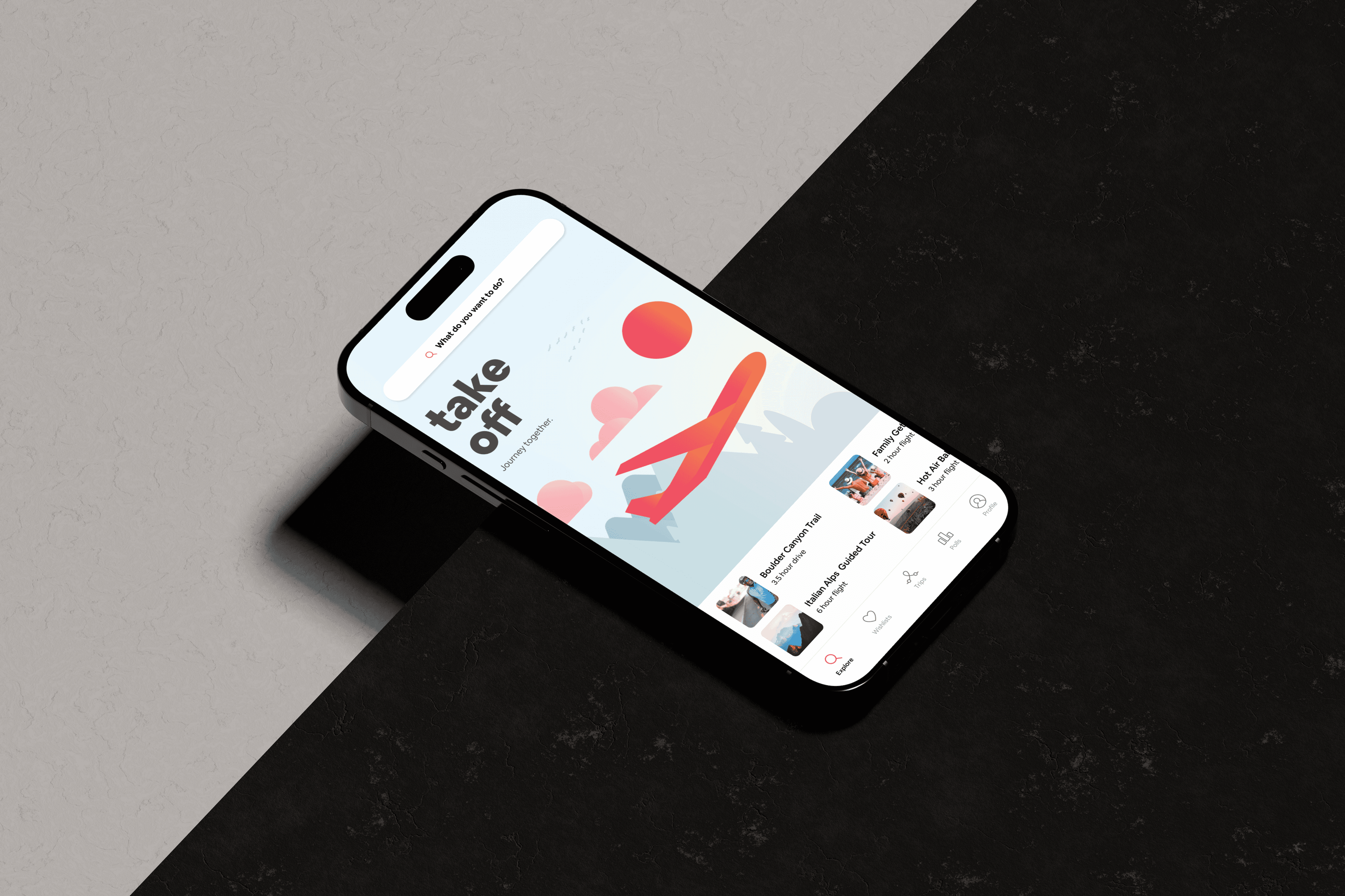
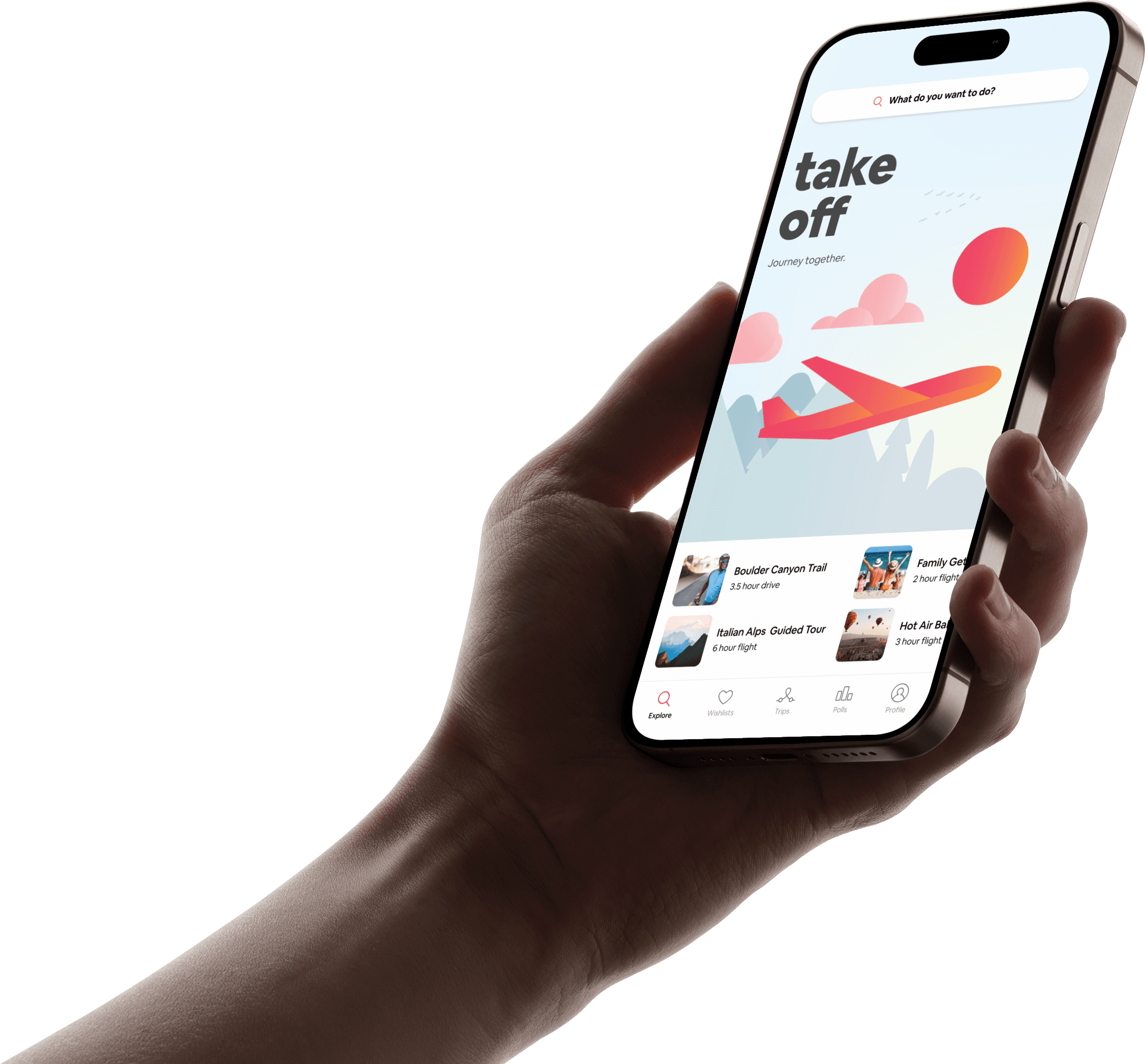
Takeoff is a collaborative itinerary-building mobile app concept for Airbnb users planning trips together.
//Role
Senior UX/UI Designer
//Duration
7 weeks, part-time
//Context
MICA Masters of Professional Studies in UX Design
//Industry
Consumer / Travel / Trip Planning
This was a team project completed during my master’s program. I contributed across research, UX, and UI, and specifically owned the calendar and co-traveler itinerary flow, which focused on helping users see and coordinate plans across a group.
Problem & Opportunity
The Problem
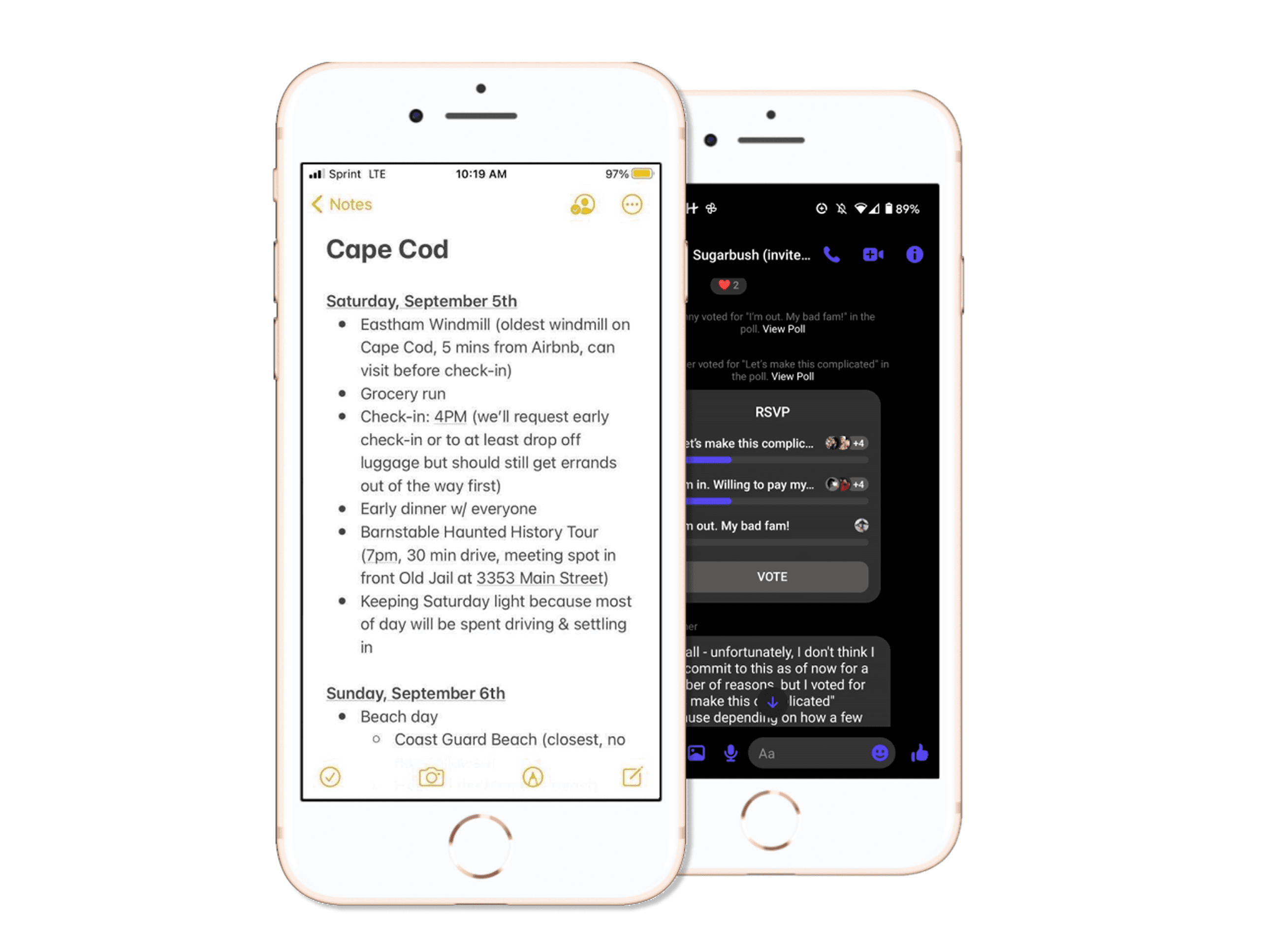
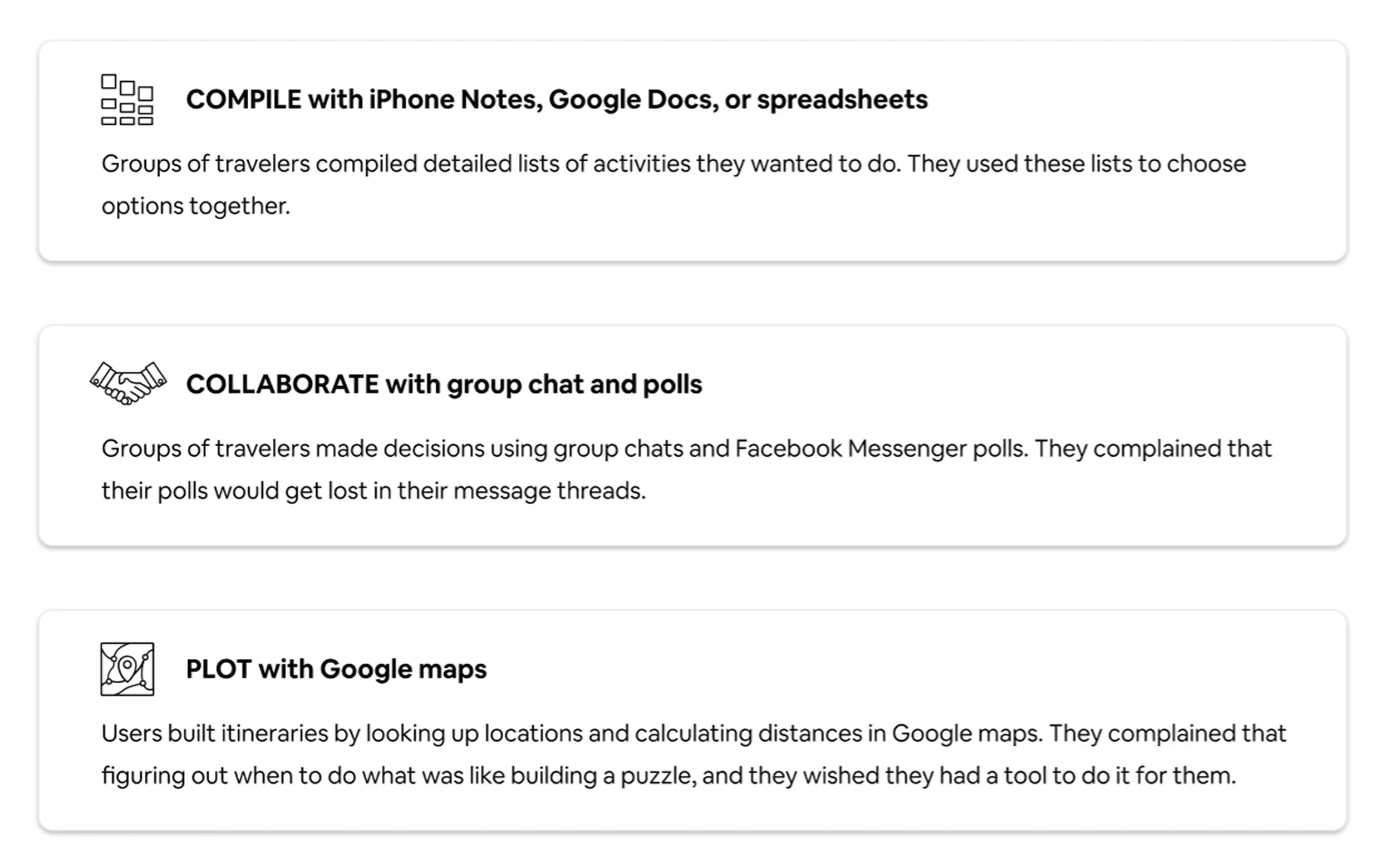
Trip planning is usually fragmented across too many tools. People save ideas in notes, coordinate in group chats, compare options in spreadsheets or docs, and use maps separately to figure out timing and distance.
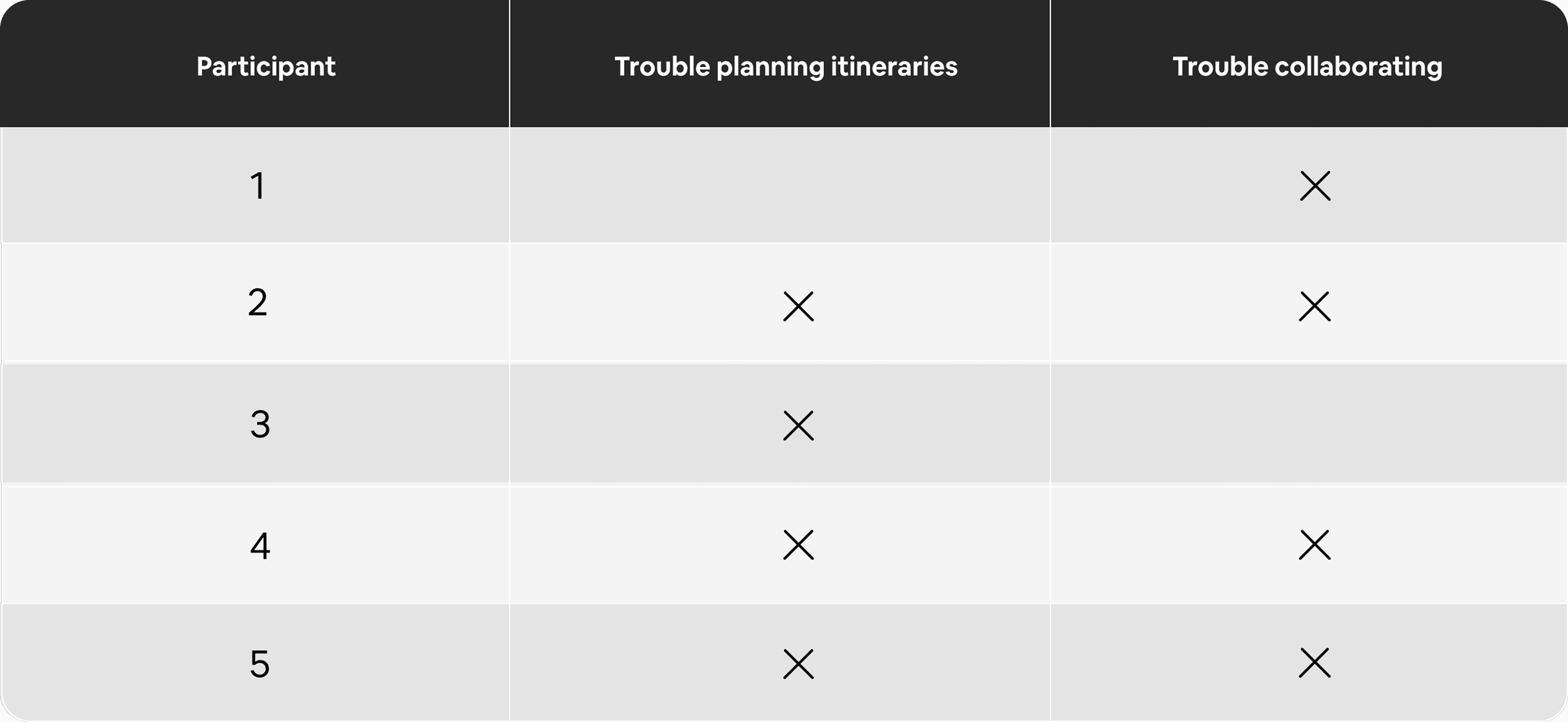
Our research showed two major pain points:
building the itinerary itself
collaborating with co-travelers
Users were not just struggling to find things to do. They were struggling to organize information, align preferences, and turn scattered ideas into a workable plan.
The Opportunity
We saw an opportunity to design a collaborative planning tool built around the way people already behave.
Instead of inventing a completely new process, we focused on supporting the three behaviors users were already piecing together manually:
compile ideas
collaborate with others
plot activities into a schedule
Because the concept was framed around Airbnb users, it also created a natural connection between the stay and the planning experience.
Goals & Success Criteria
The goal was to answer this question:
How might we help Airbnb users plan trips?
More specifically, we wanted to:
make itinerary building easier
reduce friction in group planning
help users save and organize activities
support better group decisions
replace the messy mix of chats, notes, docs, and maps with a more unified experience
Because this was a concept project, success was measured through research validation, sketch testing, usability testing, and participant feedback on the prototype.
Context & Constraints
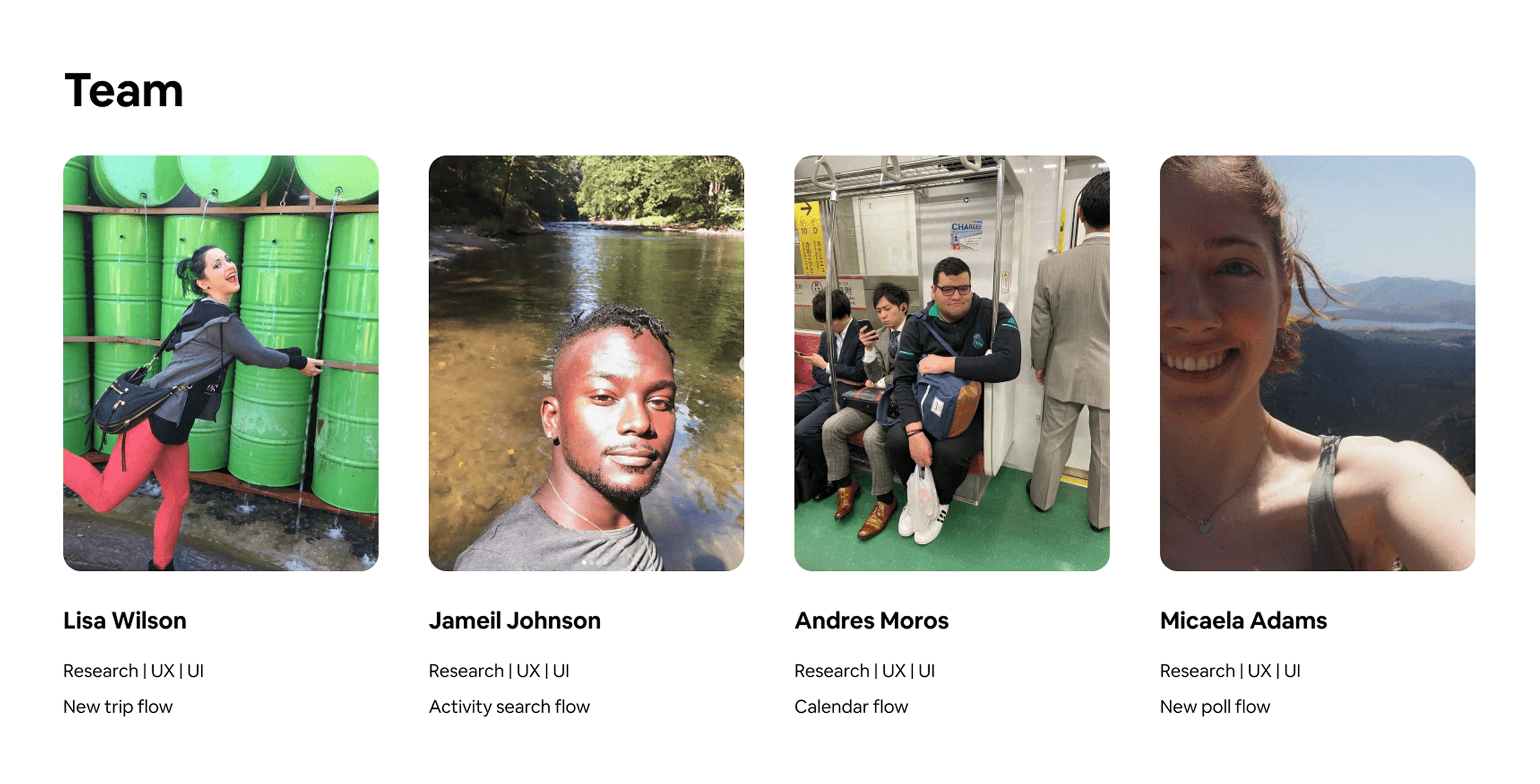
This was a 7-week, part-time class project completed during my master’s program. I worked alongside 3 other designers, so we were a team of 4 total, which meant the process relied heavily on collaboration, shared critiques, and dividing ownership across key flows. I specifically owned the calendar and co-traveler itinerary flow.
Because the project was scoped as an MVP, we had to stay focused on the highest-value planning and collaboration features first. That meant leaving broader travel features like flights, expanded messaging, checklists, and more advanced browsing for future iterations. The limited timeline also meant we had to be selective about which flows to prototype in depth and test most thoroughly
Users & Research
Target Users
Airbnb users planning trips, especially travelers coordinating with friends, family, or groups.
Research Approach
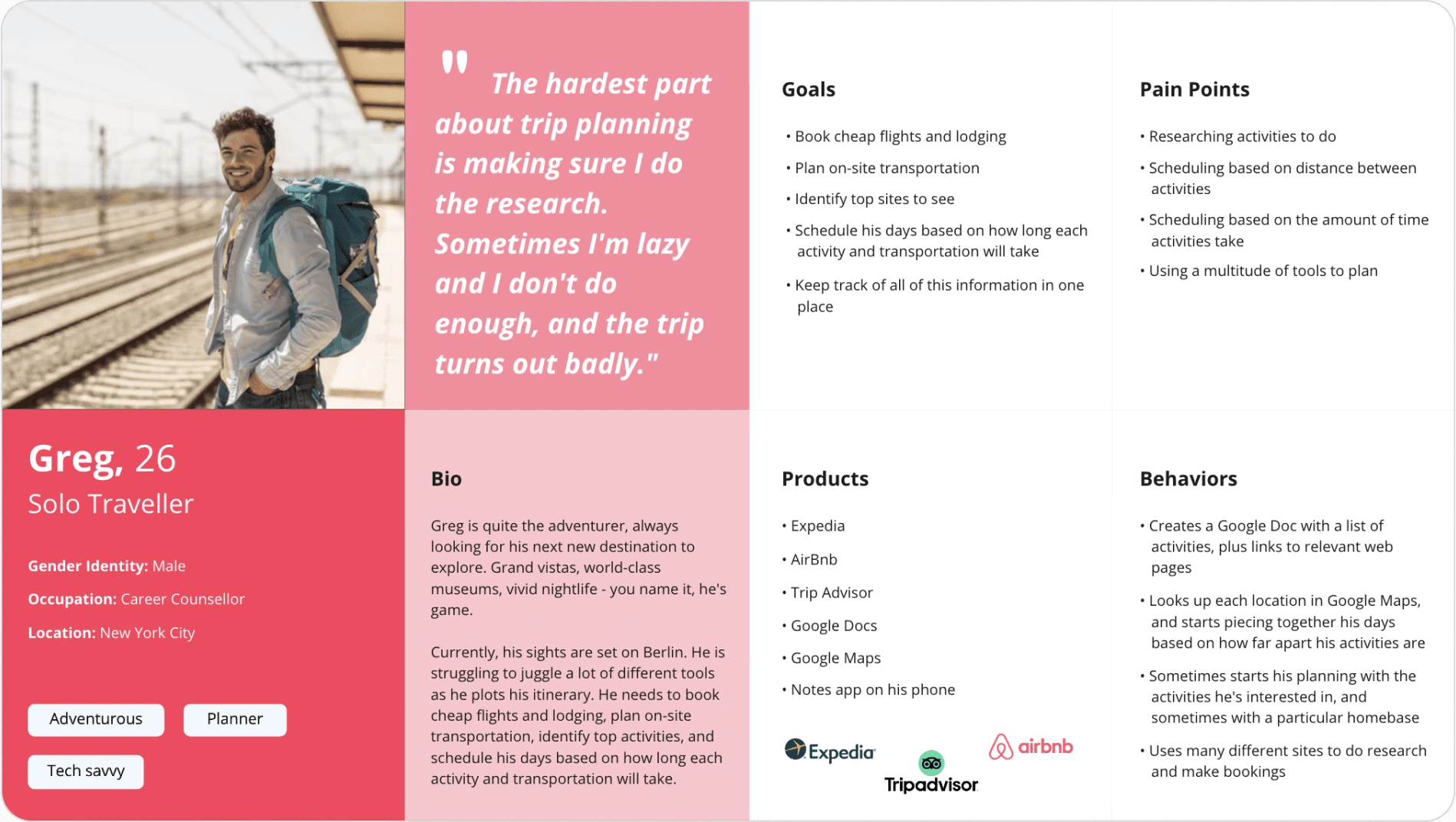
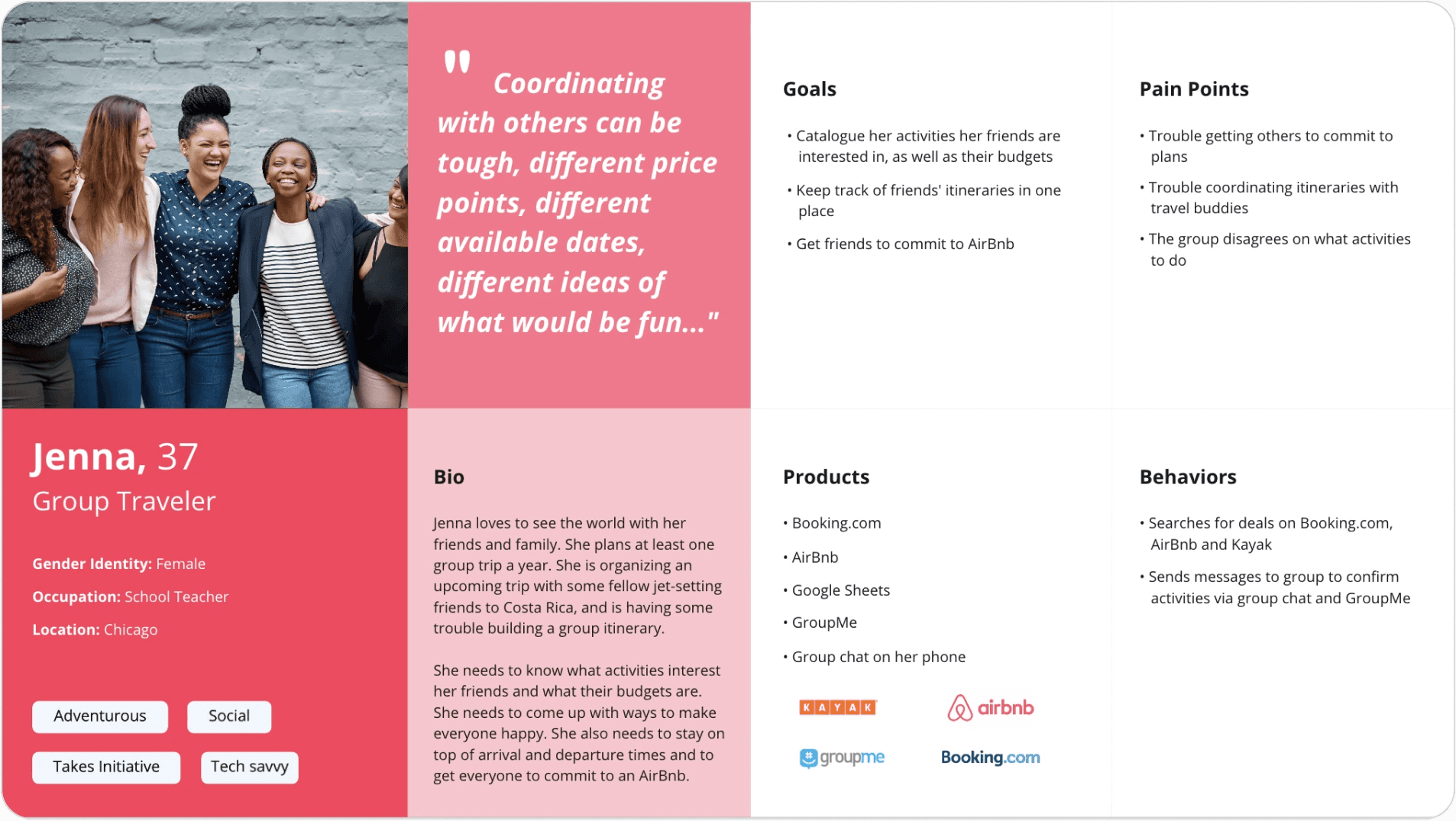
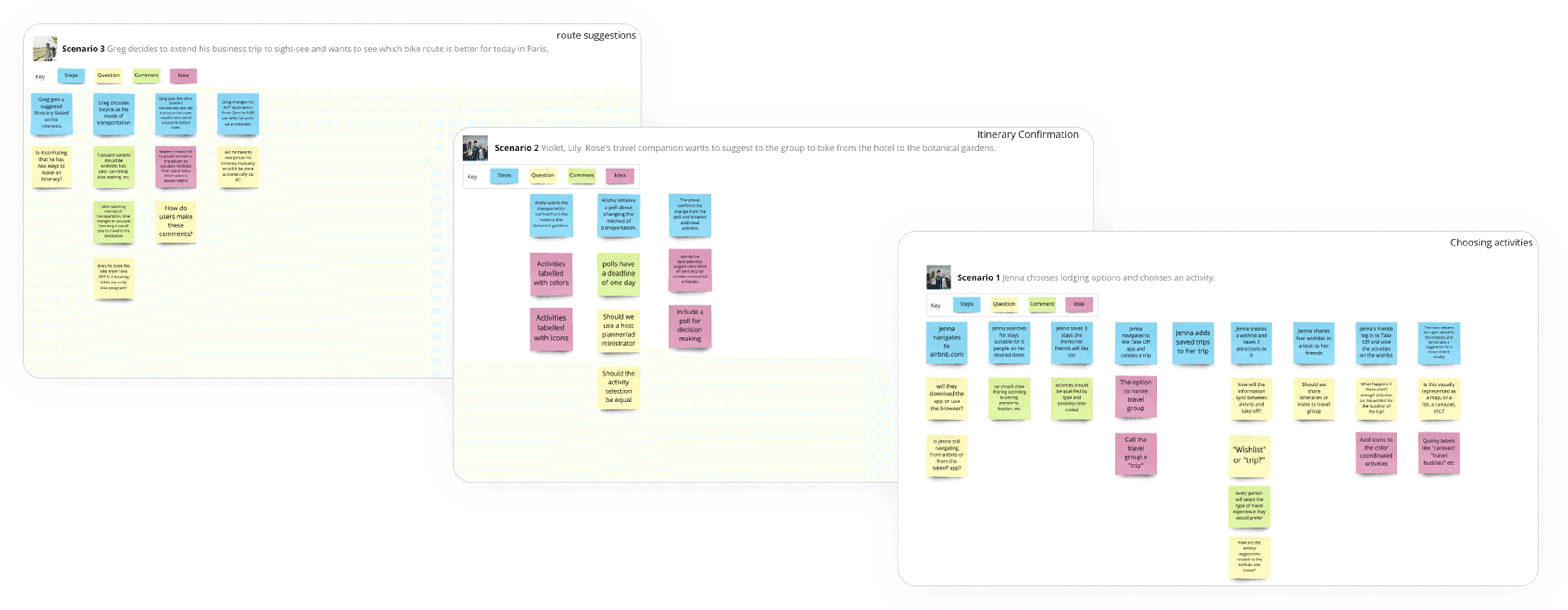
We started with 5 user interviews and affinity mapping to validate our initial hypothesis around trip-planning pain points.
From there, the project included:
qualitative personas
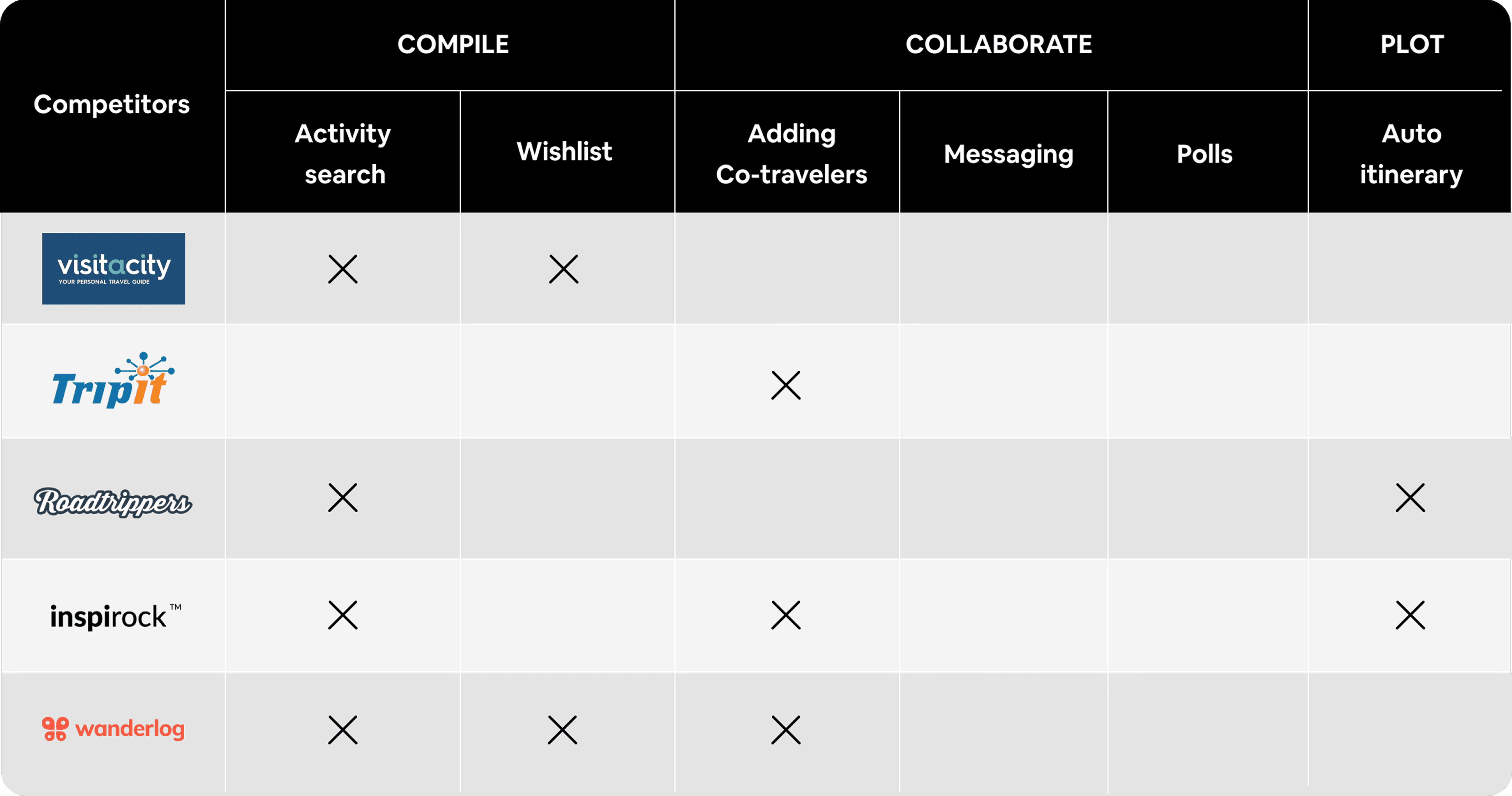
competitive analysis
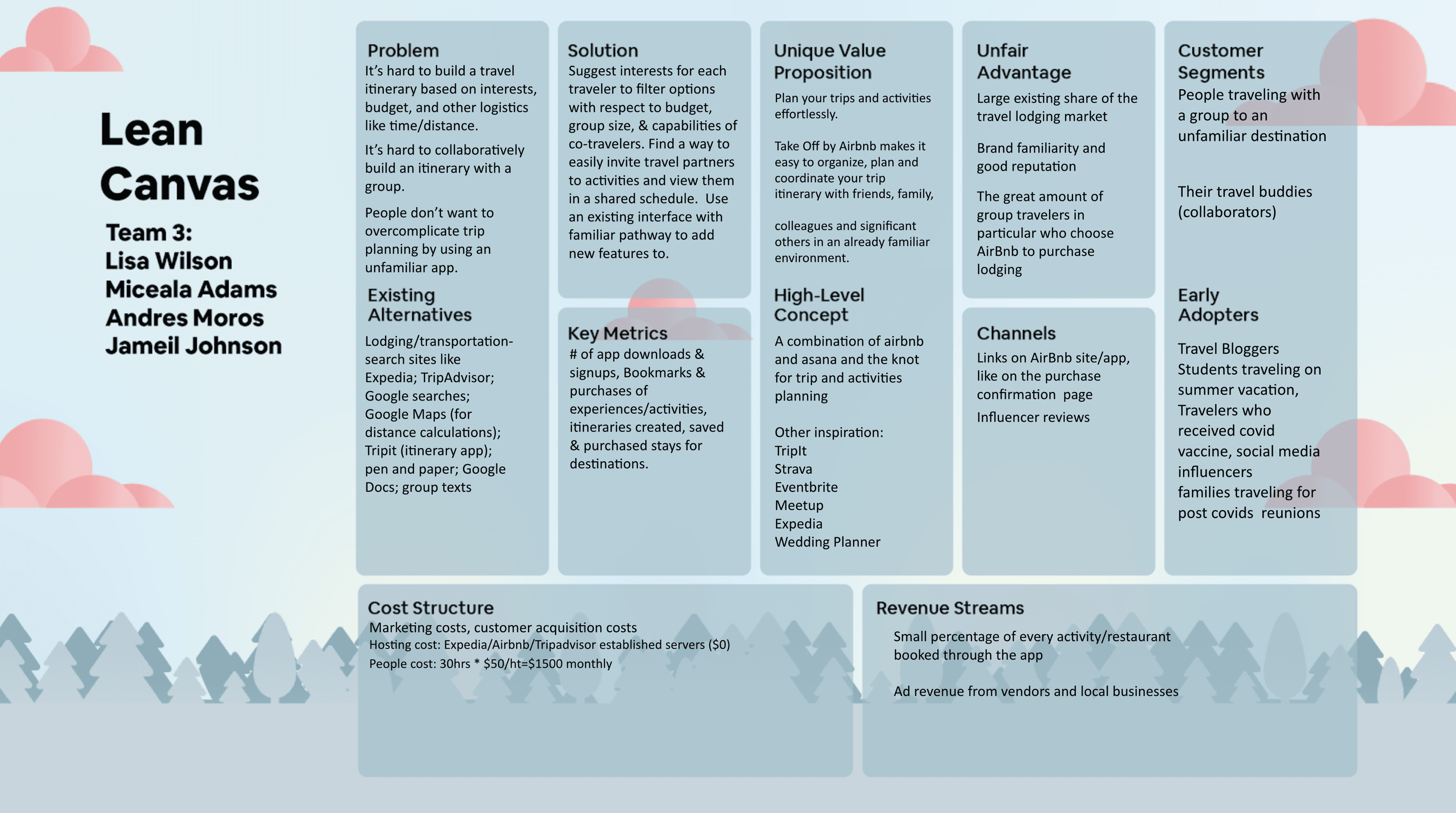
lean canvas
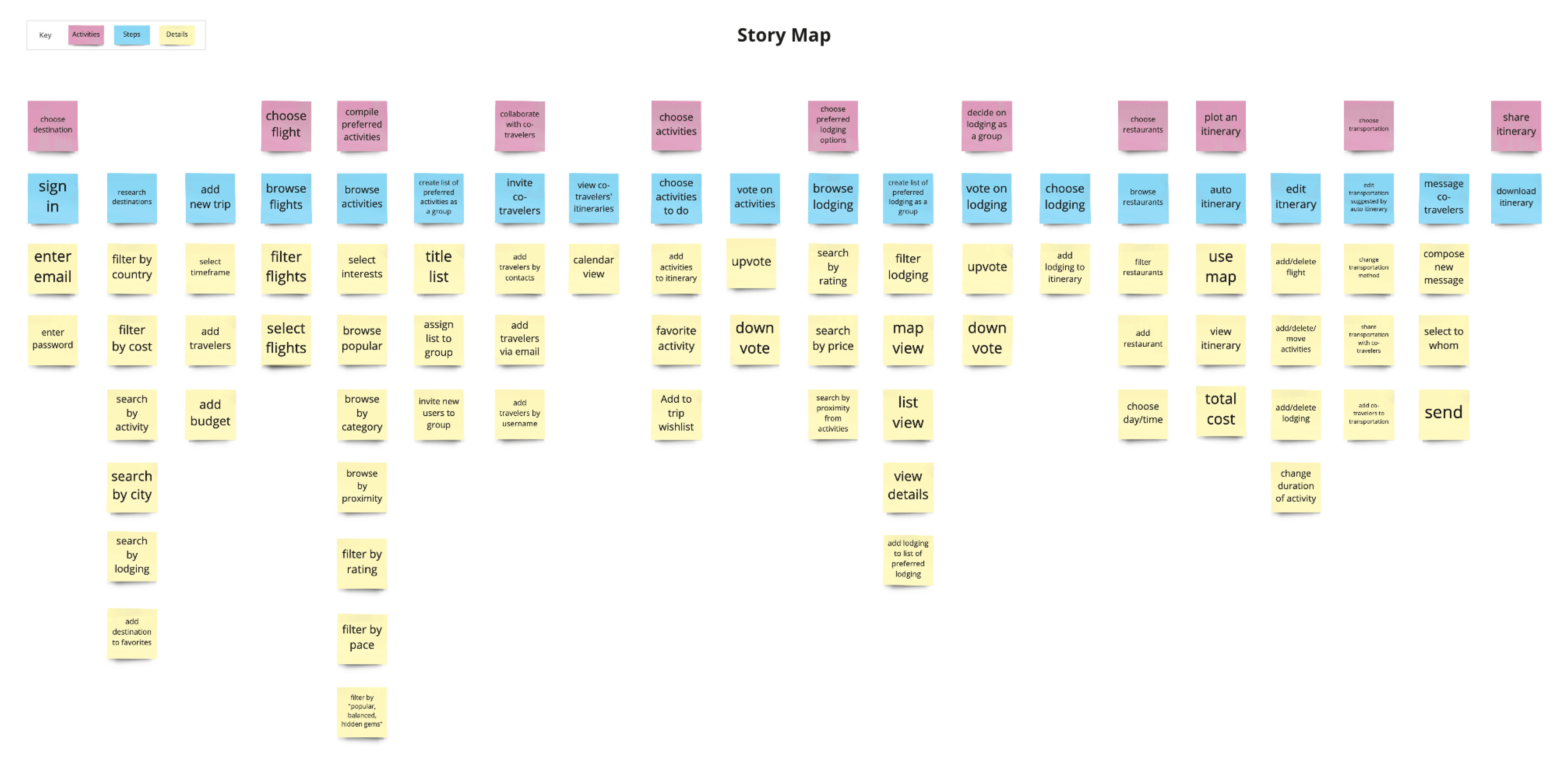
story mapping
design mapping
sketches
wireflows
sketch tests
high-fidelity prototype
usability testing
accessibility audit
heuristic audit
Key Insights
The interviews revealed a few clear patterns:
researching activities took too much effort
coordinating preferences across a group was difficult
users relied on too many disconnected tools
distance and timing made itinerary planning harder
getting people to commit was frustrating
We also noticed users were already creating their own systems by combining notes, group chat, docs, spreadsheets, and maps. That became the foundation of the product strategy.
Problem Statement
How might we design a collaborative, all-in-one solution for Airbnb users planning trips?
Strategy & Approach
The strategy came directly from research and competitive analysis.
We found that no existing product supported the full trip-planning workflow in the way users were already behaving. Some tools supported discovery, some supported scheduling, and some supported collaboration, but none brought those behaviors together clearly.
That gave the concept a strong direction: build around the real planning process, not just around travel browsing. We used scenario mapping, story mapping, and design mapping to define the most valuable features and the clearest MVP.
Information Architecture & Flows
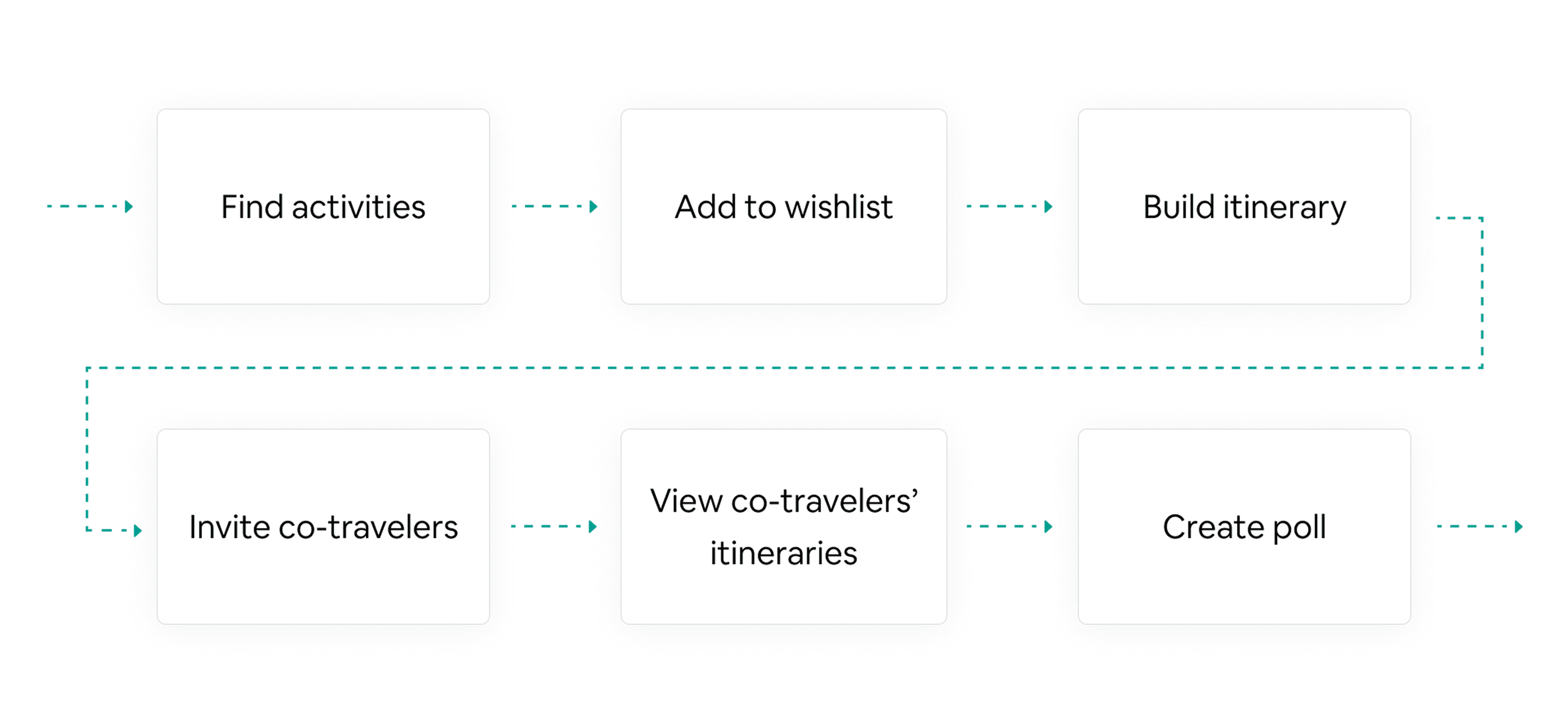
The experience was organized around a simple collaborative planning sequence:
find activities
save options
build an itinerary
invite co-travelers
compare itineraries
create polls to make decisions
The team identified four key flows for the prototype:
create new trip
view co-traveler’s itinerary
choose an activity
create a poll
My main focus was the co-traveler itinerary flow, which supported one of the strongest research needs: helping people understand not only their own plan, but everyone else’s too.
Design System & Visual Direction

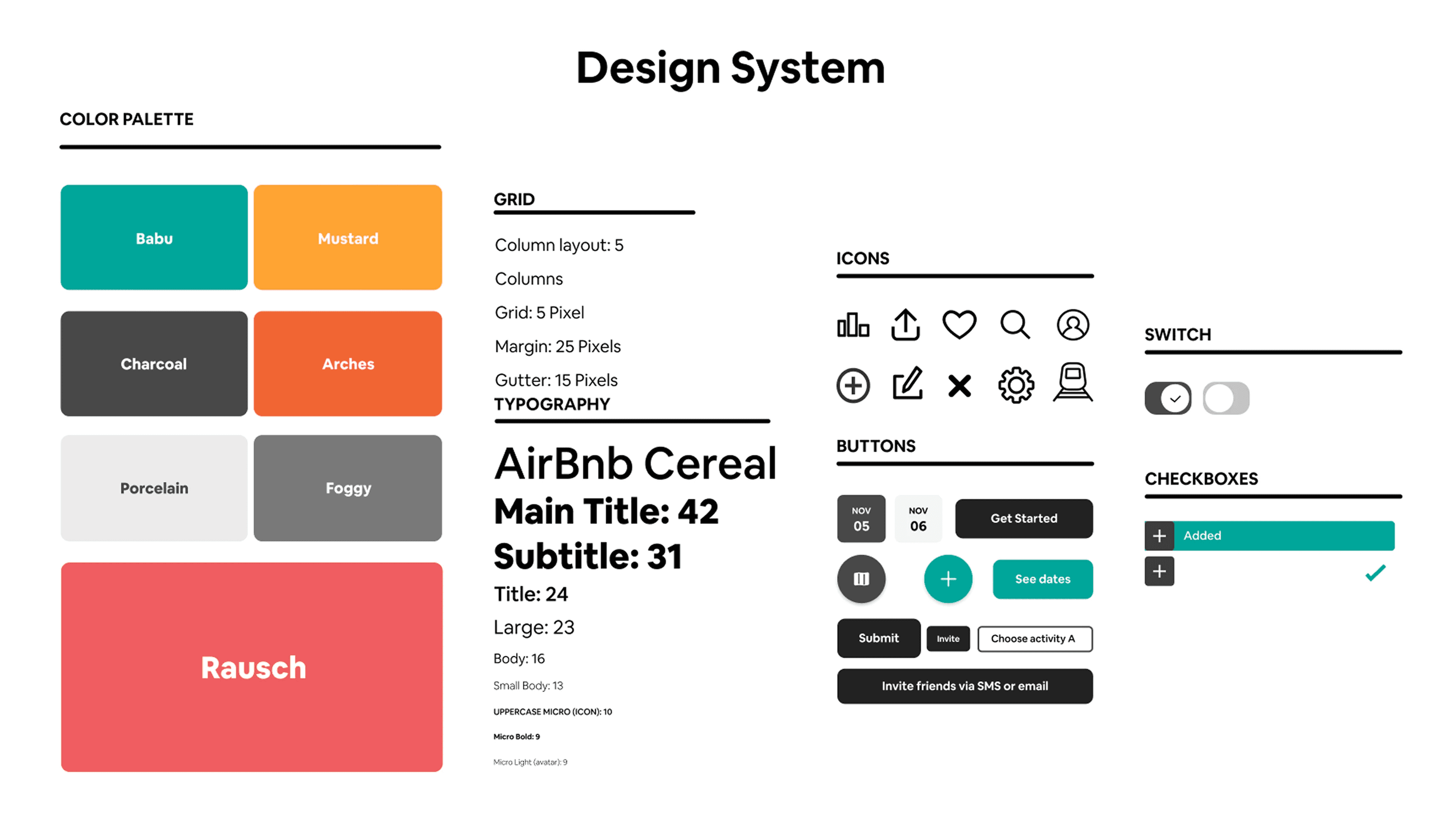
We created a lightweight design system to keep the prototype consistent across the team.
The visual direction was mobile-first, clean, and playful, with a travel-focused tone that still felt structured. The system included:
color palette
typography
grid
buttons
form controls
iconography
This was especially important because four designers were contributing to one product, and the prototype needed to feel cohesive.
Wireframes to Prototype
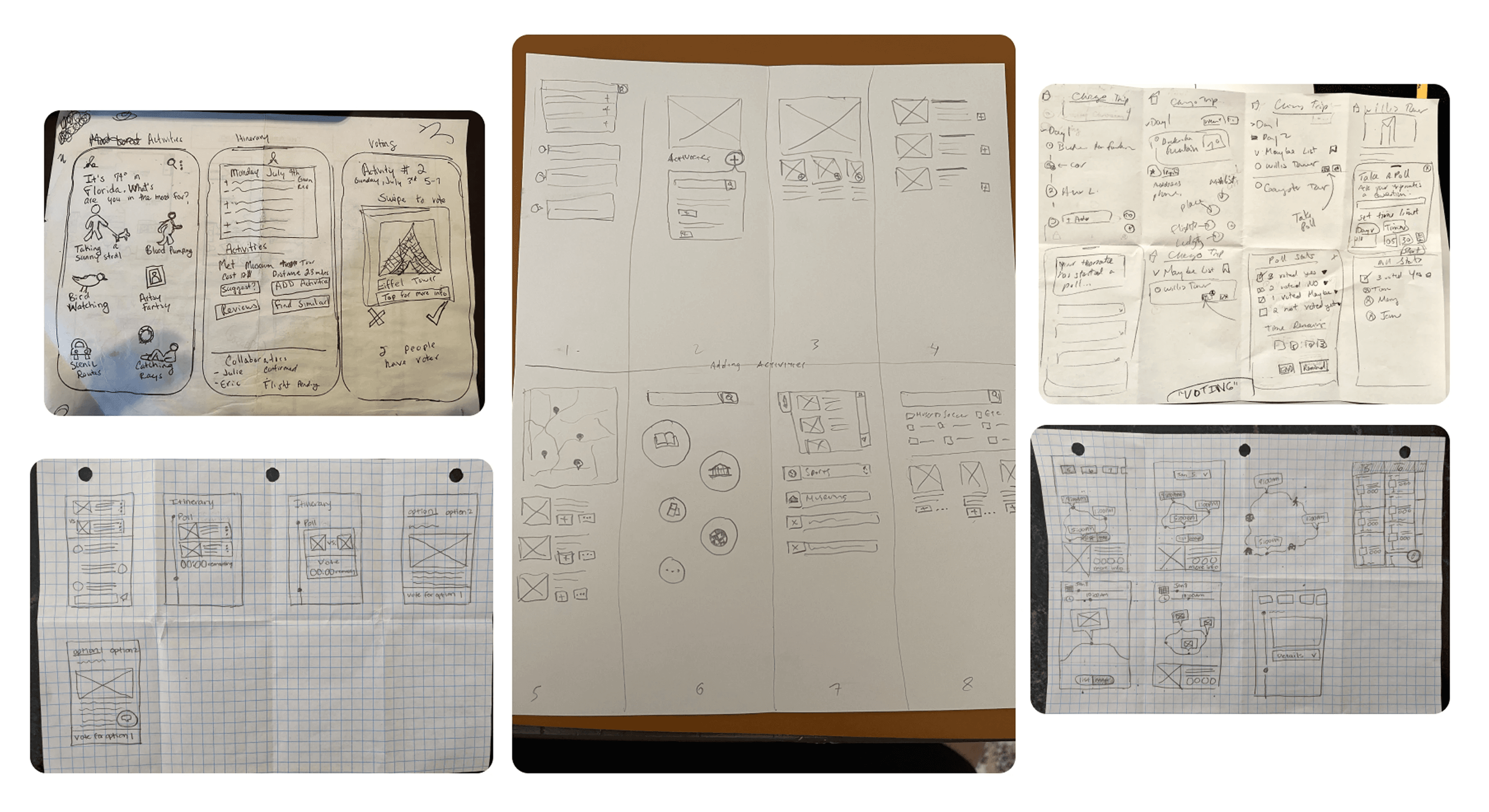
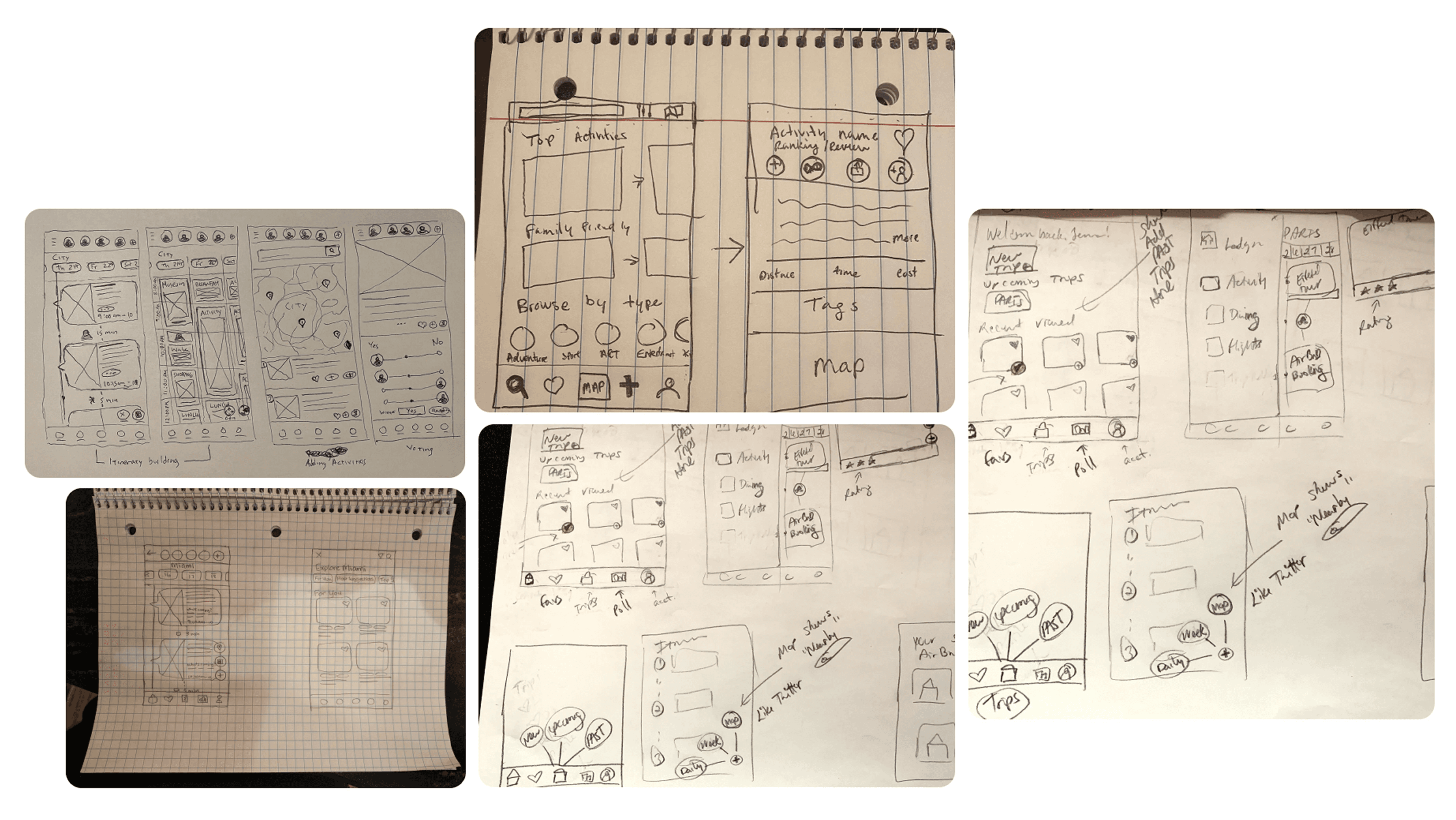
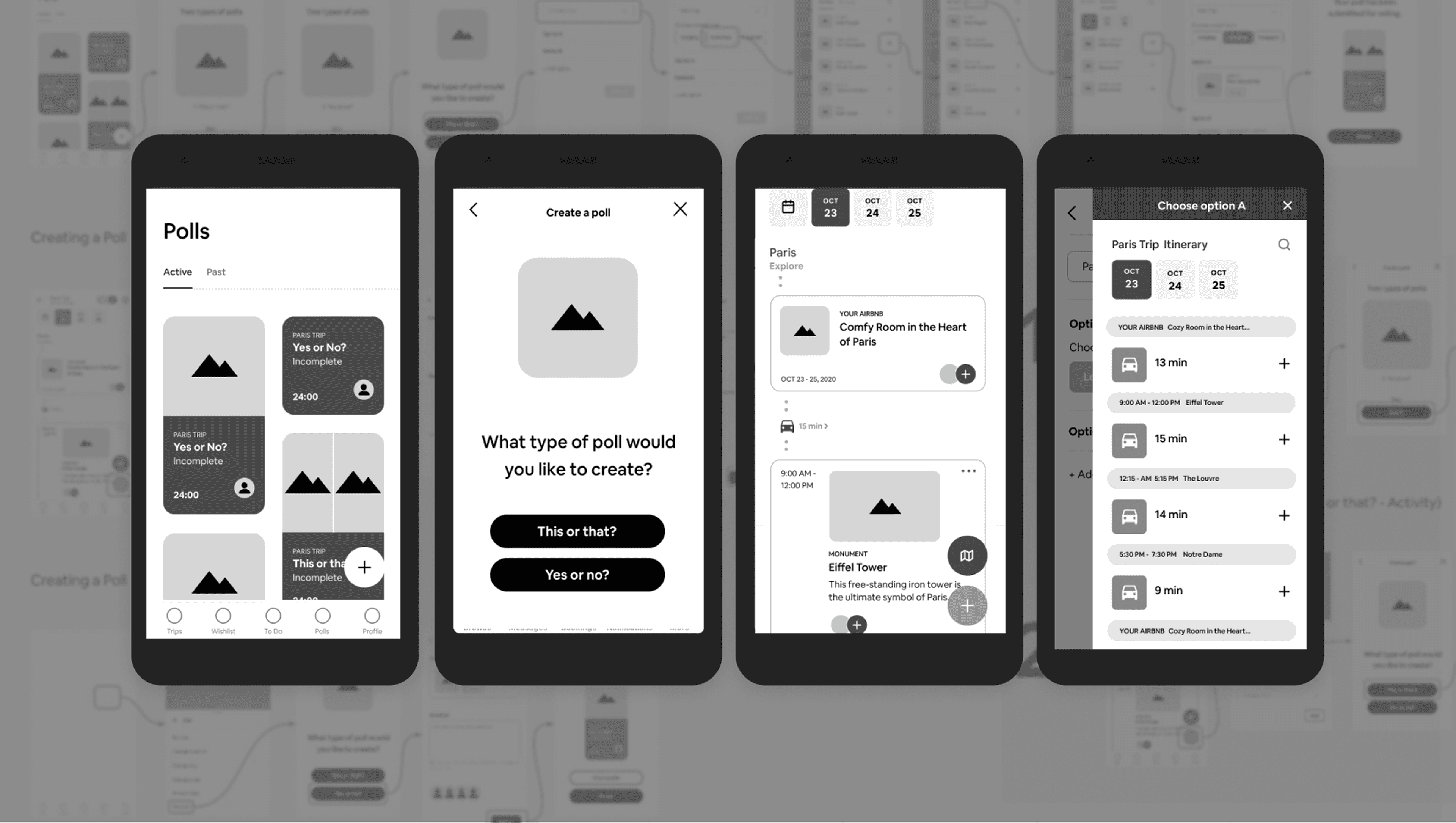
The team moved from sketches and design maps into wireflows and sketch testing to validate structure and interaction early.
From there, we built a high-fidelity prototype that covered the key planning and collaboration flows. The prototype included trip creation, itinerary views, activity selection, scheduling, and polls.
Because this was a concept product, the prototype became the main tool for testing whether the idea itself was useful and understandable.
Usability Testing & Iteration
We conducted 7 qualitative usability tests and used that feedback to refine the experience. These changes helped make the collaborative features feel more discoverable and useful.
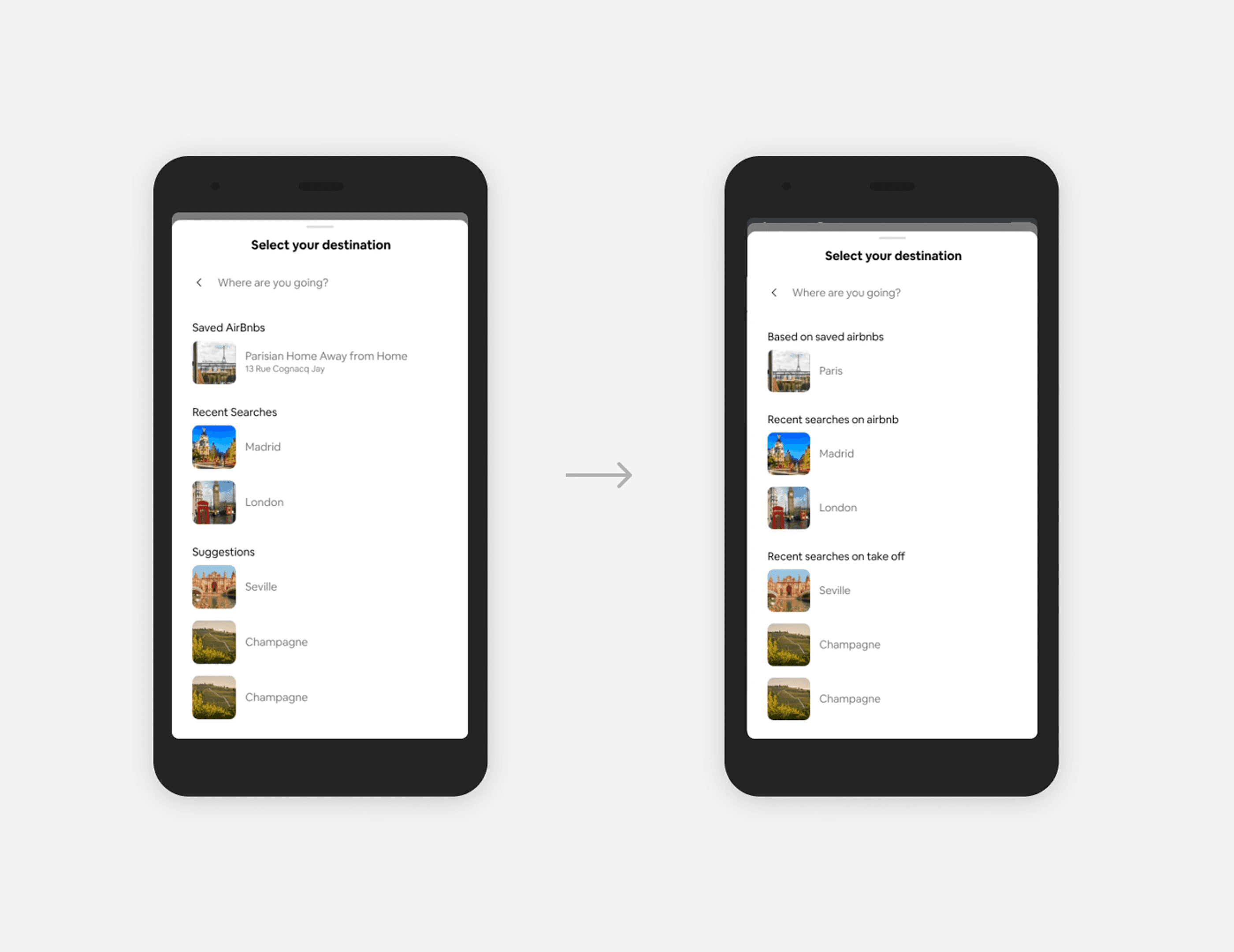
Problem: Users missed important cues during trip setup
Solution: Improved content relevance and made prompts more noticeable
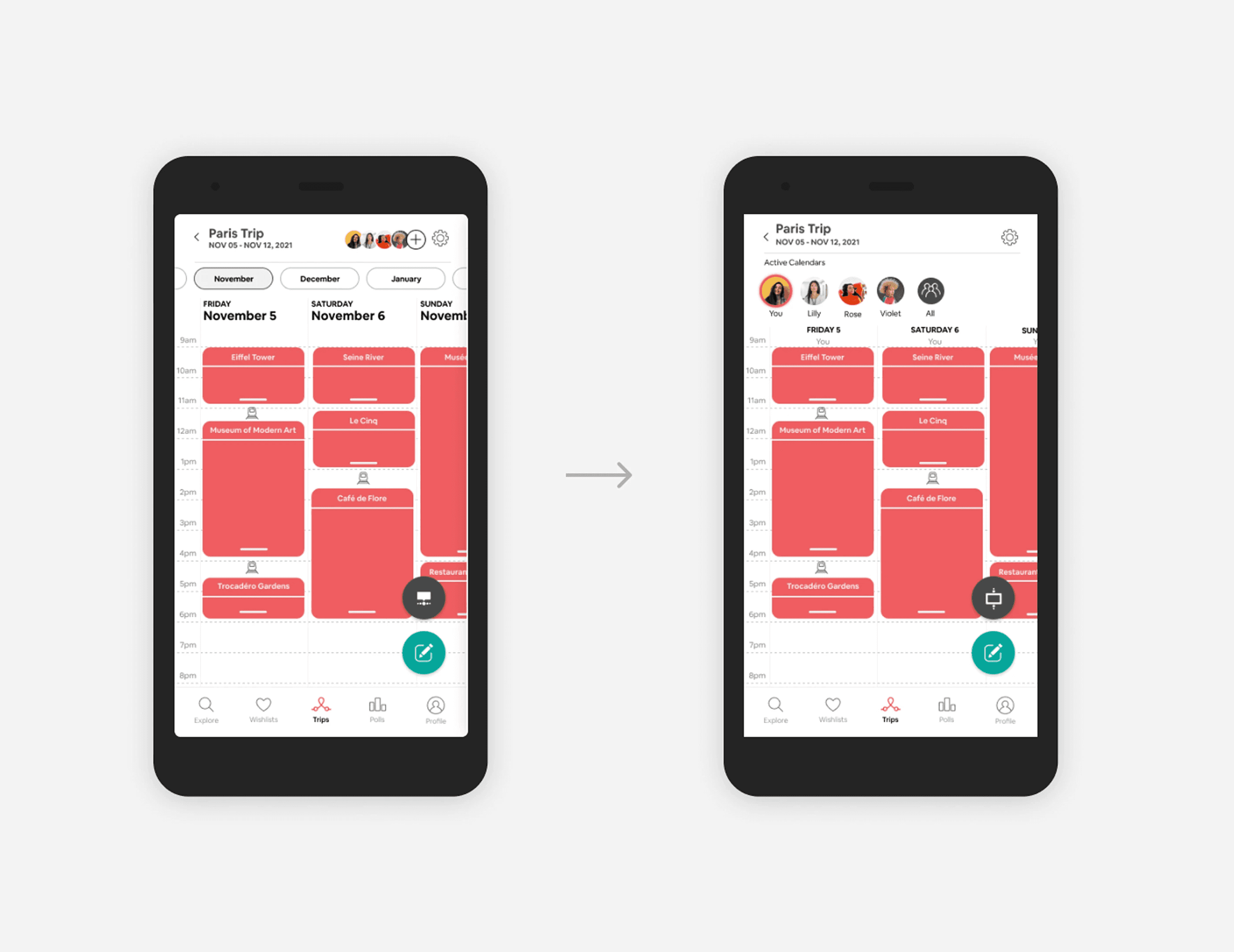
Problem: Users did not understand how to view other travelers’ itineraries
Solution: Made avatar-based entry points more visible and easier to understand
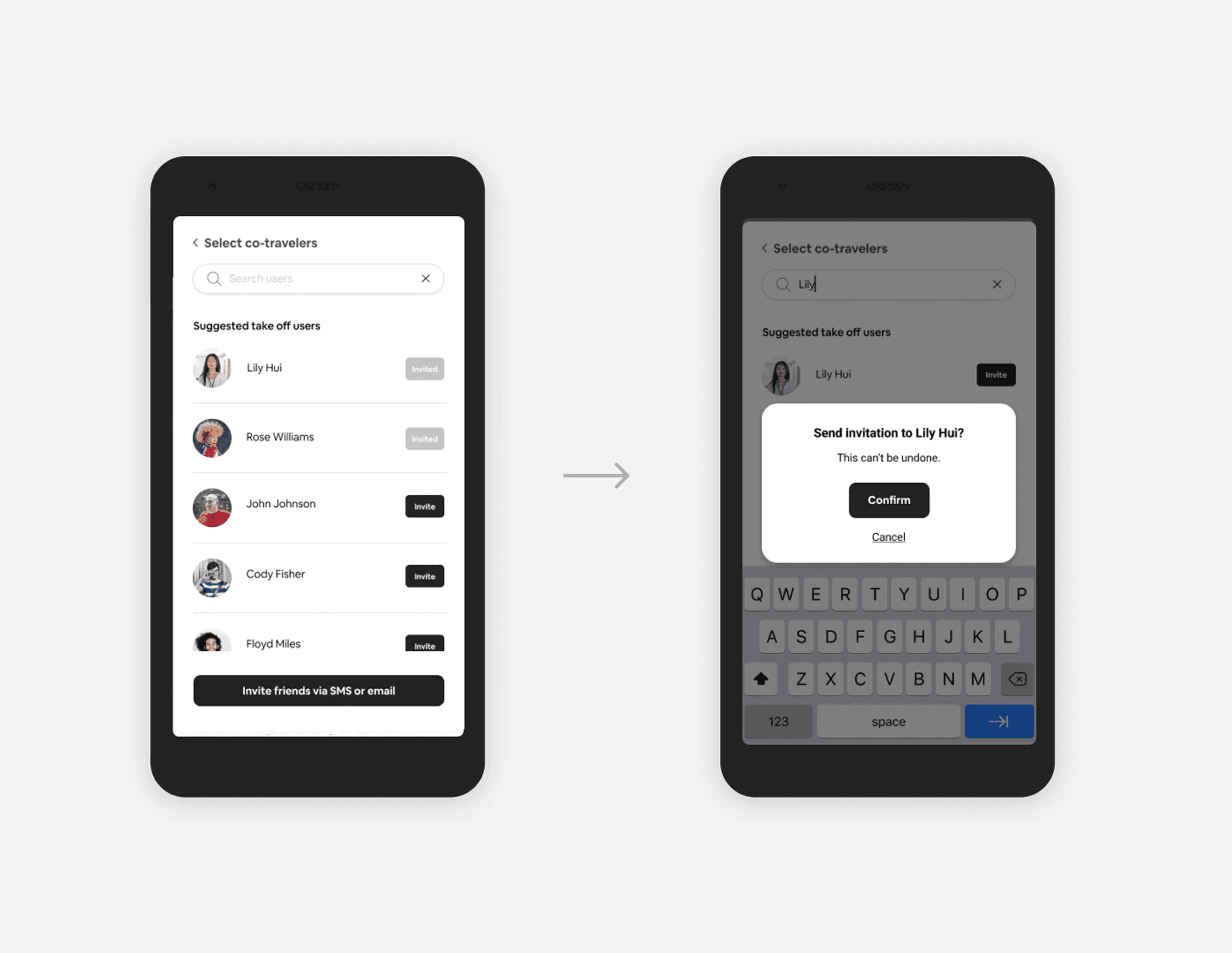
Problem: Users were unsure whether invitations had been sent
Solution: Added clearer confirmation feedback in the invite flow
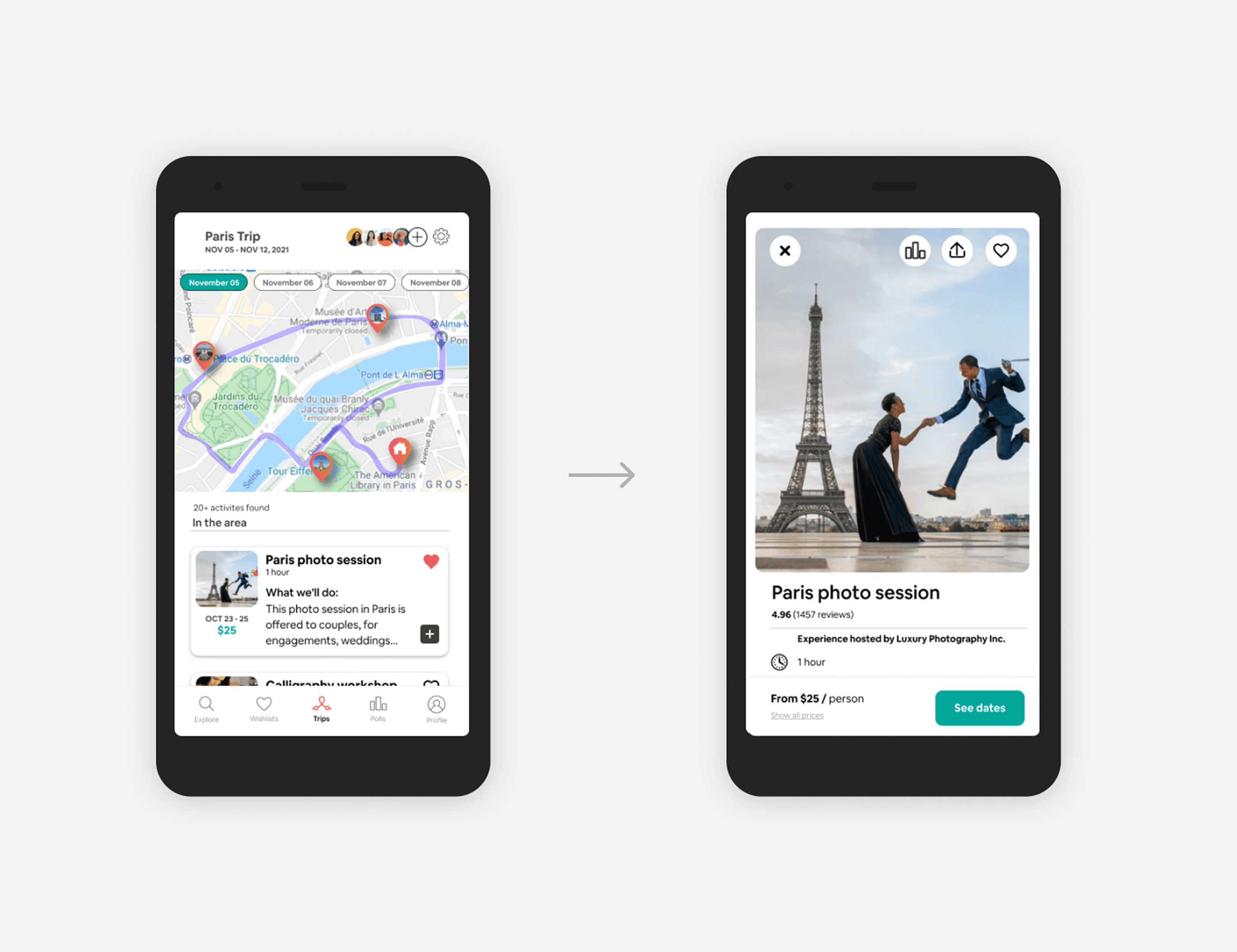
Problem: Users did not naturally think to use polls
Solution: Created clearer entry points into polls from activity pages so the feature felt more connected to decision-making
Outcome & Impact
The concept tested well overall, especially in the areas of collaboration and group decision-making.
Participants responded most positively to:
the polls feature, because it gave quieter travelers a way to contribute
the ability to see both your own itinerary and other people’s
the activities page
the idea that this could reduce conflict and friction during group planning
The strongest takeaway was that the concept resonated most when it solved real coordination problems, not just scheduling problems.
Reflection & Learnings
Challenges
Working within a 7 week part-time timeline
Designing collaboratively with 3 other designers
Balancing scope against a broad problem space
Defining an MVP for a feature-rich travel concept
What I Learned
Trip planning is as much a collaboration problem as an organization problem
Designing around existing user behaviors leads to stronger concepts
Shared team ownership works best when responsibilities are clearly defined
Narrower audiences often lead to sharper product decisions
Next Steps
Build out more of the app beyond the MVP
Expand activity and destination browsing
Define more poll and activity variations
Explore wishlist, checklist, and messaging features
Run card-sorting studies to refine categories and information architecture
If you want, I can also make the Tax Transition reflection section match this exact format even more tightly.