Amazon Price Monitoring is a product concept and research study exploring how a clearer price-tracking experience could improve the Amazon shopping flow, especially around items saved in the cart.
//Role
UX Designer
//Duration
16 weeks, part-time
//Context
MICA Masters of Professional Studies in UX Design
//Industry
GovTech / Immigration
The project started from a simple gap in the current experience. Amazon already surfaced cart price changes, but the feature did not feel visible, memorable, or useful enough to truly support price-aware shopping.
Problem & Opportunity
The Problem
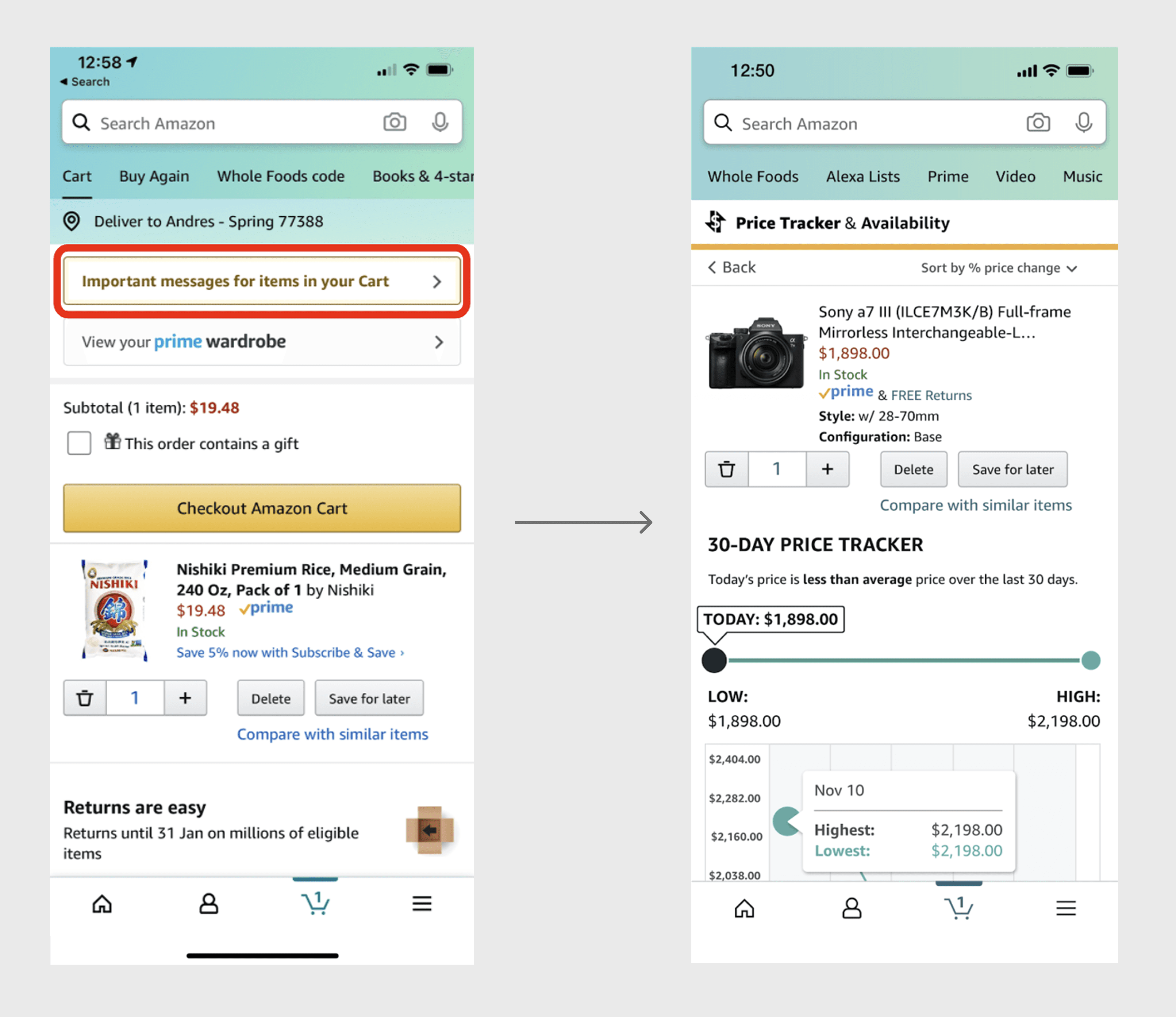
Shoppers care a lot about getting the best deal, but Amazon’s existing cart messaging around price changes felt too passive and easy to miss.
Many users did not strongly recognize or remember the feature, and some relied on outside tools instead. That meant Amazon was not fully supporting a real user need inside its own product.
The Opportunity
There was an opportunity to turn a buried cart message into a clearer, more intentional feature.
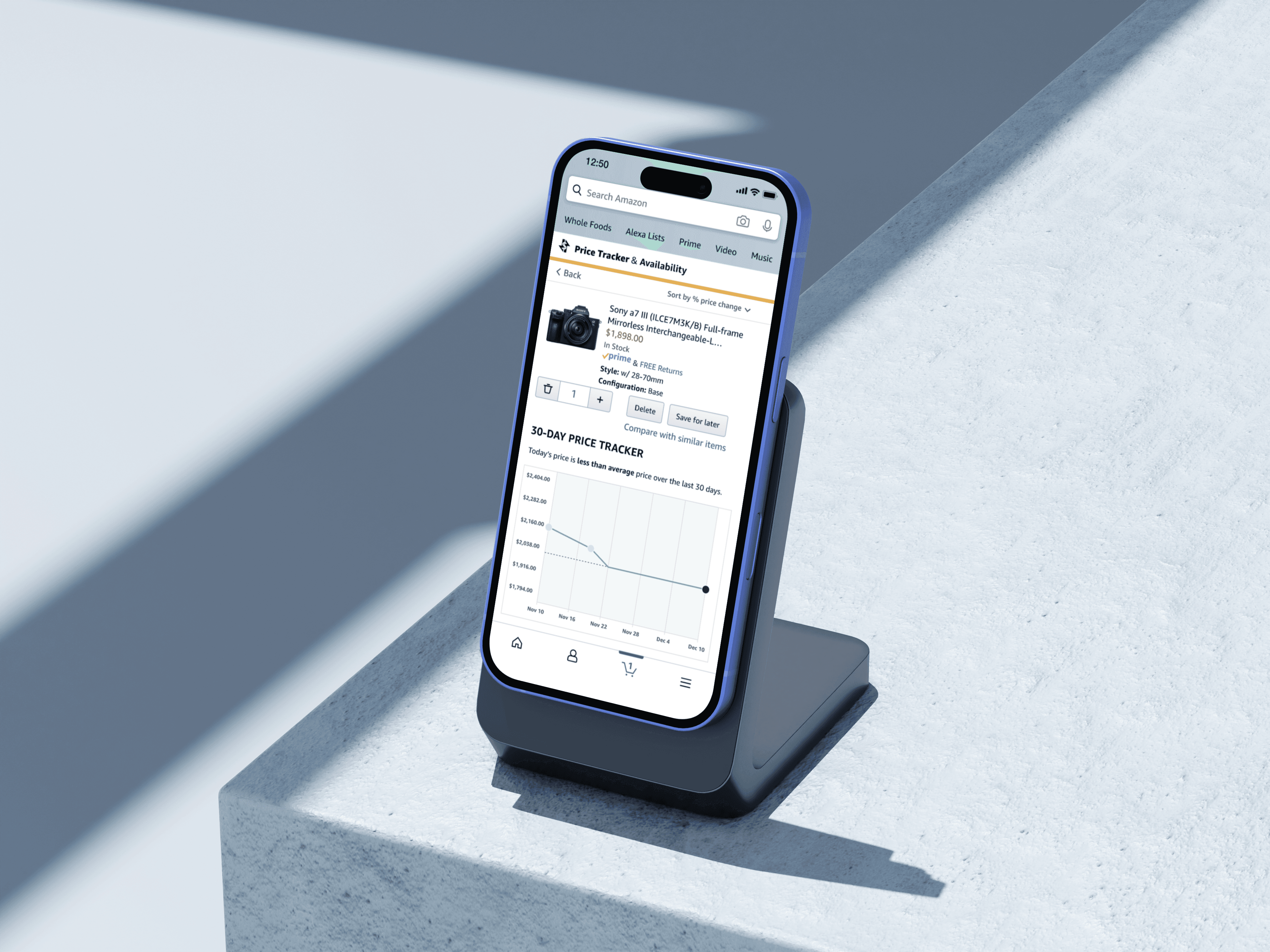
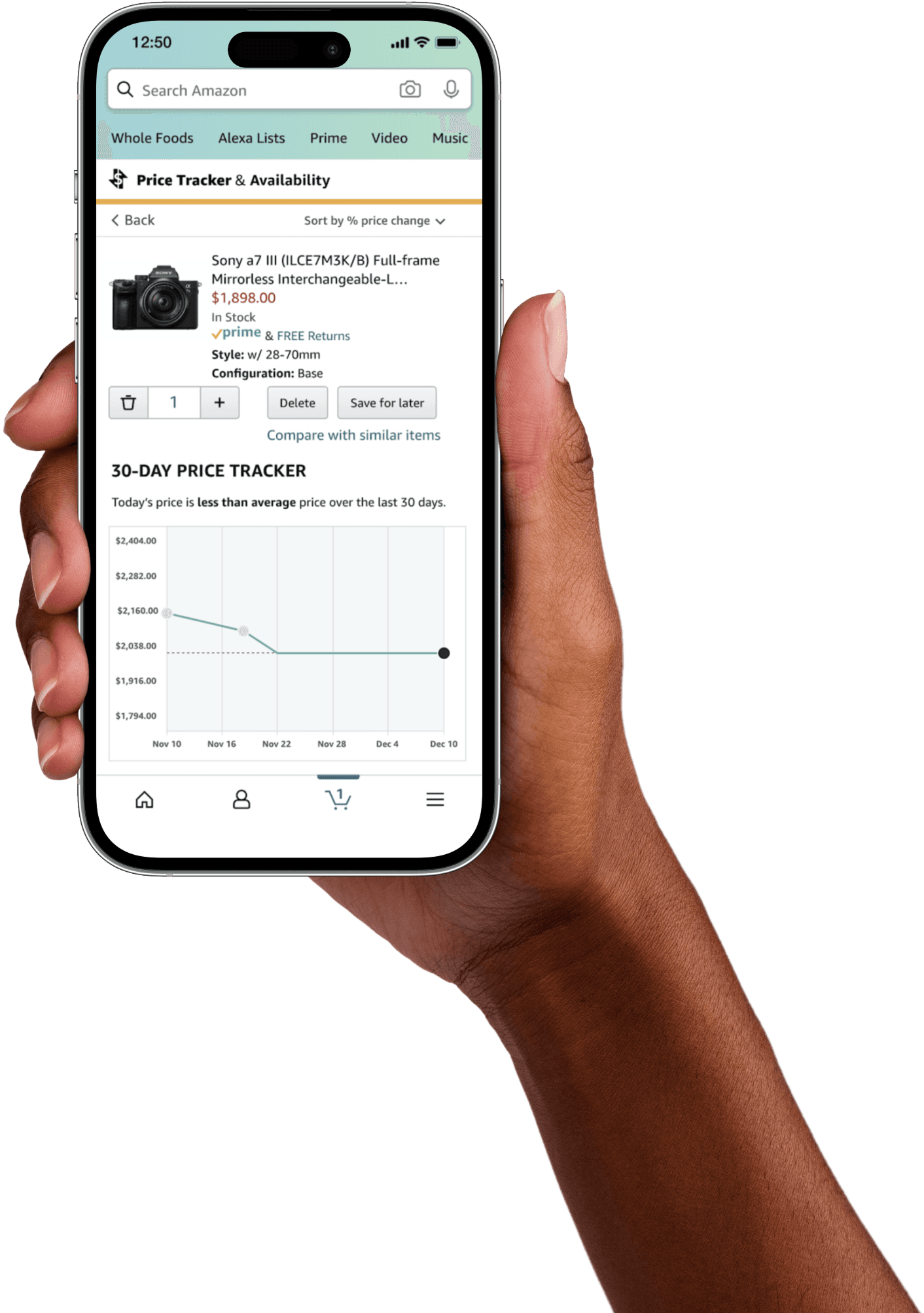
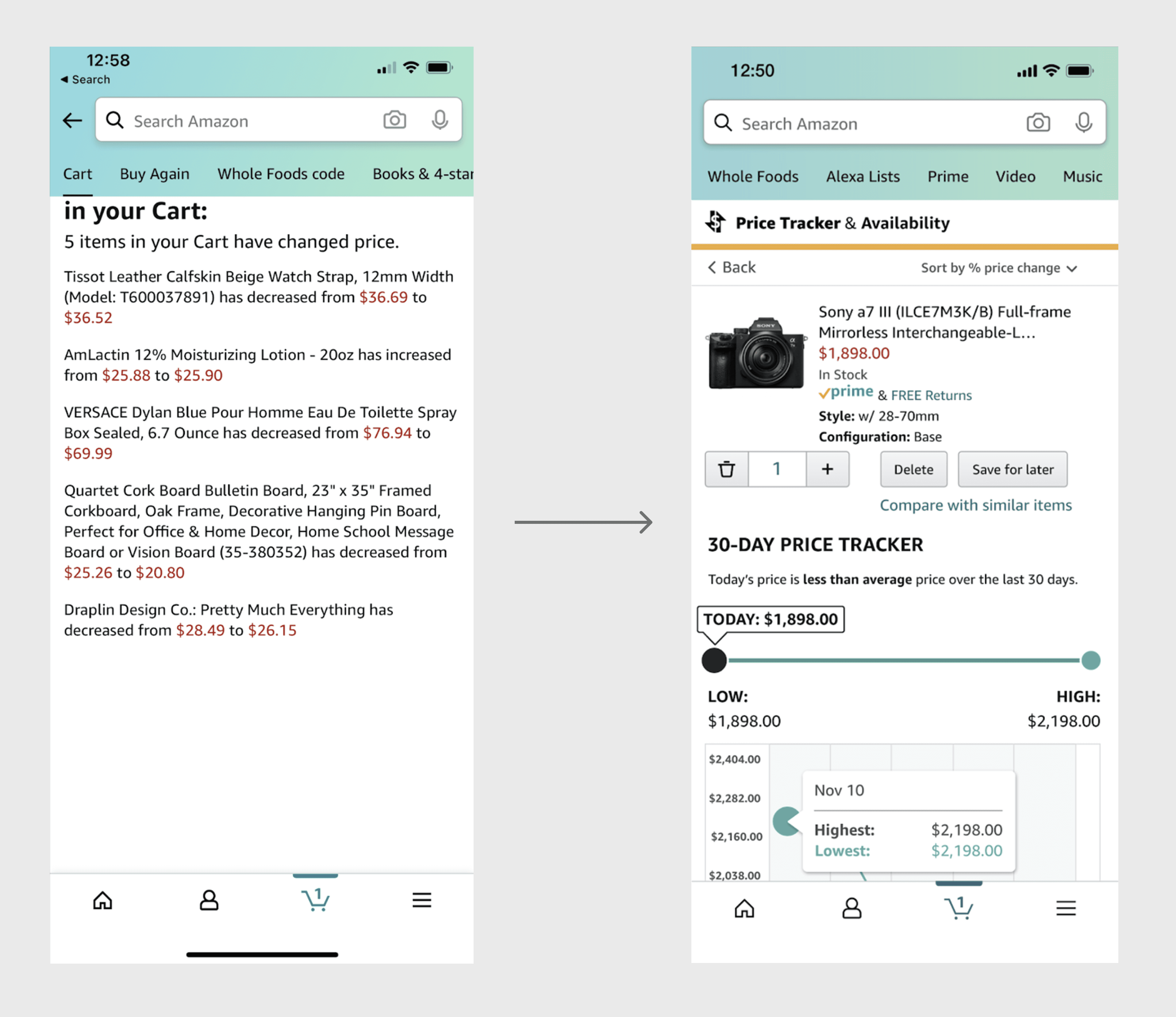
Instead of treating price changes like a small alert, the concept reframed the experience as Price Tracker & Availability, giving users a more visible way to notice price drops, compare changes, and make better purchase decisions without leaving Amazon.
Goals & Success Criteria
The project aimed to explore a few core questions:
Would a clearer price-monitoring feature help shoppers make more informed decisions?
Would it improve the usefulness of the Amazon cart experience?
Could it create value for both shoppers and sellers?
Because this was a concept project, success was measured through research findings, usability testing, and perceived usefulness rather than live metrics.
Context & Constraints
This was an academic project completed with limited time, budget, and no engineering support.
The research included:
6 interviews total
$90 budget
participants across the U.S., Venezuela, and Costa Rica
4 usability tests, conducted in Spanish
Because of those constraints, the project stayed tightly focused on one clear opportunity rather than trying to redesign Amazon more broadly.

Users & Research

Target Users
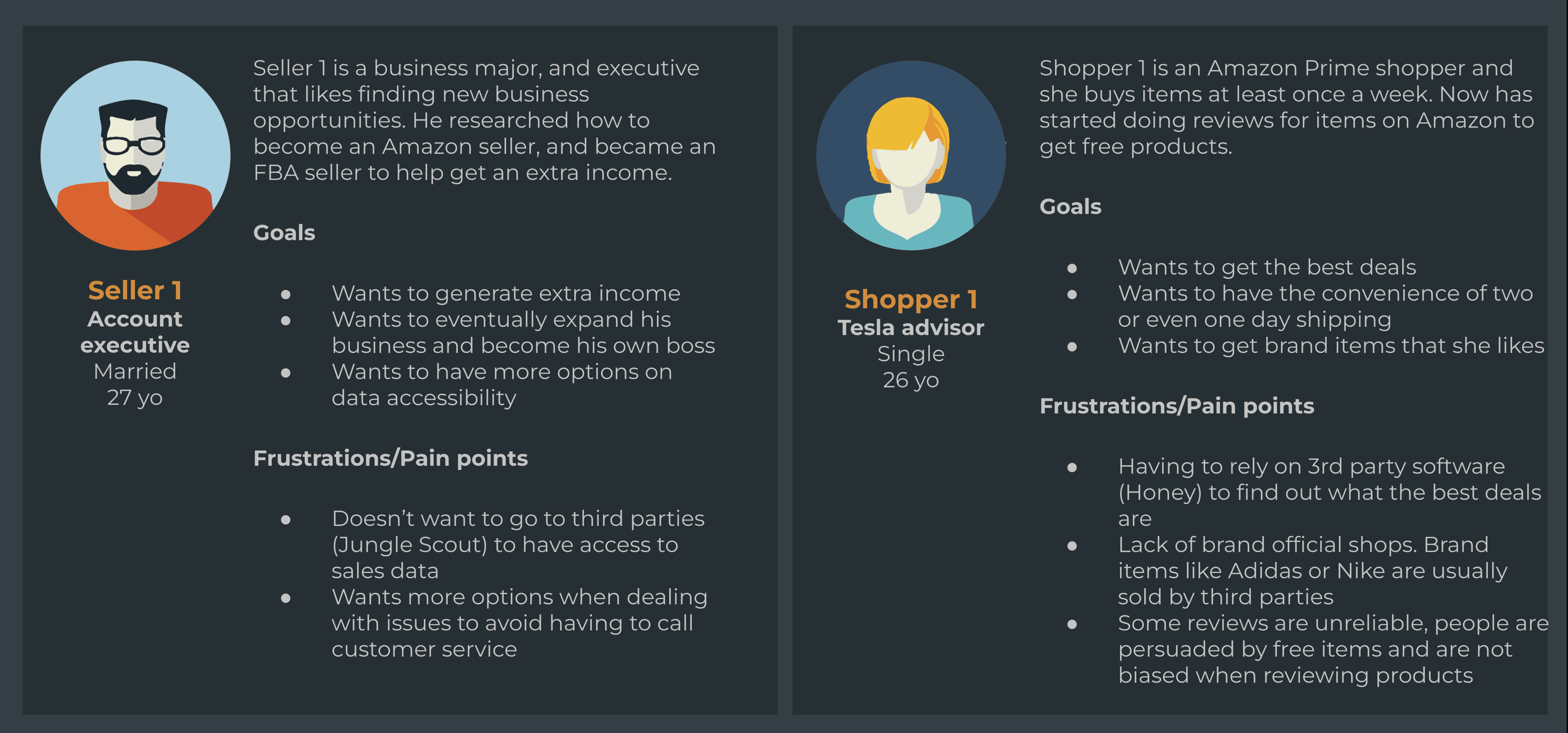
The study focused on two groups:
Amazon shoppers, especially users who care about deals and timing
Amazon sellers, who may benefit when discounted items are surfaced more clearly
Research Approach
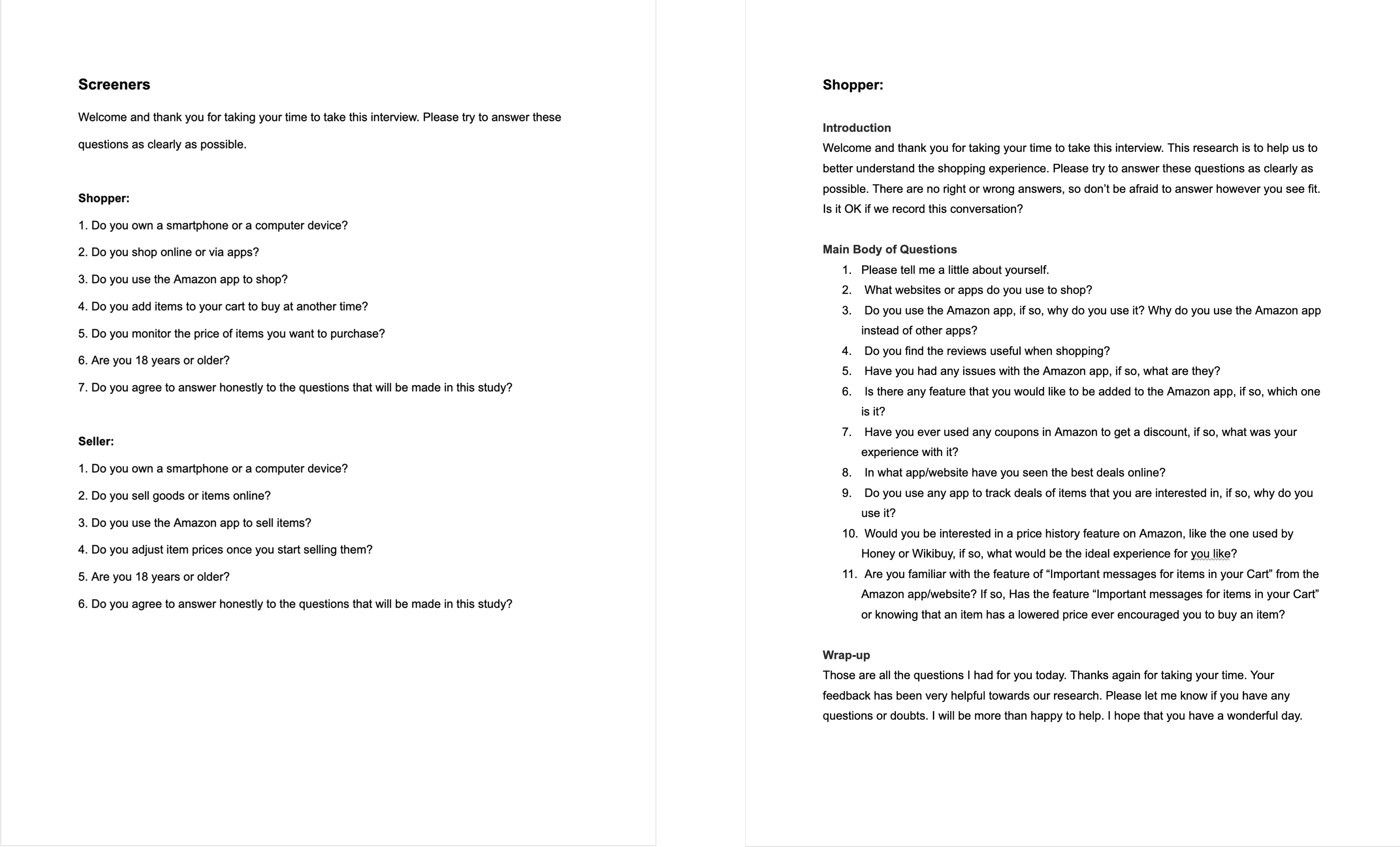
The project used qualitative interviews and later usability testing.
The interviews explored:
how people shop
why they use Amazon
how much reviews matter
whether they use coupons or deal tools
whether they track prices outside Amazon
awareness of Amazon’s current price-change messaging
Key Insights
A few themes stood out:
shoppers cared about getting the best deal
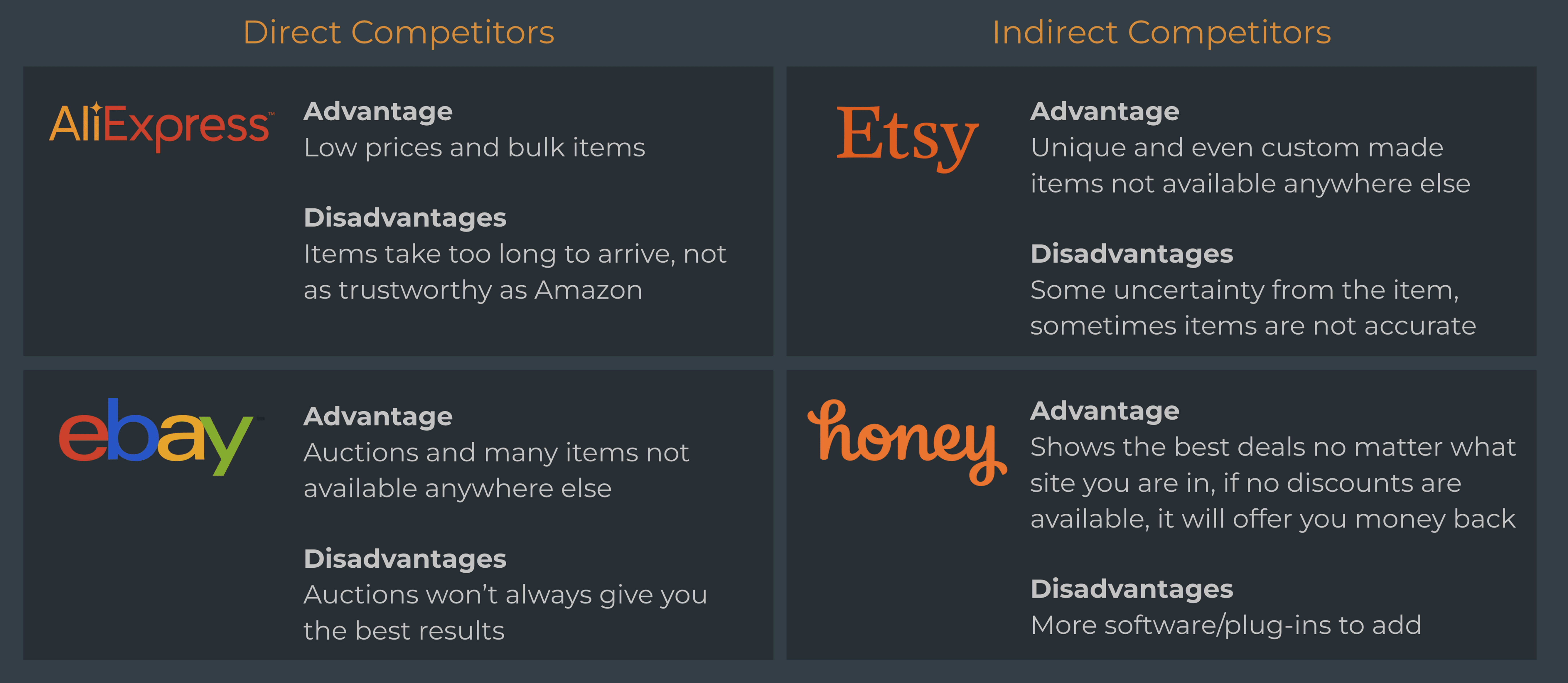
some already used outside tools like Honey
Amazon’s reliability and convenience were major reasons people used it
reviews strongly influenced purchase decisions
the current cart message feature was not memorable by name
sellers were generally supportive of discounts if they increased sales
Problem Statement
How might we make Amazon’s price change experience more visible and useful so shoppers can make better decisions without relying on third-party tools?

Strategy & Approach
The strategy was to strengthen a behavior that already existed rather than inventing a new one.
Users were already:
leaving items in their cart
waiting for prices to change
checking deals manually
using outside tools to track discounts
So instead of proposing a separate deal product, the concept focused on improving the existing cart flow and making price tracking feel like a native part of shopping on Amazon.
Information Architecture & Flows
The cart became the main entry point, since that is where users already return when they are comparing, waiting, or deciding whether to buy.
The core flow evolved into:
user sees a clearer price-tracking module in the cart
user reviews which items changed in price
user sorts or scans items by price shift
user opens product-level price details
user reviews recent price history before deciding to buy
This kept the feature close to normal shopping behavior instead of turning it into a separate tool.
Design System & Visual Direction
The visual direction stayed close to Amazon’s existing mobile UI so the concept would feel believable and native to the platform.
The design preserved familiar patterns like:
cart structure
product cards
Amazon-style hierarchy and spacing
The concept added only what was necessary, including a clearer cart module, more visible pricing details, and a lightweight price-history chart where it added real value.
Wireframes to Prototype
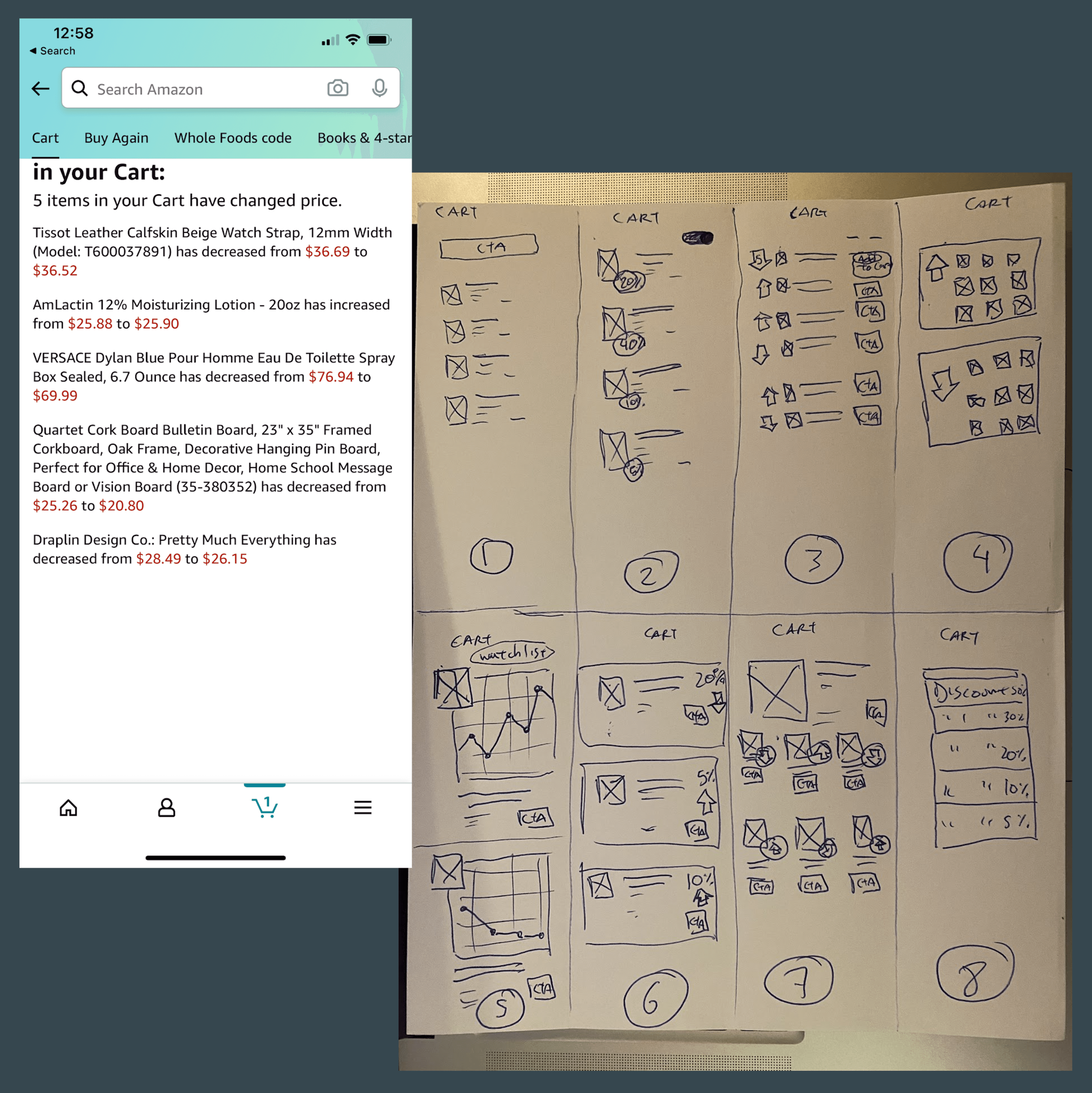
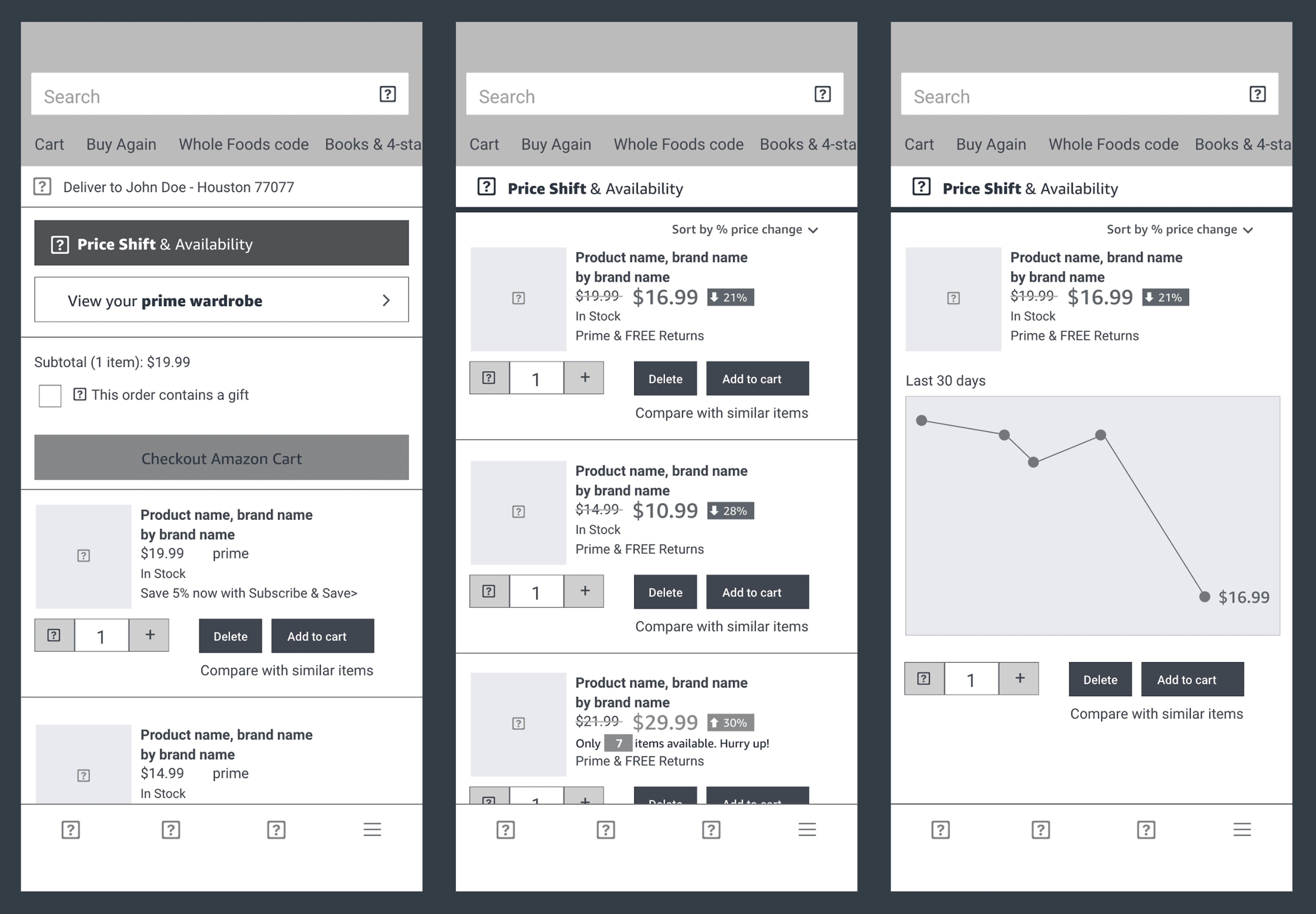
The project moved from hand sketches into wireframes and then into more refined mobile mockups.
The flow explored:
surfacing changed-price items in the cart
showing current and previous prices more clearly
allowing sorting by price change
opening a product-level price history view
The final concept introduced a cleaner 30-day price tracker with price summary markers like current, average, high, and low.
Usability Testing & Iteration
User testing showed that the concept was valuable, but visibility and integration mattered. The concept tested positively overall because it addressed a real user behavior in a way that still felt natural inside Amazon.
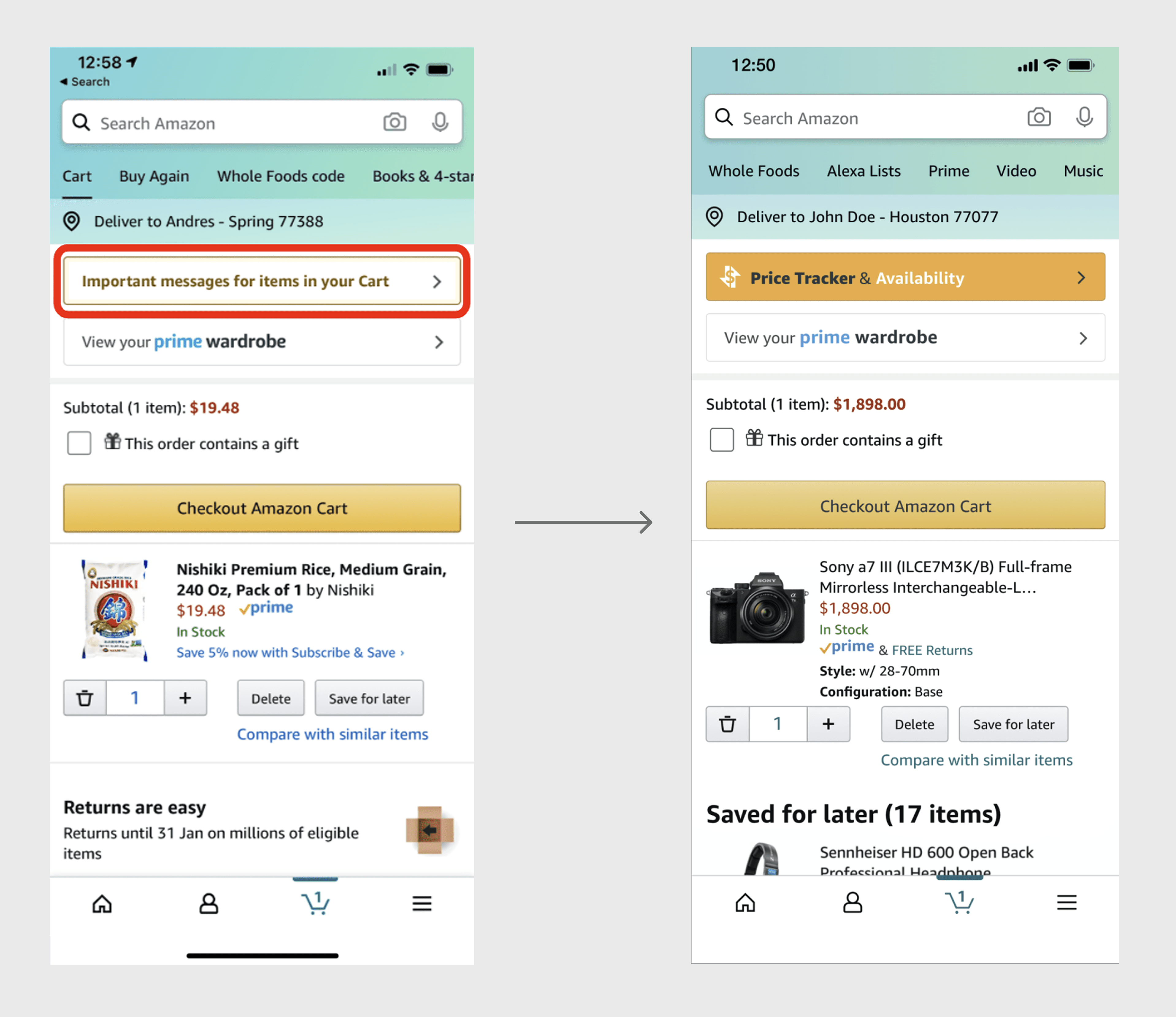
Problem: Amazon’s existing price-change messaging was too passive
Solution: Reframed it as a more visible, named feature instead of a buried cart message
Problem: Users often relied on third-party deal tools
Solution: Brought more of that value directly into the Amazon experience
Problem: Users needed more context than a one-time price alert
Solution: Added price history, sorting, and product-level tracking details
Outcome & Impact
he project showed clear demand for a better-integrated price-monitoring experience.
The key takeaway was that this feature did not feel like a random add-on. It felt like a natural improvement to an existing shopping behavior. Shoppers wanted clearer price visibility, and sellers were generally comfortable with discounts if they increased purchases.


Reflection & Learnings
Challenges
small research pool
limited budget
no development team
limited timeline
COVID-related constraints
What I Learned
users care about deal visibility, but the feature has to feel built into the main shopping flow
naming and placement matter as much as the feature itself
even a small utility can improve trust and decision-making if it solves a real need clearly
testing structure matters, especially when evaluating a feature tied to existing habits
Next Steps
refine the cart-level feature further
expand the price-history interaction
test how much pricing history users actually need
explore alerts, saved items, and deeper sorting options
validate the concept with a larger testing group