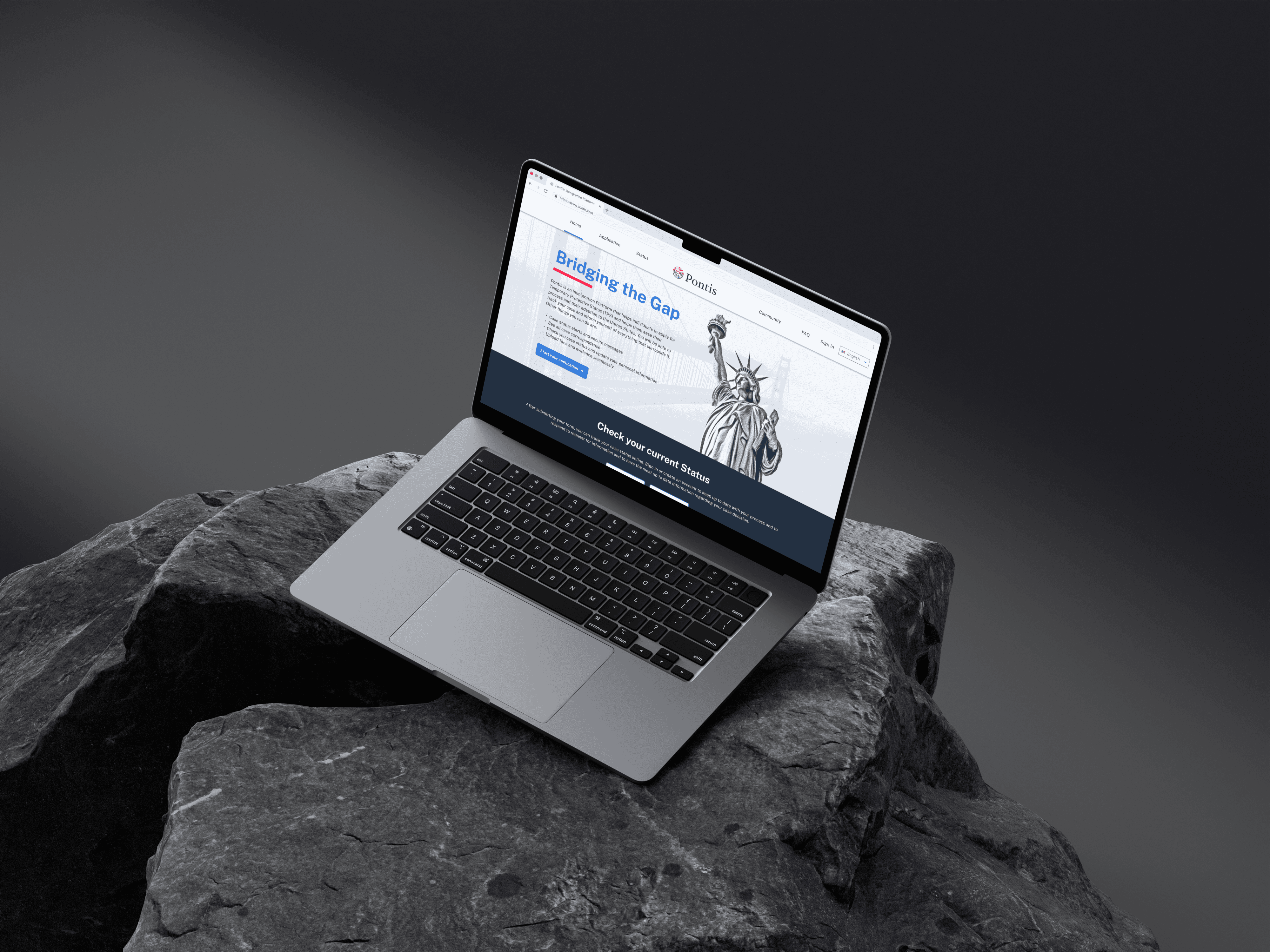
Its an immigration platform designed to help Venezuelan refugees understand, apply for, and track Temporary Protected Status (TPS) in the United States.
//Role
Lead UX Designer
//Duration
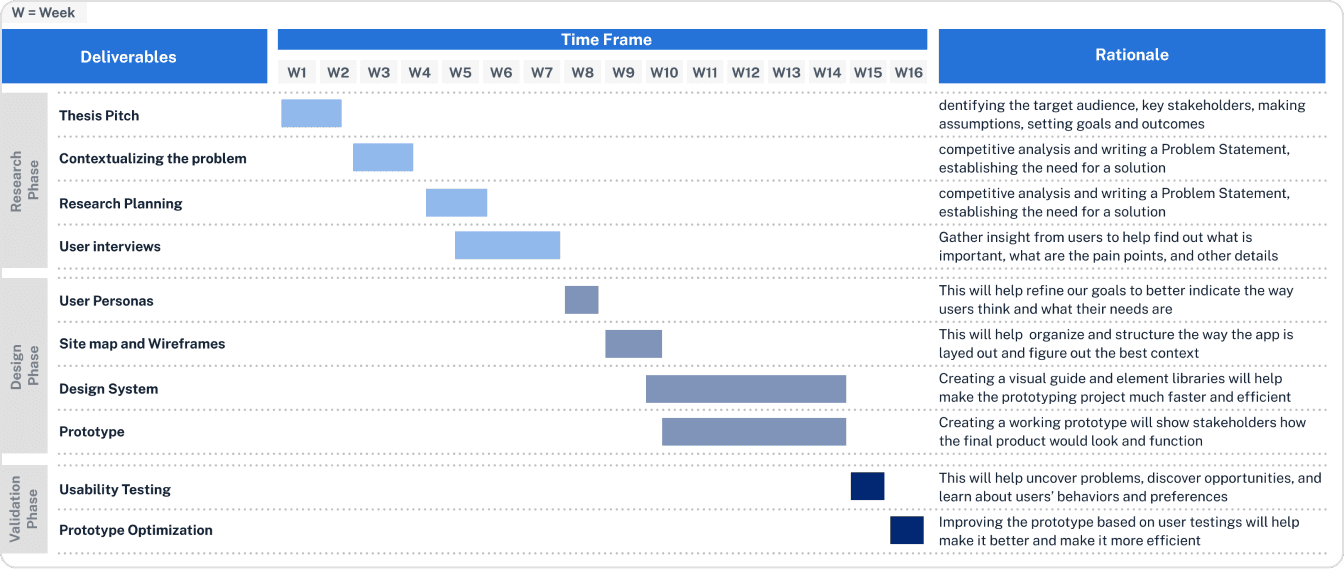
16 weeks, part-time
//Context
MICA Masters of Professional Studies in UX Design
//Industry
GovTech / Immigration
I led the project end to end, including user interviews, research, information architecture, design, prototyping, and usability testing.
Problem & Opportunity
The Problem
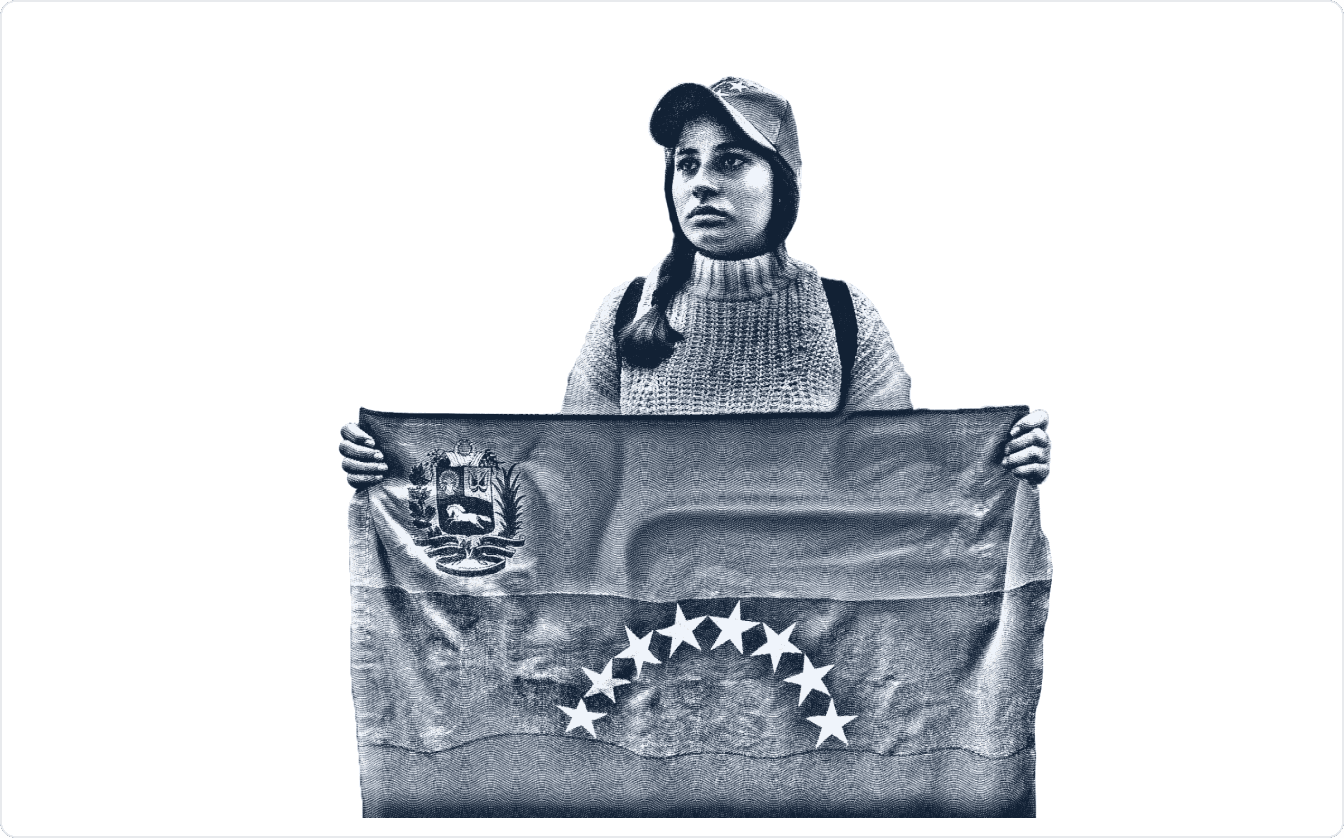
Venezuela has experienced a mass exodus of over 5.6 million people due to political and economic instability. The United States became one of the primary destinations for Venezuelan refugees, and in 2021, TPS was granted to over 300,000 individuals.
Despite this, the TPS application process remains complex, unfamiliar, and intimidating. Many applicants rely on intermediaries due to confusing forms, language barriers, and lack of trustworthy guidance, often at a high financial cost.
The Opportunity
There was an opportunity to create a centralized, trustworthy platform that could guide users through the TPS process, reduce reliance on intermediaries, and help immigrants better integrate into life in the United States.
Goals & Success Criteria
Make the TPS application process easier to understand and complete
Reduce confusion, anxiety, and dependency on intermediaries
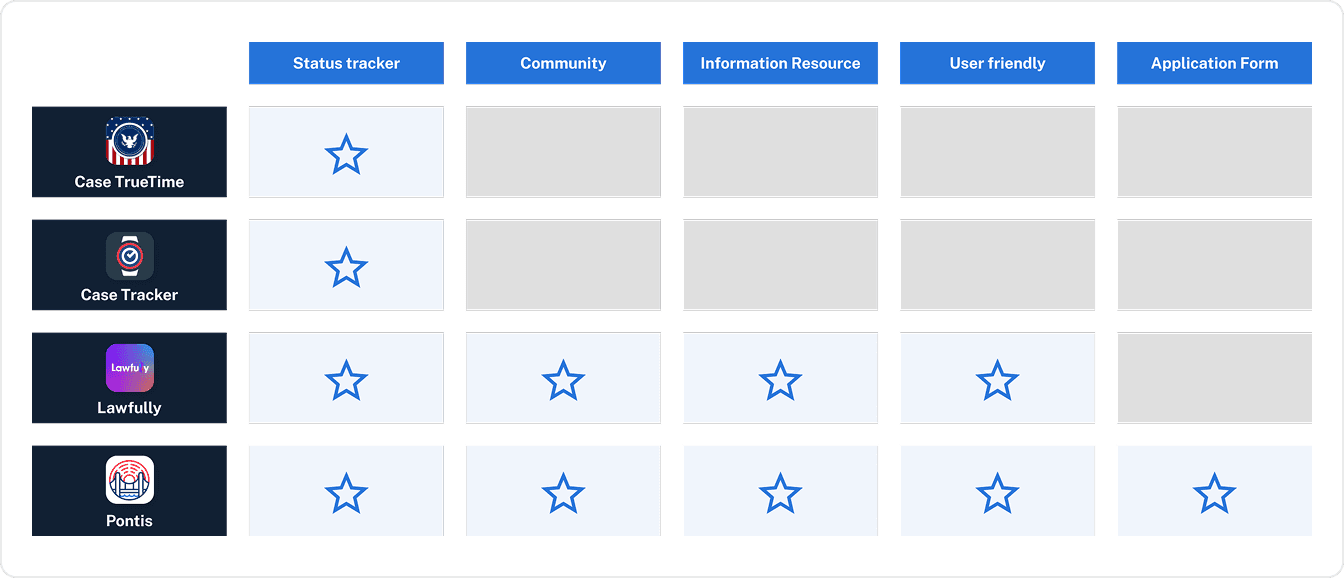
Centralize reliable information, application tracking, and community support
Create a product that respects users’ financial and emotional constraints
Success would be measured qualitatively through clarity, confidence, and perceived ease of use.
Context & Constraints
This was a class project completed alongside a full-time job. The scope was intentionally ambitious, but time, access to users, and the emotional sensitivity of the subject matter introduced real constraints.
Additionally, the target audience was niche, limiting the pool of available participants for research and testing.
Users & Research
Target Users
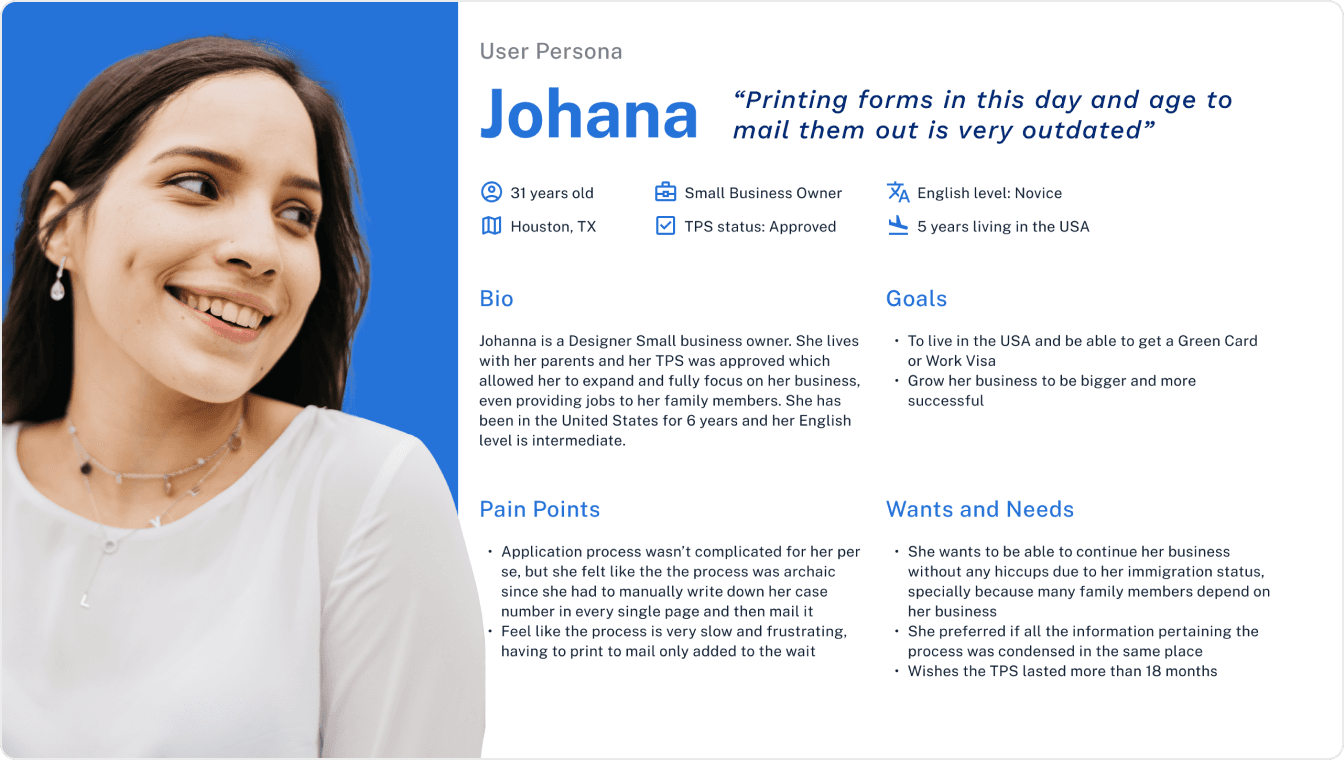
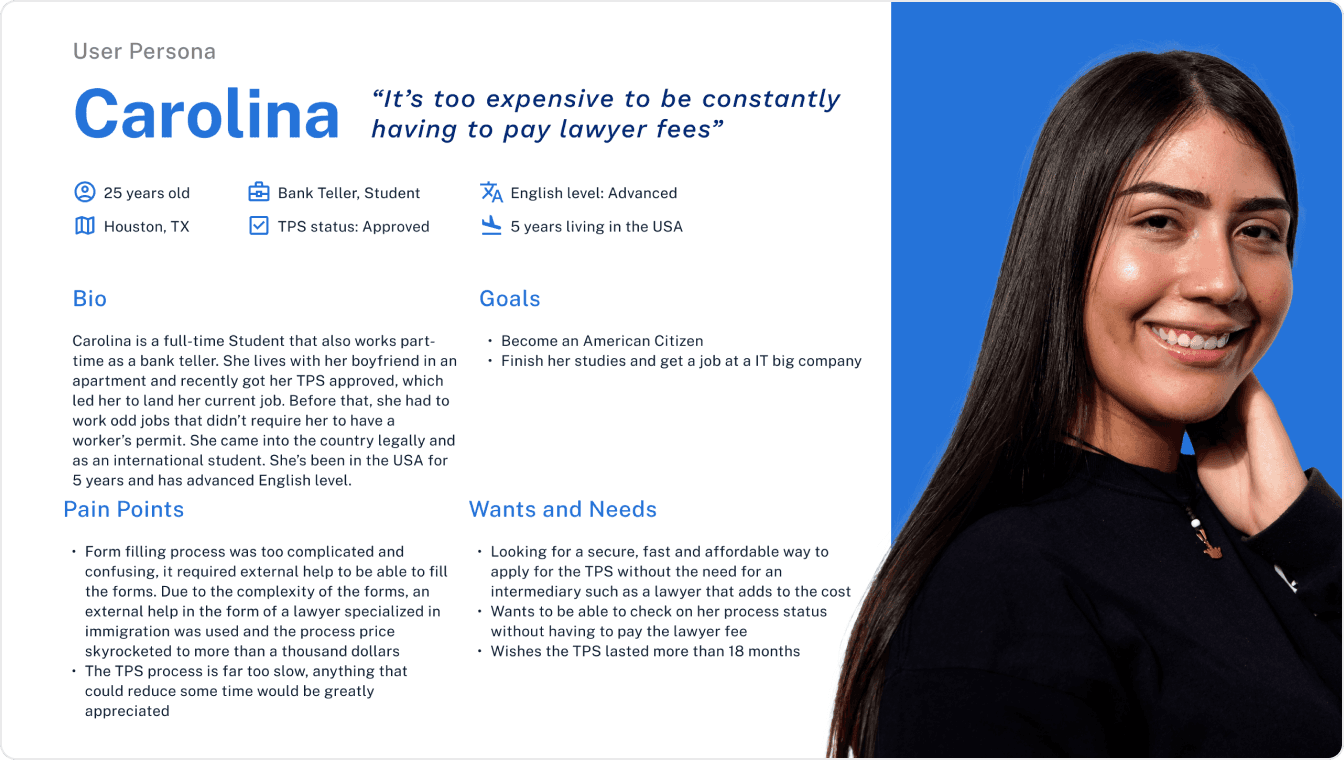
Venezuelan refugees currently applying for or eligible for TPS, with varying levels of English proficiency, financial stability, and familiarity with U.S. systems.
Research Approach
6 qualitative interviews
Mix of in-person and video interviews
Participants were Venezuelan women in their mid-20s to early-30s
All had lived in the U.S. for at least five years and were actively navigating the TPS process
Key Insights
Most users relied on intermediaries due to form complexity
Cost was a greater concern than lack of information
English proficiency heavily influenced confidence and success
Users prioritized job opportunities and language education upon arrival
The process felt fragmented, stressful, and inefficient
Problem Statement
How might we help Venezuelan immigrants understand, apply for, and track TPS in a way that is clear, affordable, and supportive throughout the entire process?
Strategy & Approach
I focused on simplifying complexity through structure, clarity, and guidance. Rather than redesigning government forms directly, the platform acts as a bridge, translating requirements into understandable steps while offering support, progress tracking, and community knowledge.
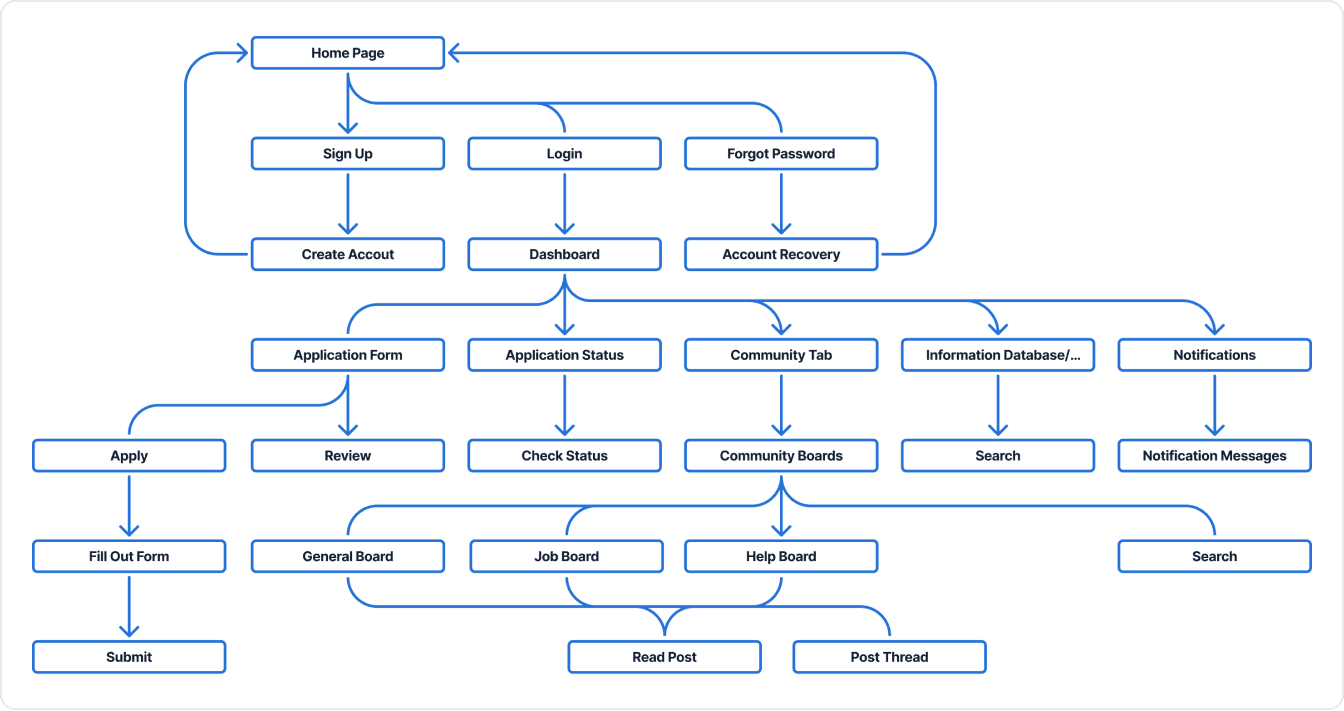
Information Architecture & Flows
The platform was structured around four core areas:
•Application guidance
• Status tracking
• Information database
• Community support
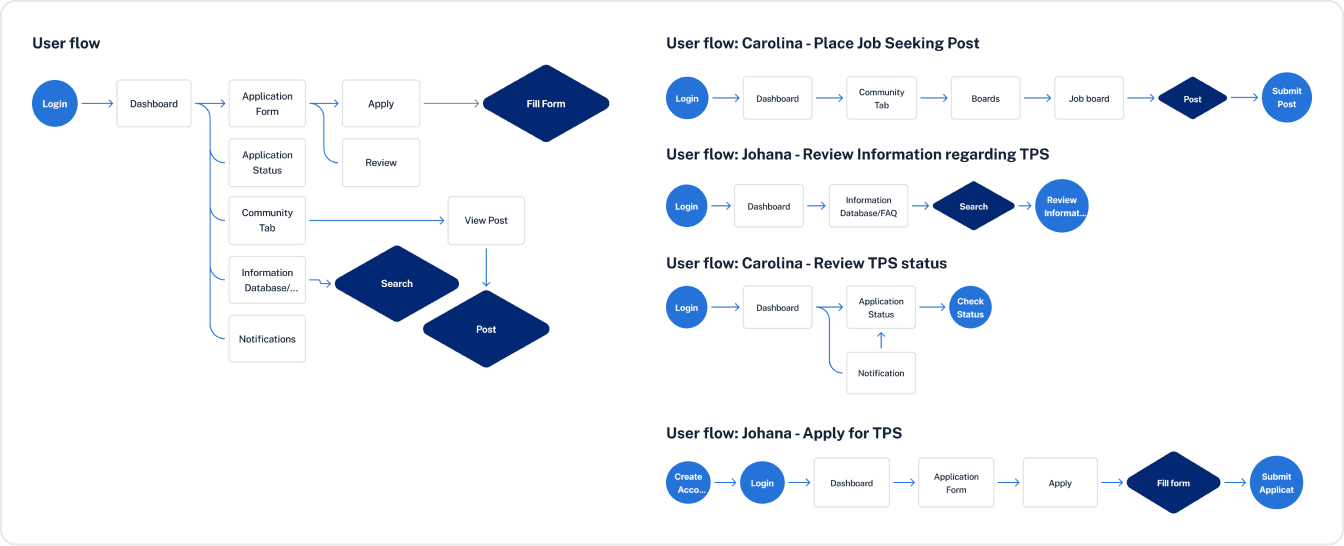
Sitemaps and user flows were designed to reduce cognitive load and help users understand where they were, what came next, and what actions were required.
Design System & Visual Direction
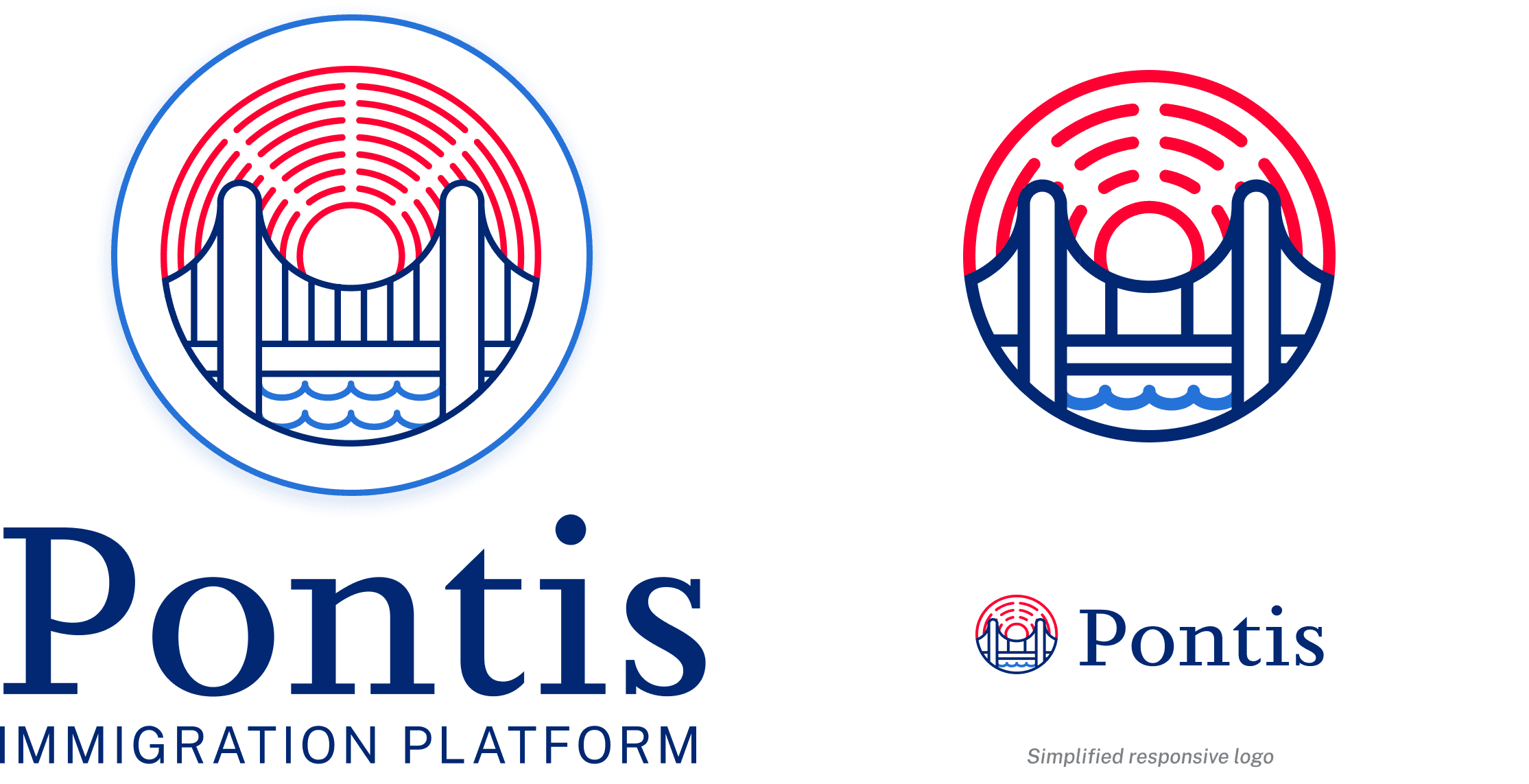
The name Pontis, Latin for “bridge,” reflects the product’s purpose as a connection between refugees and their new environment.
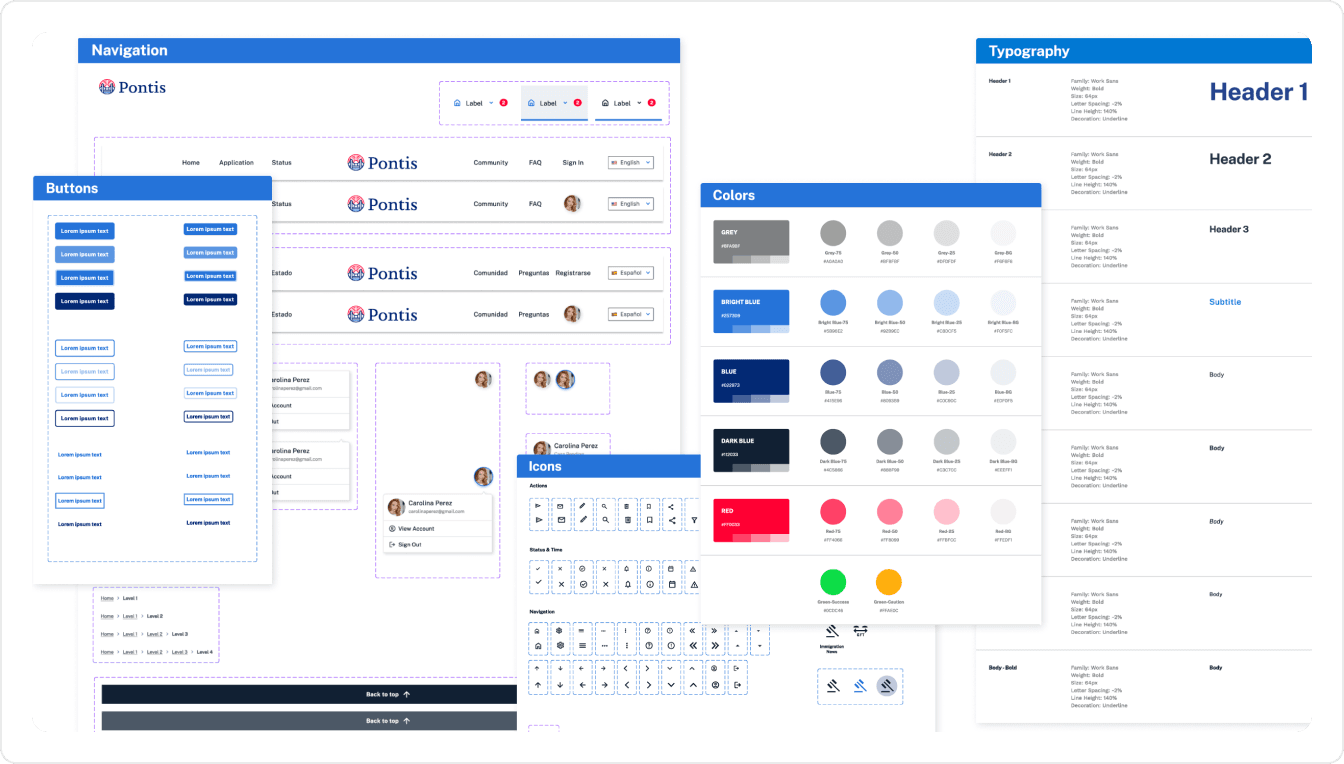
The visual system emphasizes clarity and trust. A minimal bridge icon and colors inspired by the U.S. flag were chosen to suggest stability and legitimacy without feeling overly bureaucratic.
Wireframes to Prototype
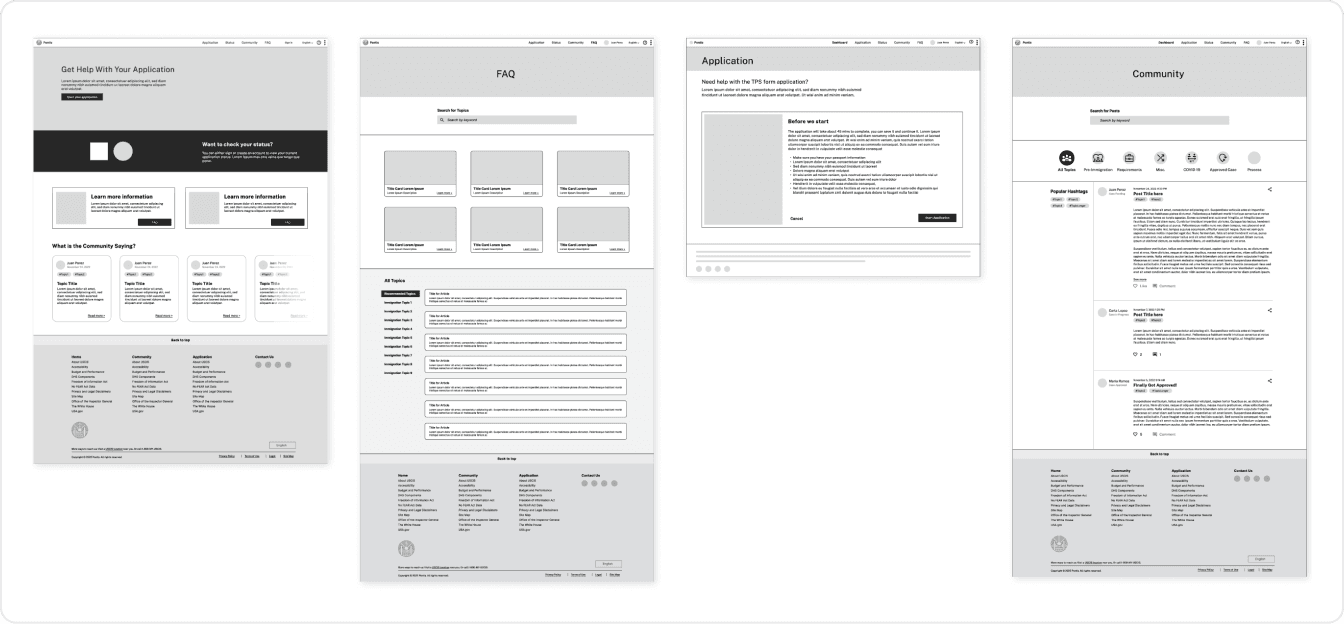
Low-fidelity wireframes focused on structure and flow rather than visuals. As designs evolved, components were refined using a consistent system to ensure scalability and efficiency.
A clickable prototype was built to validate interactions and end-to-end flows.
Usability Testing & Iteration
I conducted five qualitative usability tests. Key findings led to meaningful design changes.
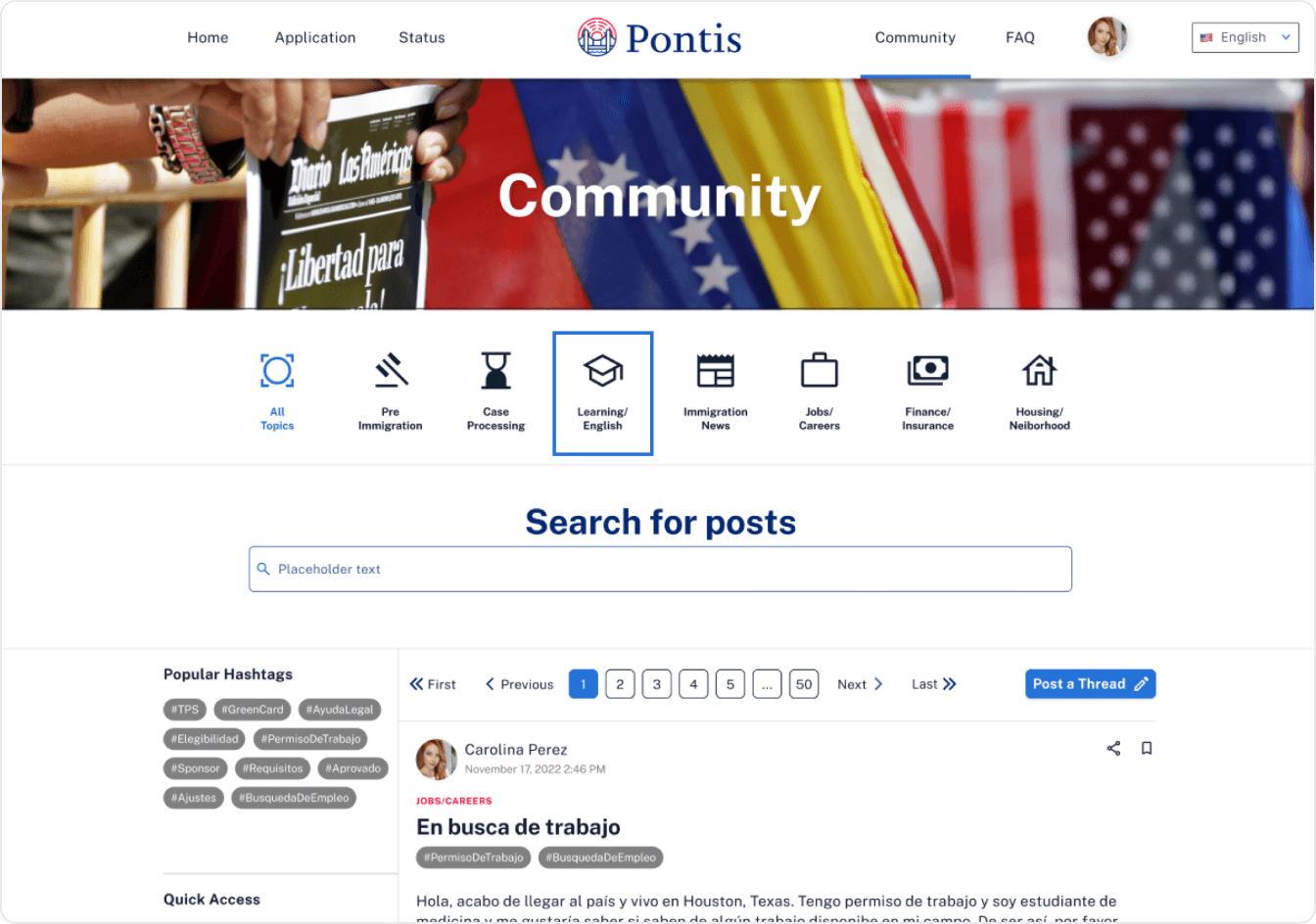
Problem
The community section lacked information users considered essential
Solution
Added a missing section based on research priorities
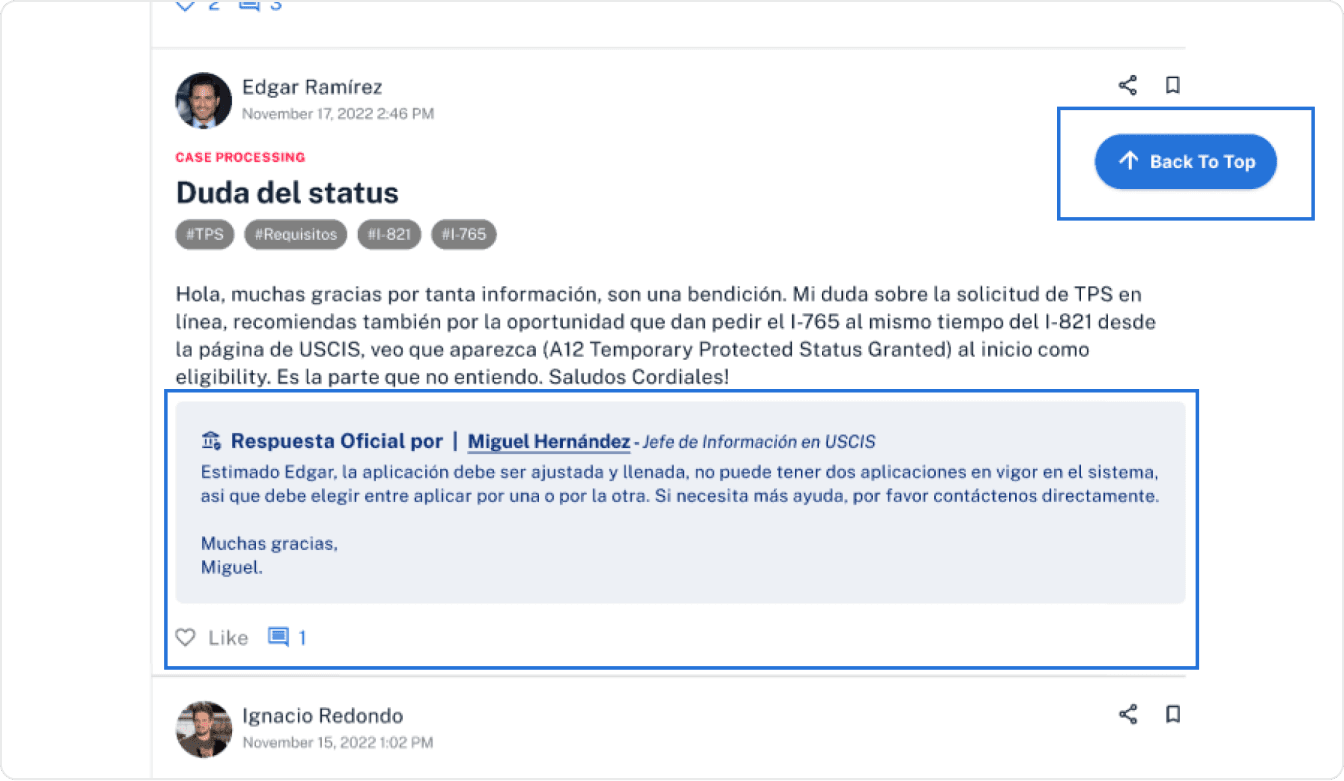
Problem
Users questioned the credibility of responses in the community tab
Solution
Introduced verified responses and visual distinction for official sources
Problem
Excessive scrolling caused frustration
Solution
Added a floating action button for quick navigation
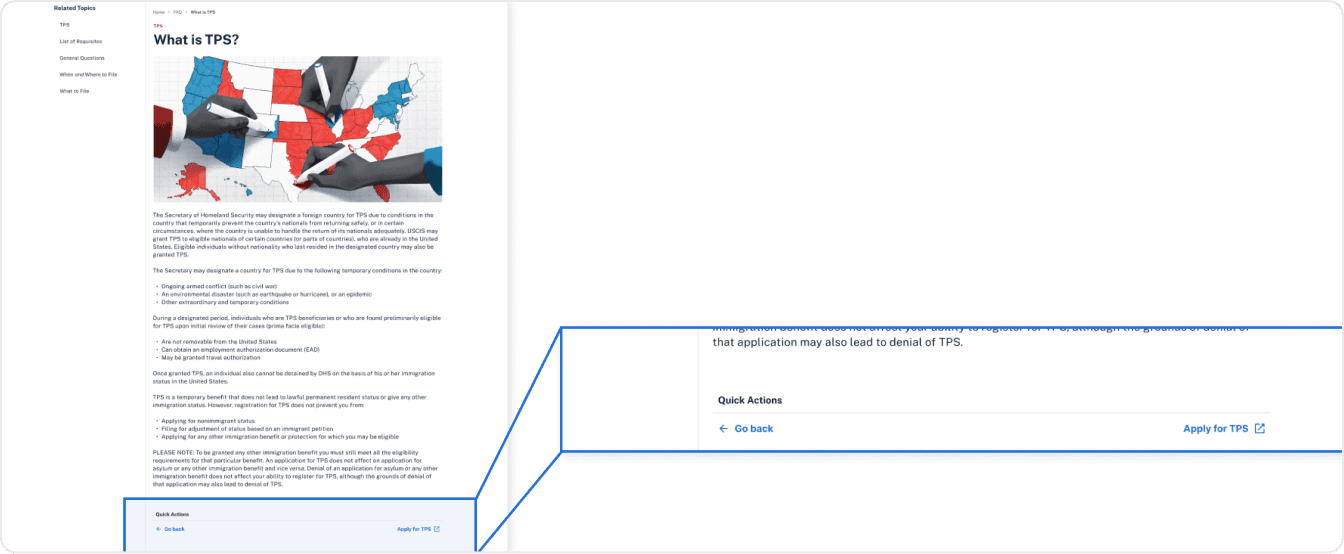
Problem
Users wanted immediate actions after reading content
Solution
Introduced contextual quick actions
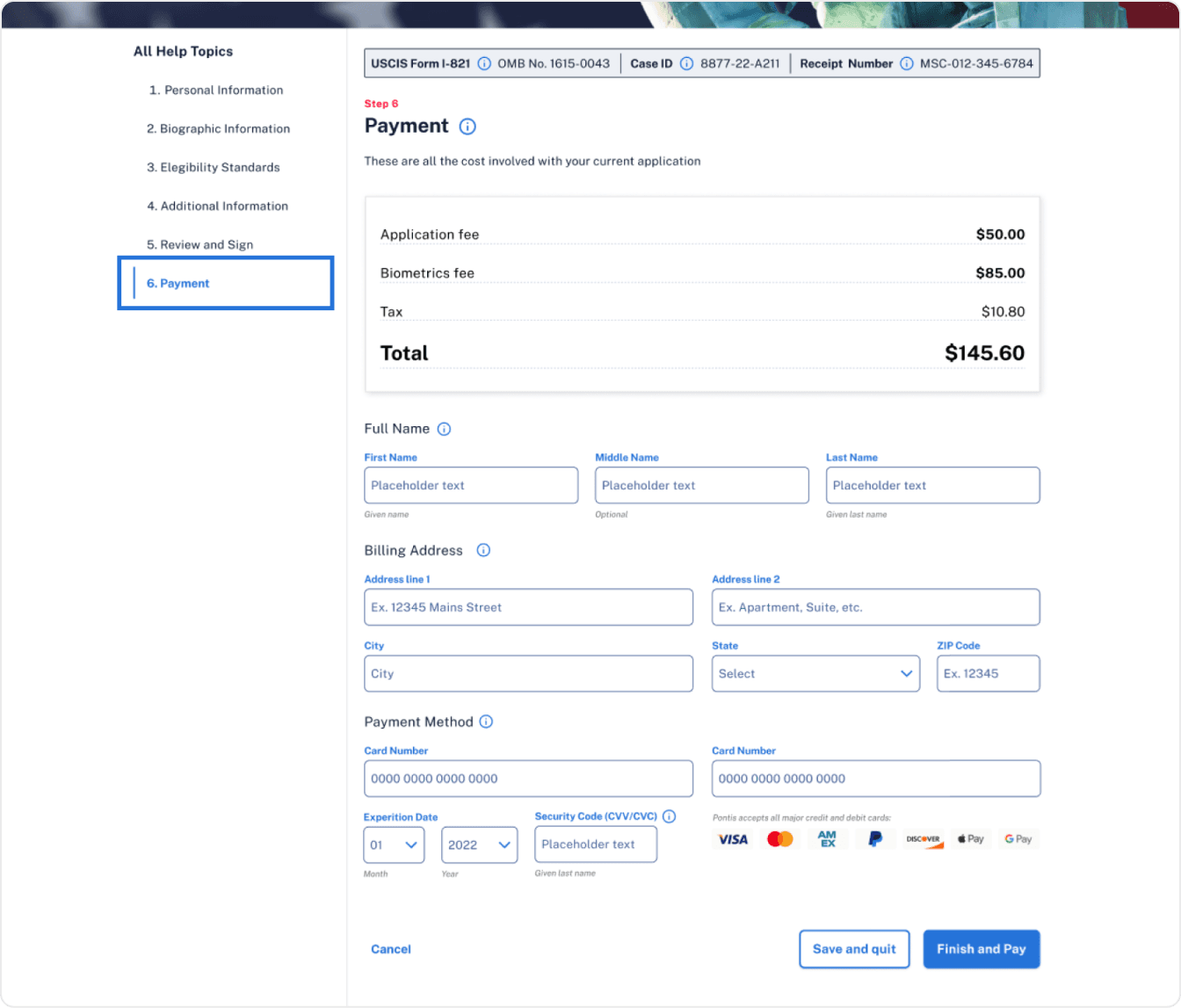
Problem
Payment was missing from the flow
Solution
Added a dedicated payment step to complete the application experience
Outcome & Impact
Users responded positively to the platform, noting that it felt significantly clearer and more approachable than the process they had previously experienced. Many expressed that they would have felt more confident applying independently with a tool like Pontis.


Reflection & Learnings
Challenges
Balancing scope with limited time
Accessing a niche user group
Organizing a large volume of critical information
Personal loss during the project timeline
What I Learned
Cost anxiety outweighed information gaps
Familiar patterns improve trust in complex systems
Leveraging existing systems improves efficiency
Simplicity is essential when stakes are high
Next Steps
Design and test a mobile version
Conduct card sorting for FAQs and community content
Expand usability testing
Adapt the platform for other TPS cases and languages