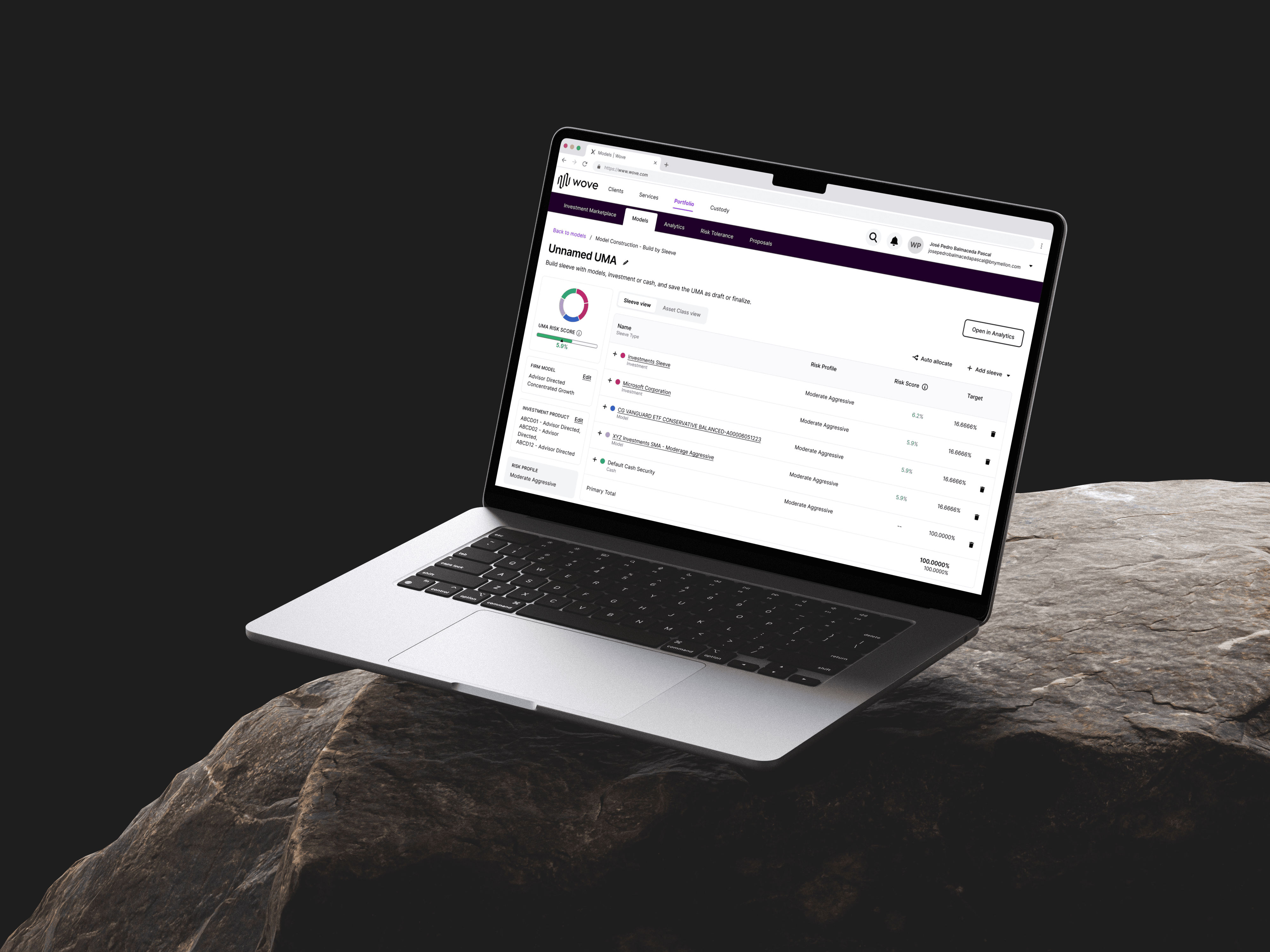
Portfolio Construction is a model-building experience within Wove that helps advisors create, edit, copy, and manage different portfolio types across a complex investment platform.
//Role
Senior Product Designer
//Duration
2025 to present
//Context
BNY Mellon | Wove
//Industry
Fintech / Wealth Management
I first worked on early drafts of the project, then later inherited the broader investment track with my lead designer after the previous consulting team rolled off. My focus was on making the experience more consistent across model types and better connected to Model Management.
Problem & Opportunity
The Problem
ortfolio Construction had become fragmented across multiple model types, including standard advisor models, legacy UMA, Lincoln CCP UMA, strategy models, brokerage models, TPMs, SMAs, and firm models. Creating, editing, viewing, and copying models often felt inconsistent depending on what the user was working on.
The Opportunity
There was an opportunity to create a more normalized system that shared common patterns across model types while still respecting the rules that made each one different. That would make the product easier to use, easier to maintain, and easier to scale.
Goals & Success Criteria
The main goals were to normalize core workflows across model types, reduce unnecessary complexity, improve clarity in highly detailed flows, and create more reusable patterns for future work across the investment track.
Success meant a more coherent experience for users and a stronger foundation for product and engineering.
Context & Constraints
This was not a greenfield project. I returned to work that had already evolved under another team, then helped bring consistency back to it after inheriting the broader investment track.
The work also had to support multiple model types, legacy and new UMA experiences, deep integration with Model Management, ongoing client feedback, and many business rules tied to real financial workflows.

Users & Research
Target Users
The primary users were financial advisors and portfolio managers creating and managing models inside Wove.
Research Approach
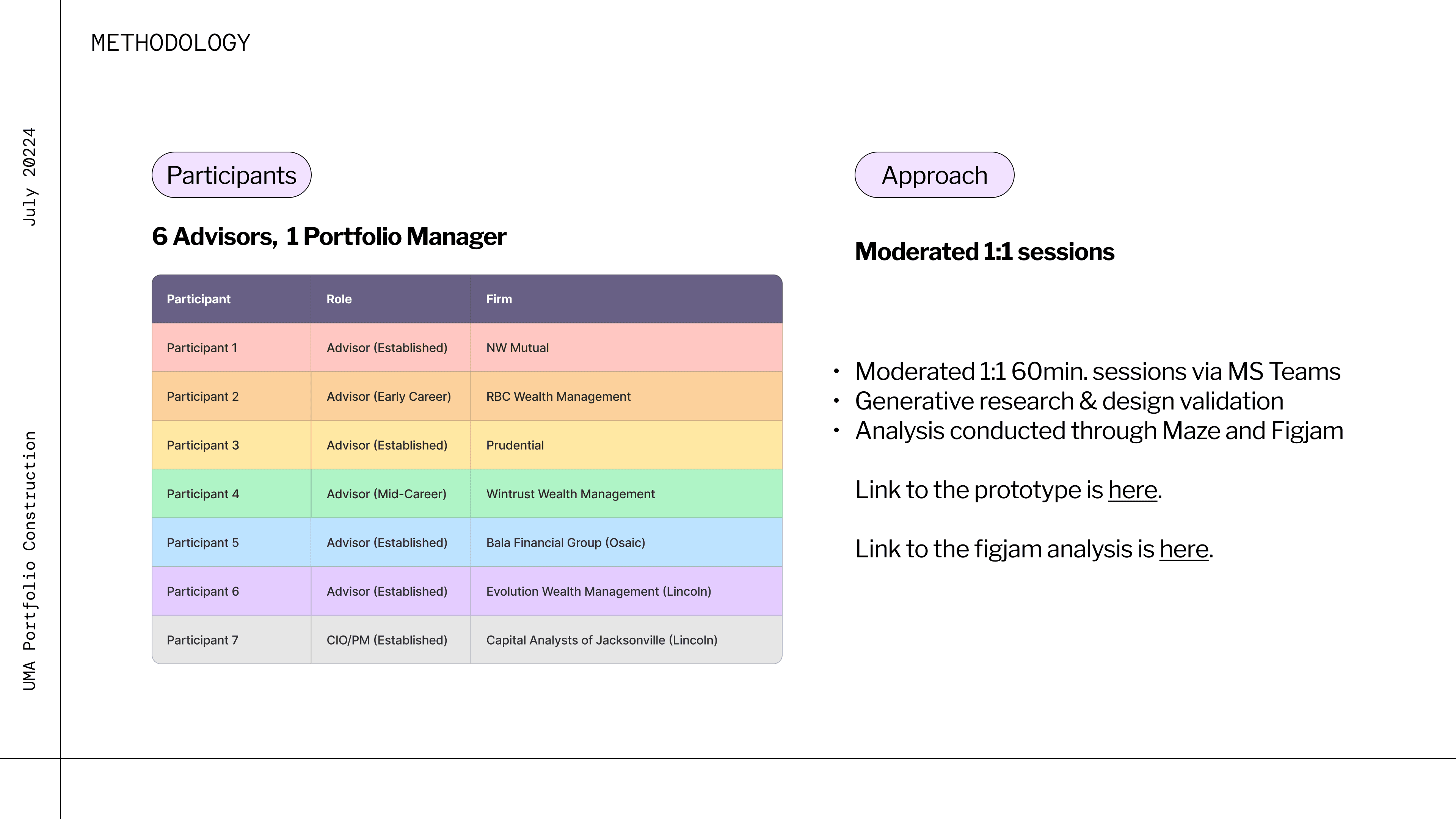
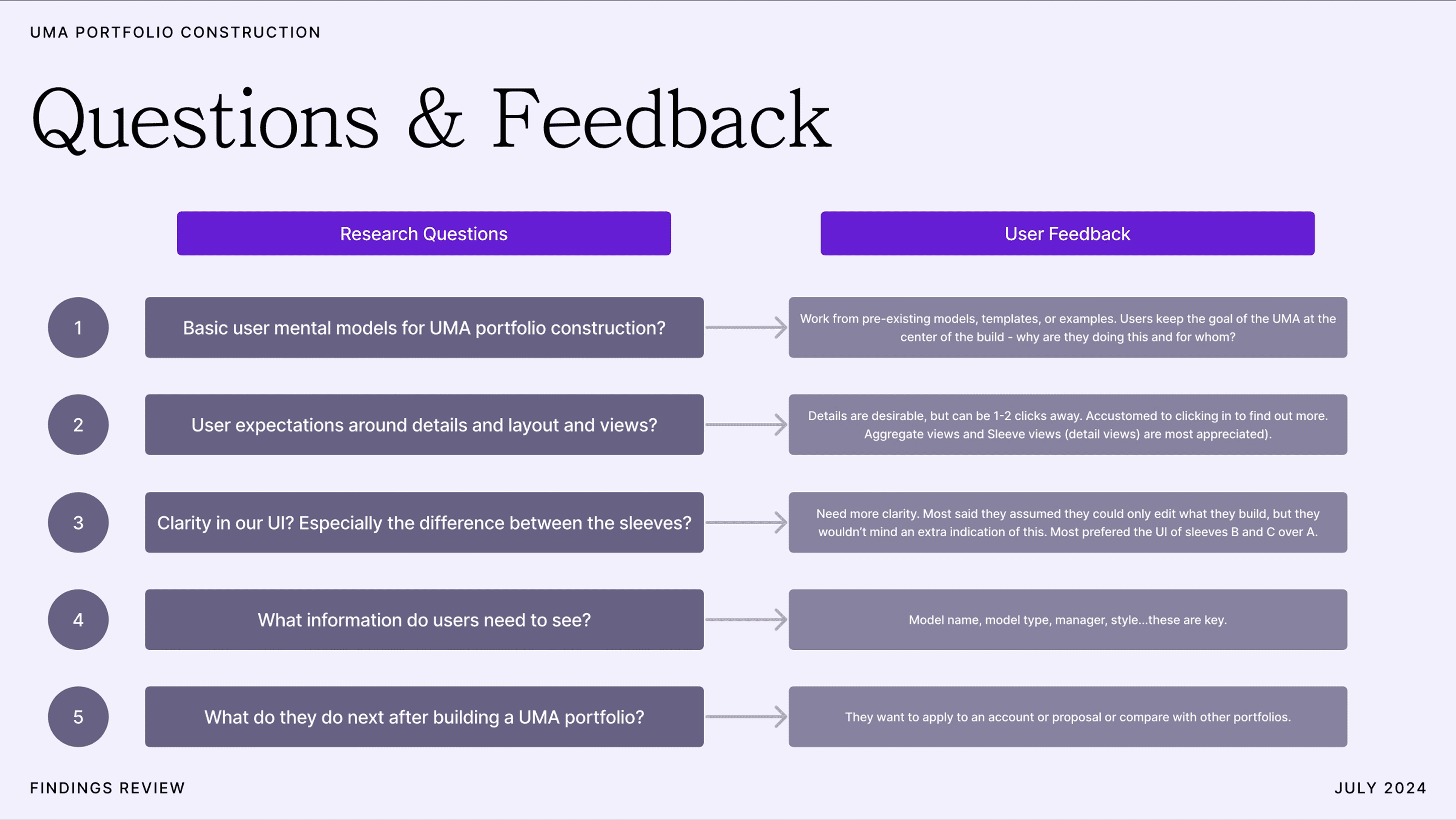
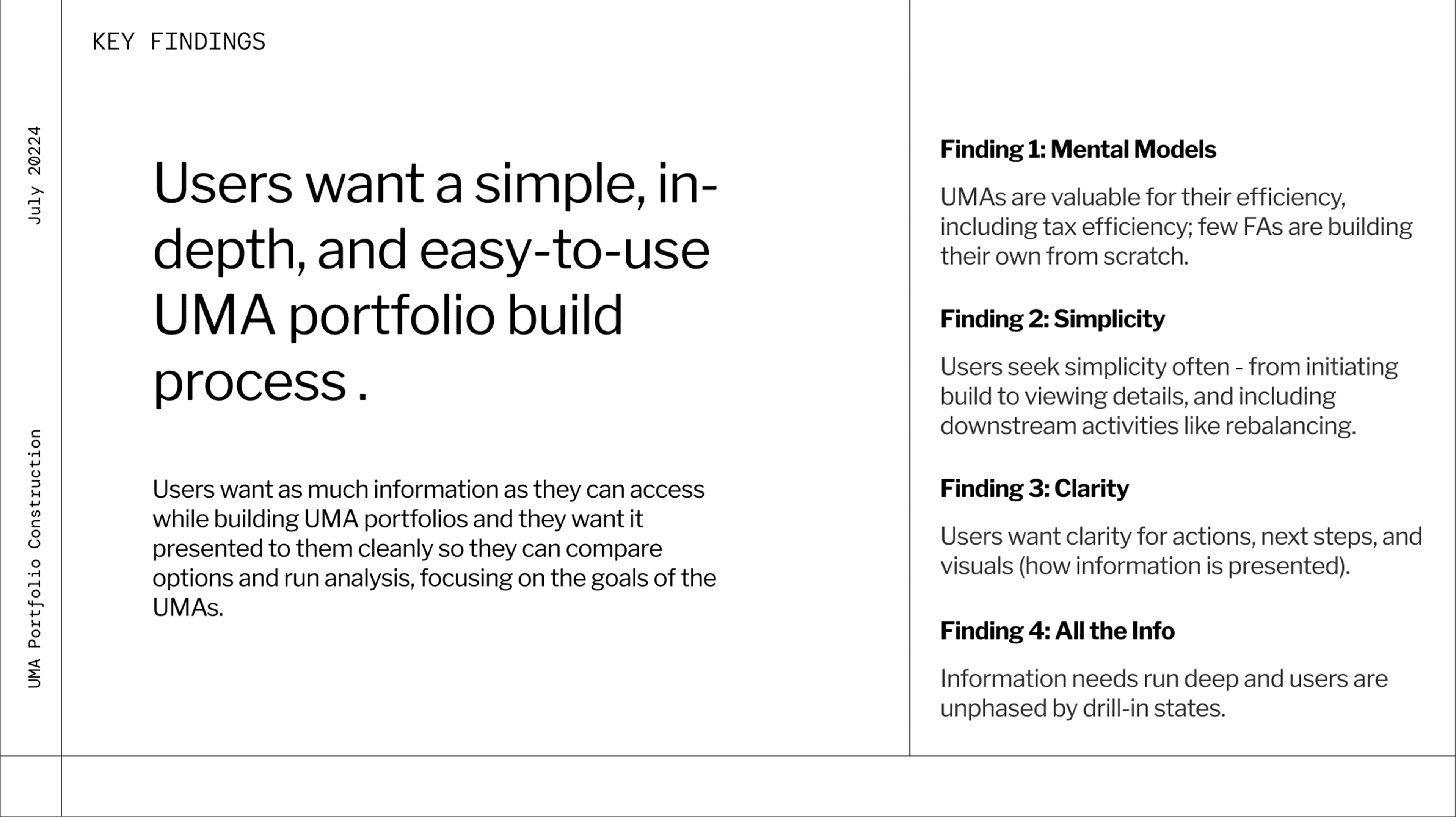
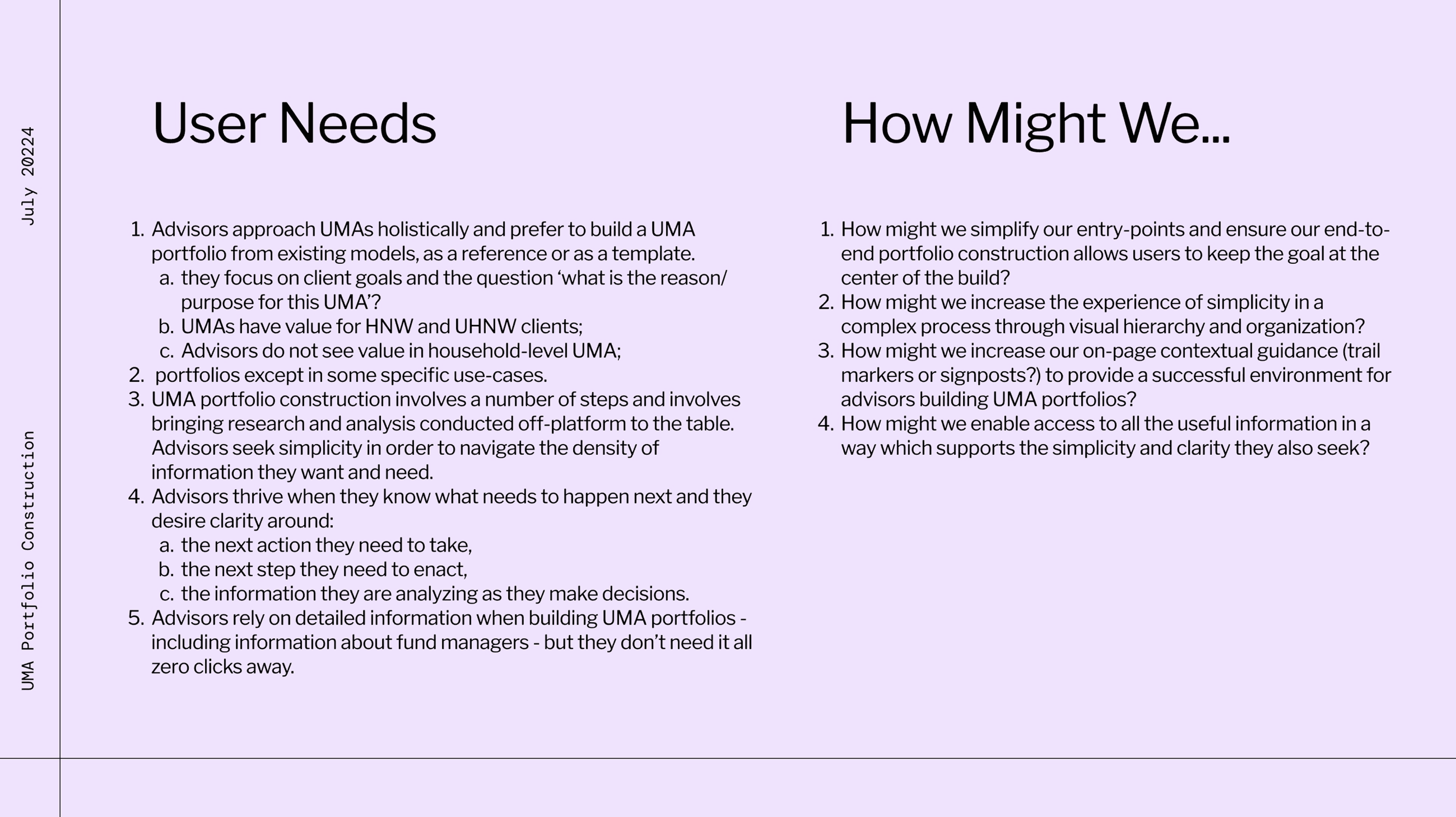
Before I took over the project directly, user research had already been done around UMA portfolio construction. After that, the work continued to evolve through recurring product reviews, client feedback, and close collaboration with engineering.
Key Insights
Users wanted the experience to feel simpler and more intuitive, even though the underlying logic was very complex. They also needed clearer signals around what was editable, what came next, and how different model-building paths related to one another.
Problem Statement
How might we create a clearer and more consistent portfolio construction experience across multiple model types without losing the flexibility required by the business?
Strategy & Approach
The strategy was to normalize what could be shared across model types, then layer in differences only where they were truly required.
That meant creating more consistency around create, edit, copy, and view patterns, while still supporting model-specific rules for things like UMA, Lincoln CCP, strategy, and brokerage models.
Information Architecture & Flows
The information architecture had to support many different creation paths and model types while still feeling like one connected system.
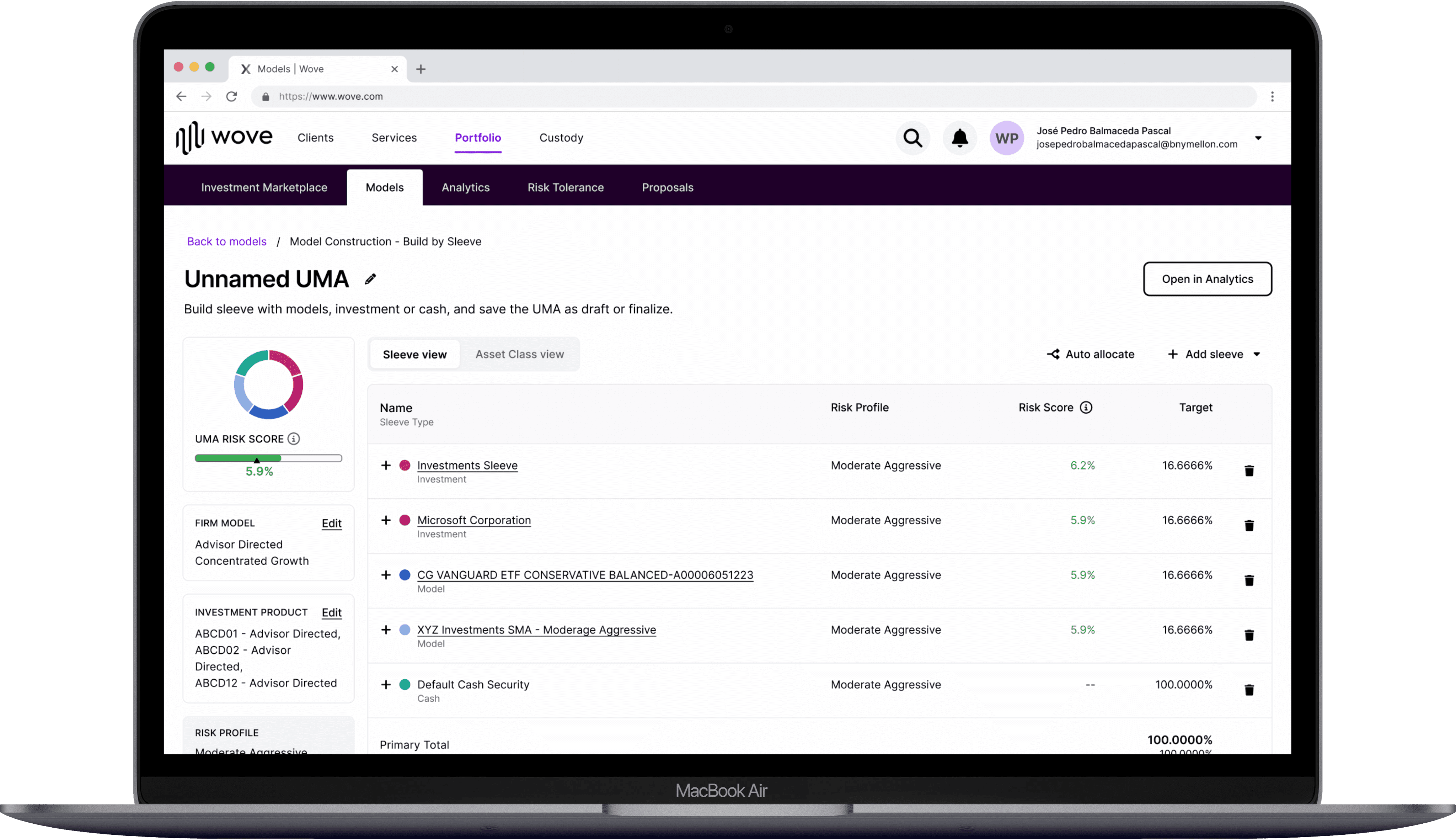
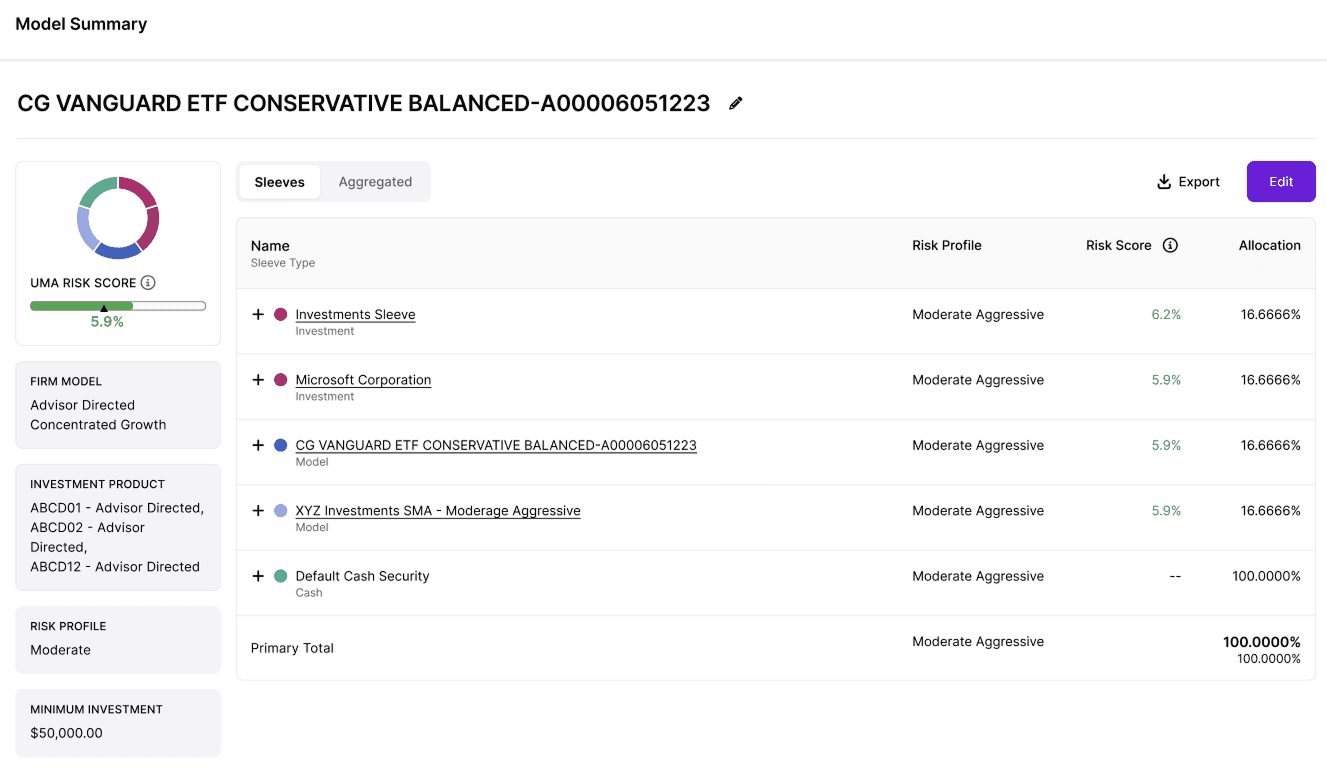
A major part of the work was standardizing top bar controls, view switching, allocation tables, left-panel summaries, footer actions, and related details across create, edit, and view states.

Design System & Visual Direction
The work was grounded in Hamilton, BNY Mellon’s design system, which I also helped build and expand.
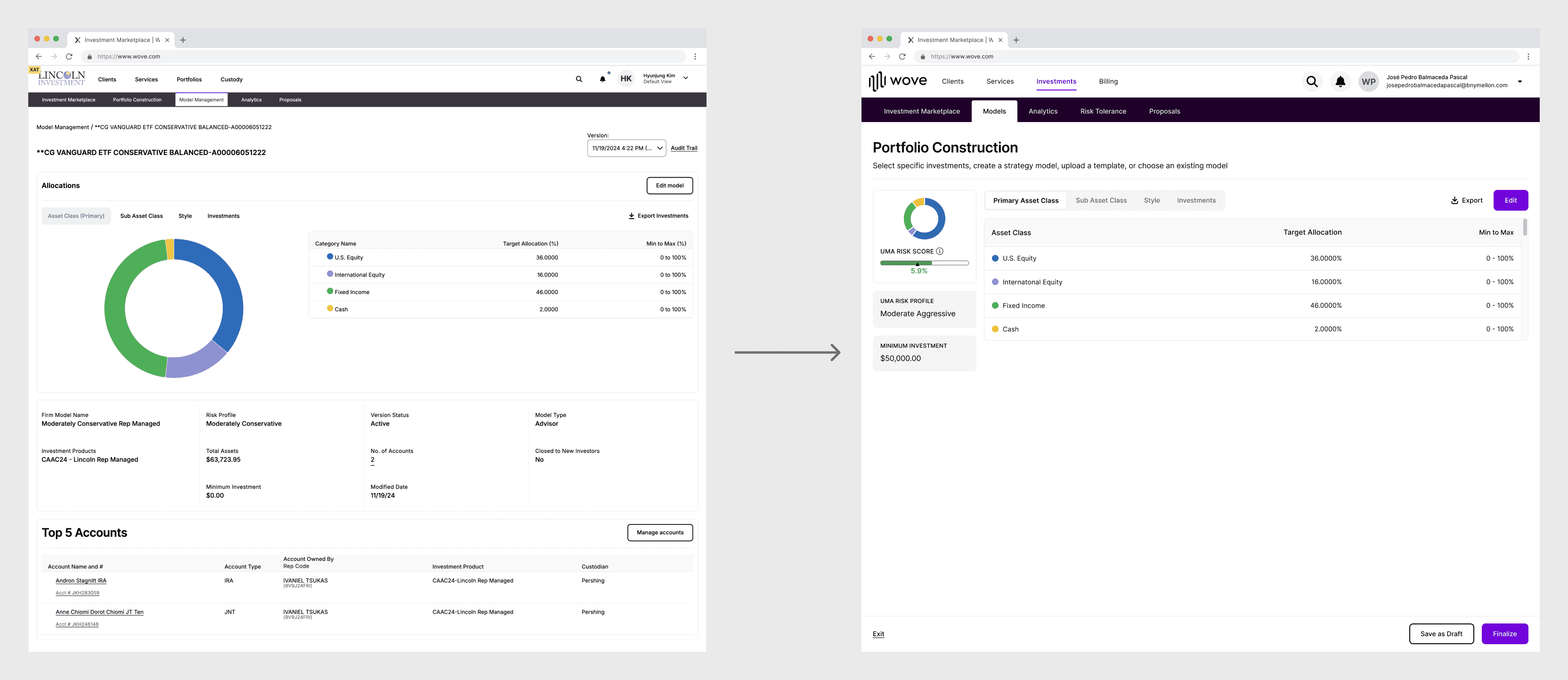
The visual direction focused on improving hierarchy, making dense data easier to scan, clarifying editable versus read-only states, and creating reusable patterns that could scale across many related screens.
This example shows how we improved the layout by reducing the graph’s visual weight and prioritizing the underlying data, making the experience more efficient and the information easier to access, scan, and edit.
Wireframes to Prototype
This project evolved through ongoing iteration rather than a single clean handoff. Throughout 2025, my lead designer and I met regularly with product owners, refined flows, and adjusted the work based on changing requirements and engineering realities.
The work was done at high fidelity, and for more complex flows I used prototypes to validate interaction logic. For Portfolio Construction, I created a prototype for the UMA experience.

Usability Testing & Iteration
The earlier research had a strong influence on the product direction, and the work continued to evolve through regular refinement and feedback.
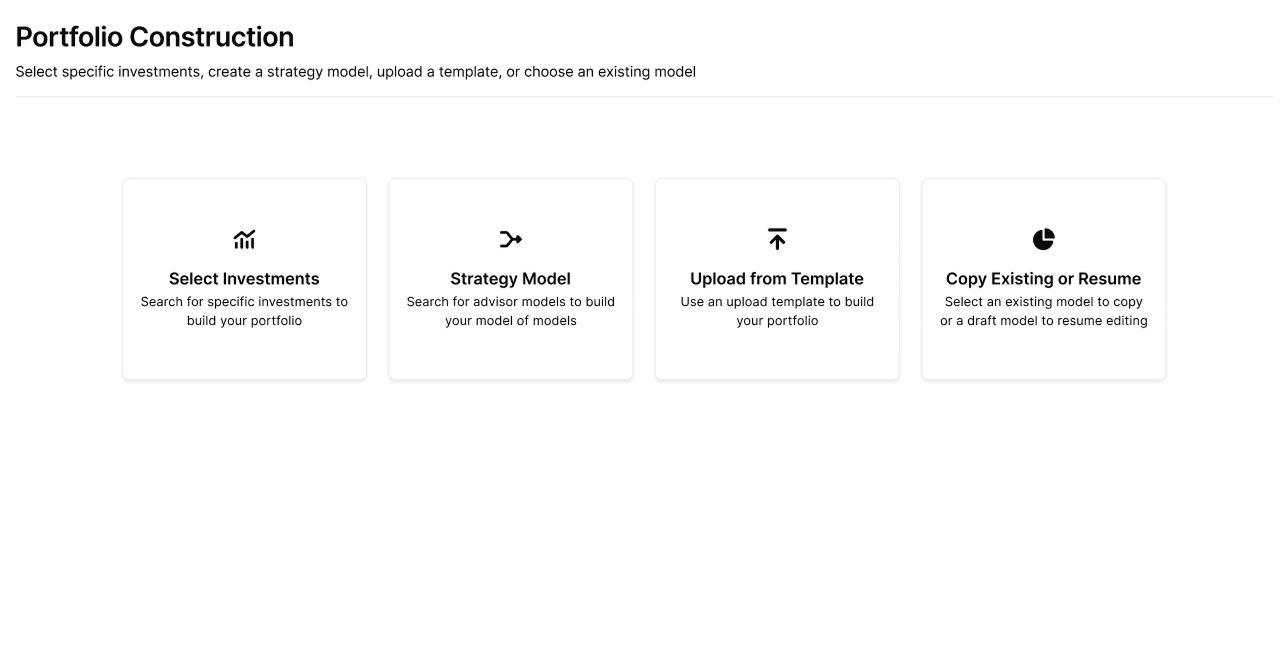
Problem: Entry points and creation methods could feel overlapping
Solution: Clarified how different creation paths were described and structured so users better understood which route fit their goal
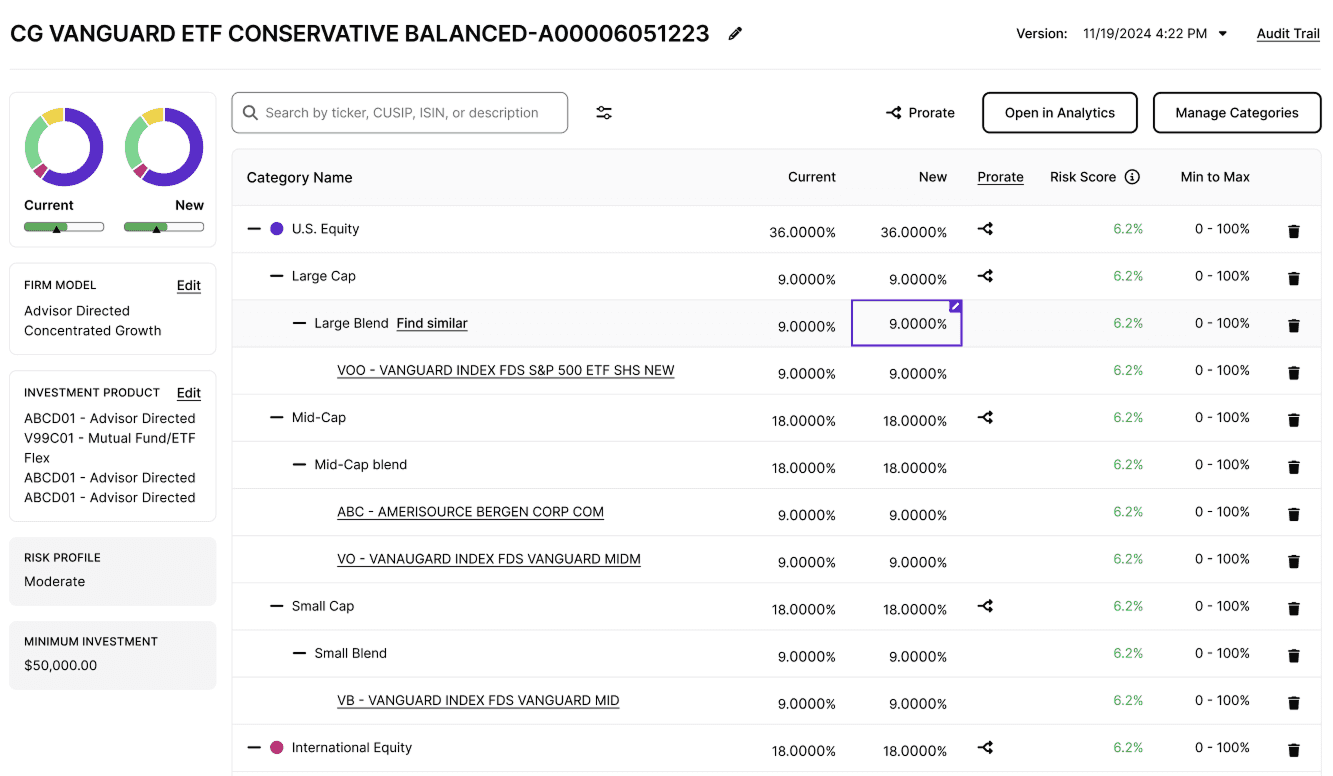
Problem: Users often preferred to begin from an existing model or template
Solution: Treated model building more like a guided and reference-based workflow, not just a blank-state exercis
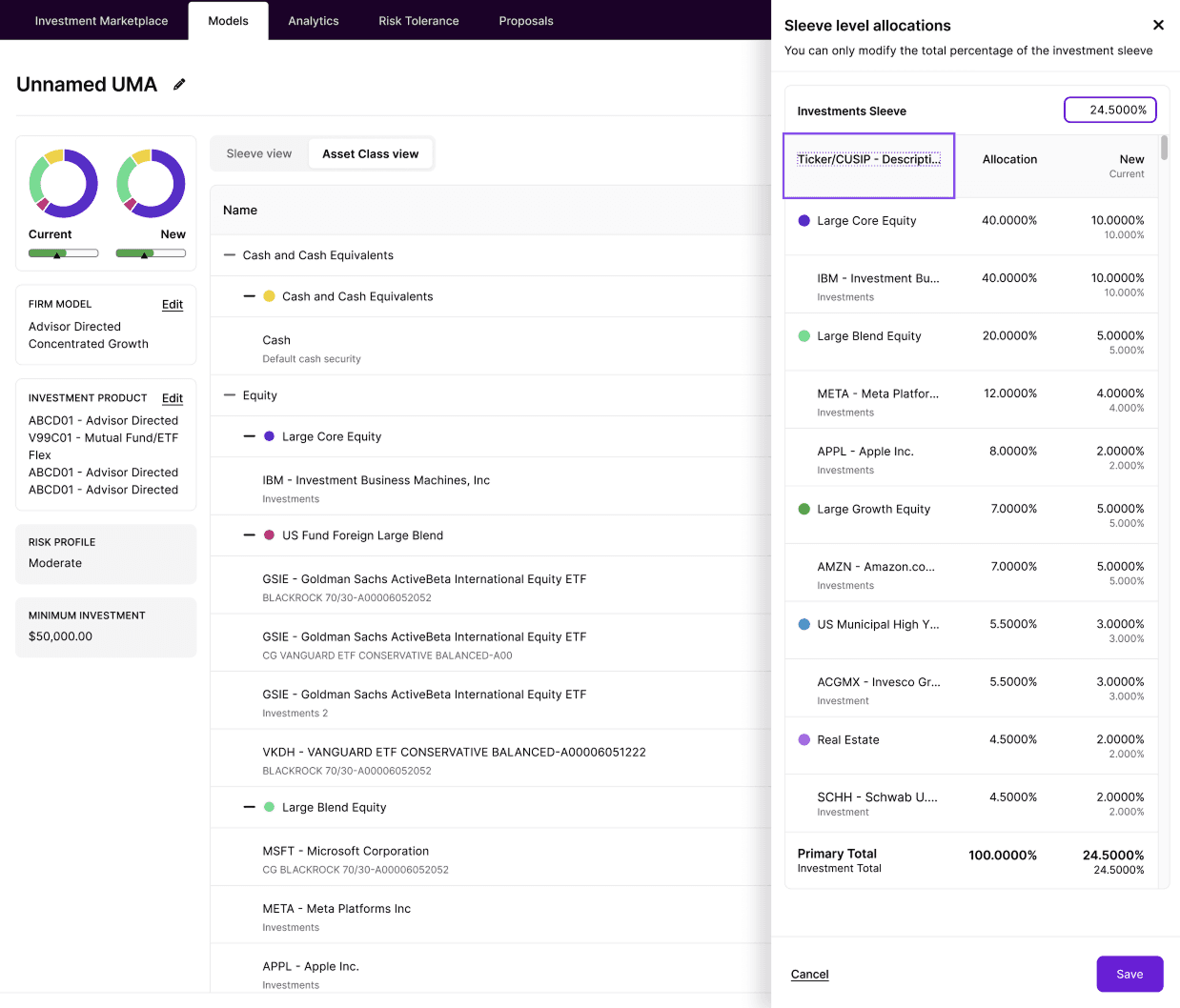
Problem: Sleeve-only views were not always enough to support decision-making
Solution: Strengthened aggregate and hierarchical views so users could understand overall allocation while still drilling deeper
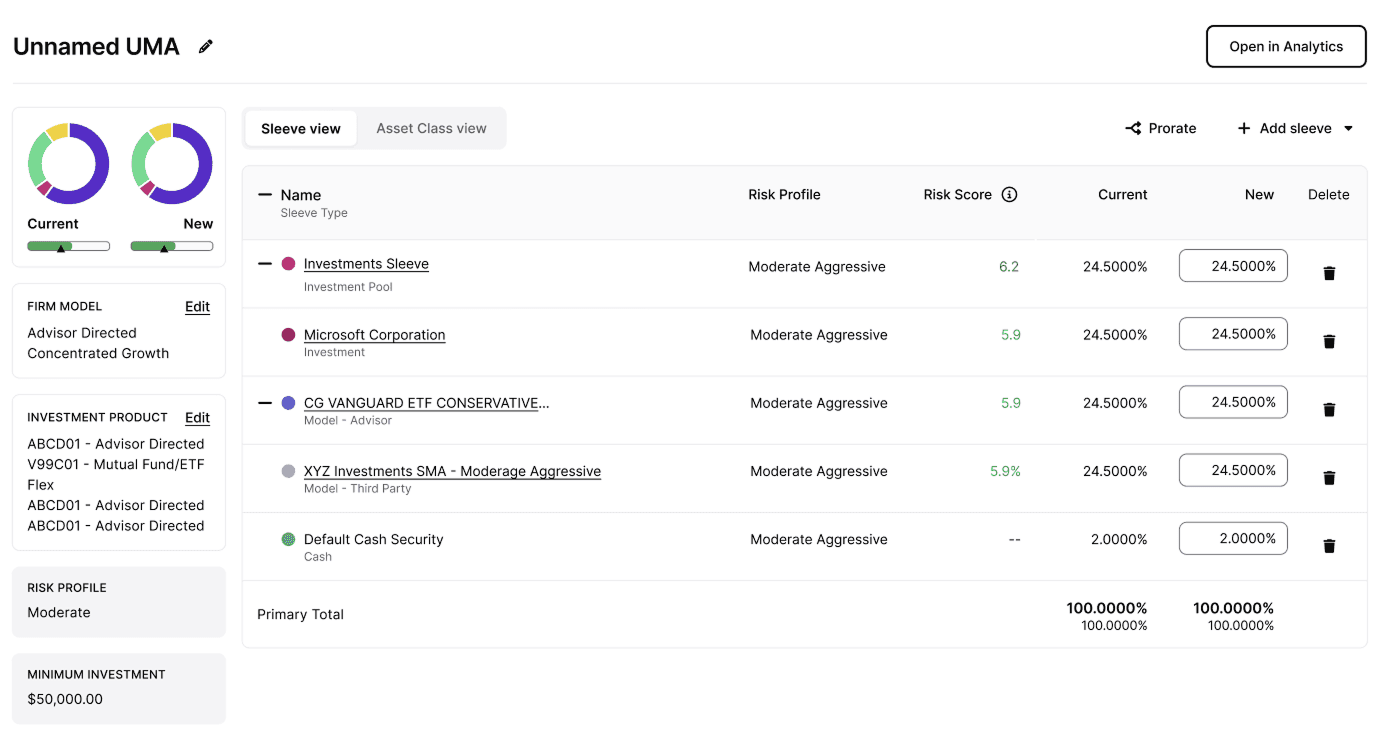
Problem: Users were unsure what was editable and what happened after finalizing
Solution: Improved state clarity, guidance, and downstream flow understanding
Problem: Business rules varied widely by model type
Solution: Built shared patterns where possible, then layered model-specific constraints only where necessary
Outcome & Impact
Portfolio Construction became a key normalization effort across the investment track.
The work helped create a more consistent foundation for model creation and model viewing, while also supporting tighter integration with Model Management and future platform improvements.

Reflection & Learnings
Challenges
The biggest challenge was bringing consistency to a system with many model types, many edge cases, and active client needs.
What I Learned
In complex fintech products, normalization is not just a UI exercise. It is also product strategy. Clear structure, state awareness, and reusable patterns make a big difference when the workflows are this detailed.
Next Steps
Continue tightening the connection between Portfolio Construction and Model Management, simplify creation entry points further, and keep refining the experience based on user and client feedback.
If you want, I can do the same shortening pass for Model Management too.